
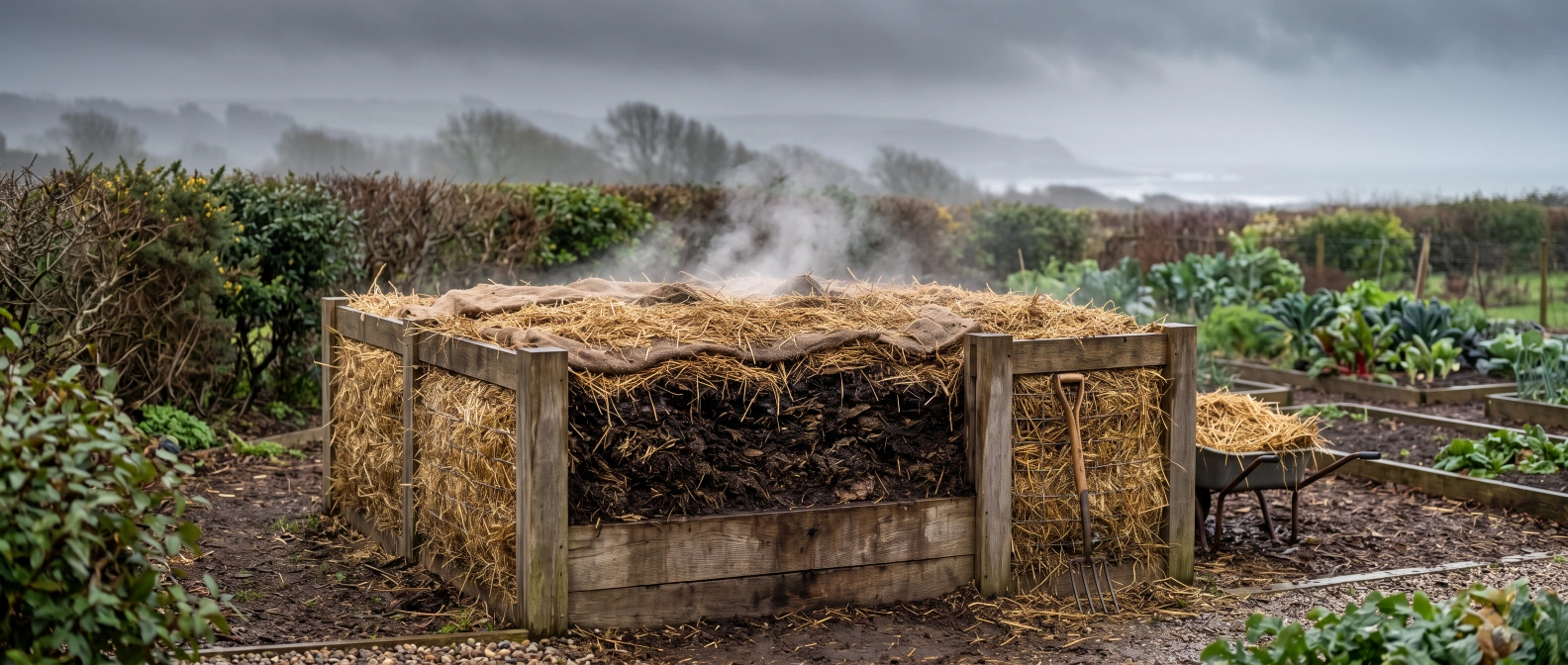
A temperate maritime climate -- the kind found across Britain, Ireland, coastal northwest Europe, parts of New Zealand, and the Pacific Northwest -- presents a specific set of challenges and opportunities for the composter. The golden rule here: compensate for the lack of tropical heat with heap mass, good insulation, careful moisture management, and -- above all -- time. Patience is your most important tool.
The Challenges
- Cool temperatures slow microbial activity, making the sustained 55-65°C heat that kills pathogens and weed seeds genuinely hard to reach.
- High rainfall and humidity drive heaps toward slow, smelly anaerobic decomposition unless moisture is actively managed.
- Variable seasons mean heap activity fluctuates dramatically across the year.
- Slower decomposition overall means longer processing times -- especially important when handling humanure safely.
The Advantages
- Abundant carbon materials -- bracken, straw, rushes, autumn leaves, and coastal seaweed provide excellent bulking material.
- Large, active earthworm populations in cool, moist soils -- among the most powerful composting organisms available.
- Year-round moisture means heaps rarely dry out completely, unlike in continental climates.
- Coastal access to seaweed -- one of the most mineral-rich compost inputs on earth -- is a unique maritime advantage.
19 Chapters, In Order
Each builds on the last, but every chapter also stands alone if you're looking for something specific.
Frequently Asked Questions
What's the single biggest composting challenge in a temperate maritime climate?
Cool temperatures. Achieving the sustained 55-65°C heat that kills pathogens and weed seeds is far harder here than in a warm climate, and it's the central challenge behind almost every piece of guidance in this section -- from heap size and insulation through to the two-year minimum for humanure.
What real advantages does this climate have for composting?
Genuinely several. Abundant carbon material (bracken, straw, rushes, autumn leaves), large and active earthworm populations, year-round moisture that keeps heaps from drying out, and -- for anyone near the coast -- free access to seaweed, one of the most mineral-rich compost inputs on earth.
Do I need special equipment to compost well in this climate?
No -- every method in this guide is low-technology and achievable with a spade, some timber or straw bales, and patience. The one non-negotiable is heap size: a minimum of one cubic metre, since anything smaller loses heat too fast to compost effectively through a cool winter.