
Earthworms are among the most powerful composting organisms available, and a temperate maritime climate is close to ideal for them -- cool, moist, with abundant organic matter. Vermicomposting produces vermicast, a material so biologically active and nutrient-dense that small amounts have disproportionately large effects on plant growth and soil health.
Vermicast vs Compost
- Contains 5-10x more available nitrogen, phosphorus and potassium than the organic matter processed.
- Exceptional microbial population -- billions of bacteria per gram, far exceeding even good hot compost.
- Carries plant growth hormones (auxins, cytokinins) produced by worms' gut bacteria.
- Near-neutral pH regardless of what was fed in.
- Water-stable -- aggregates hold together in rain rather than dispersing and capping as fine compost can.
Which Worms to Use
Ordinary garden earthworms (Lumbricus terrestris) are not suitable -- they're deep burrowers needing mineral soil. The correct species are surface-dwelling composting worms:
- Eisenia fetida (brandling/tiger worm) -- most common and widely available, red and yellow banding, found in manure heaps and rotting vegetation.
- Eisenia andrei -- similar, slightly faster processor, often lives alongside fetida.
- Lumbricus rubellus -- red worm, slightly larger, tolerates cooler temperatures particularly well, good for maritime climates.
Source from an existing worm bin, a manure heap, or a specialist supplier; once established they reproduce rapidly.
Building a Worm Bin
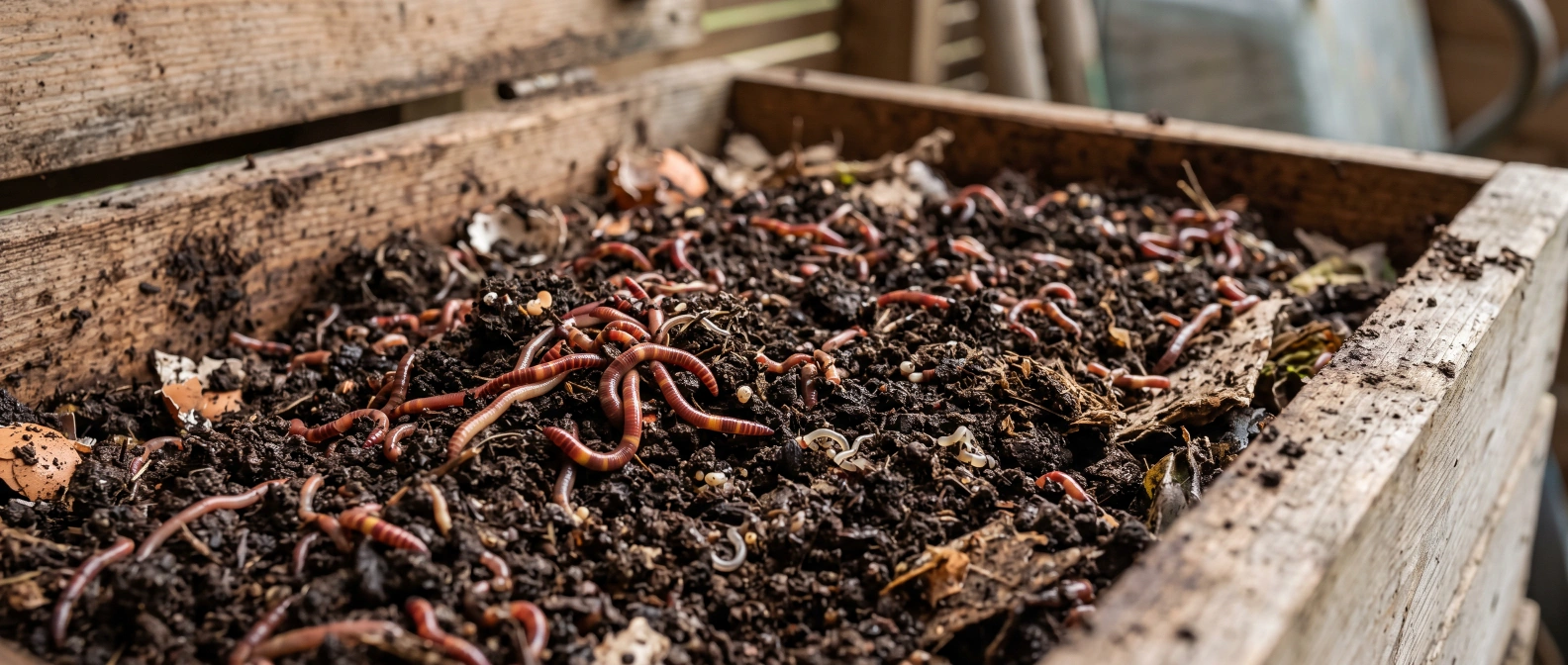
- Drainage holes at the base -- worms drown in waterlogged conditions; collect the liquid (worm leachate) as a valuable liquid feed.
- Ventilation -- small holes in the sides.
- Insulation -- keep above 10°C (below this worms slow dramatically; below 4°C they cease activity); site in a shed, garage, or insulated outdoor box in winter.
- Darkness -- worms avoid light, a lid is essential.
- Bedding to start -- damp torn cardboard, aged compost, or coir.
Feeding the Worm Bin
- Best foods -- fruit/vegetable peelings, coffee grounds, tea bags (no staples), crushed eggshells, plain paper/cardboard, soft garden trimmings.
- Add in moderation -- citrus (small amounts, acidic), onion/garlic (small quantities), cooked vegetable matter.
- Avoid entirely -- meat, fish, dairy, oily food, glossy paper.
- Bury food under the bedding surface rather than leaving on top -- reduces flies, speeds processing.
- Balance wet food waste with dry carbon material (cardboard, paper) in roughly equal volumes.
- Feed little and often rather than large infrequent additions.
Harvesting and Using Vermicast
Harvest when mostly dark, crumbly vermicast with few recognisable food particles. Push all material to one side, fill the empty side with fresh bedding/food -- worms migrate within a few weeks, leaving finished cast to harvest.
- Seed sowing mix -- 1:3 with soil or coir, exceptional germination rates.
- Potting compost -- add 20-30% vermicast to any potting mix.
- Planting holes -- a handful per hole when transplanting.
- Top dressing -- small amounts worked into surface around growing plants.
- Worm leachate -- the liquid draining from the bin, dilute 10:1, very high in microbial activity.
Frequently Asked Questions
Can I use ordinary garden earthworms for vermicomposting?
No. Ordinary garden earthworms (Lumbricus terrestris) are deep burrowers that need mineral soil and are not suitable for a worm bin. The correct species are surface-dwelling composting worms -- Eisenia fetida (brandling/tiger worm), Eisenia andrei, or Lumbricus rubellus, which tolerates cooler temperatures particularly well and suits maritime climates. Source them from an existing worm bin, a manure heap, or a specialist supplier.
What's the difference between vermicast and ordinary compost?
Vermicast contains 5-10x more available nitrogen, phosphorus and potassium than the organic matter processed, carries billions of bacteria per gram, and includes plant growth hormones produced by worms' gut bacteria. It also has a near-neutral pH regardless of what was fed in, and forms water-stable aggregates that hold together in rain rather than dispersing the way fine compost can.
What temperature does a worm bin need to stay above?
Above 10°C for reasonable activity -- below this worms slow dramatically, and below 4°C they cease activity entirely. In this climate that means siting the bin in a shed, garage, or insulated outdoor box over winter to keep it working.