
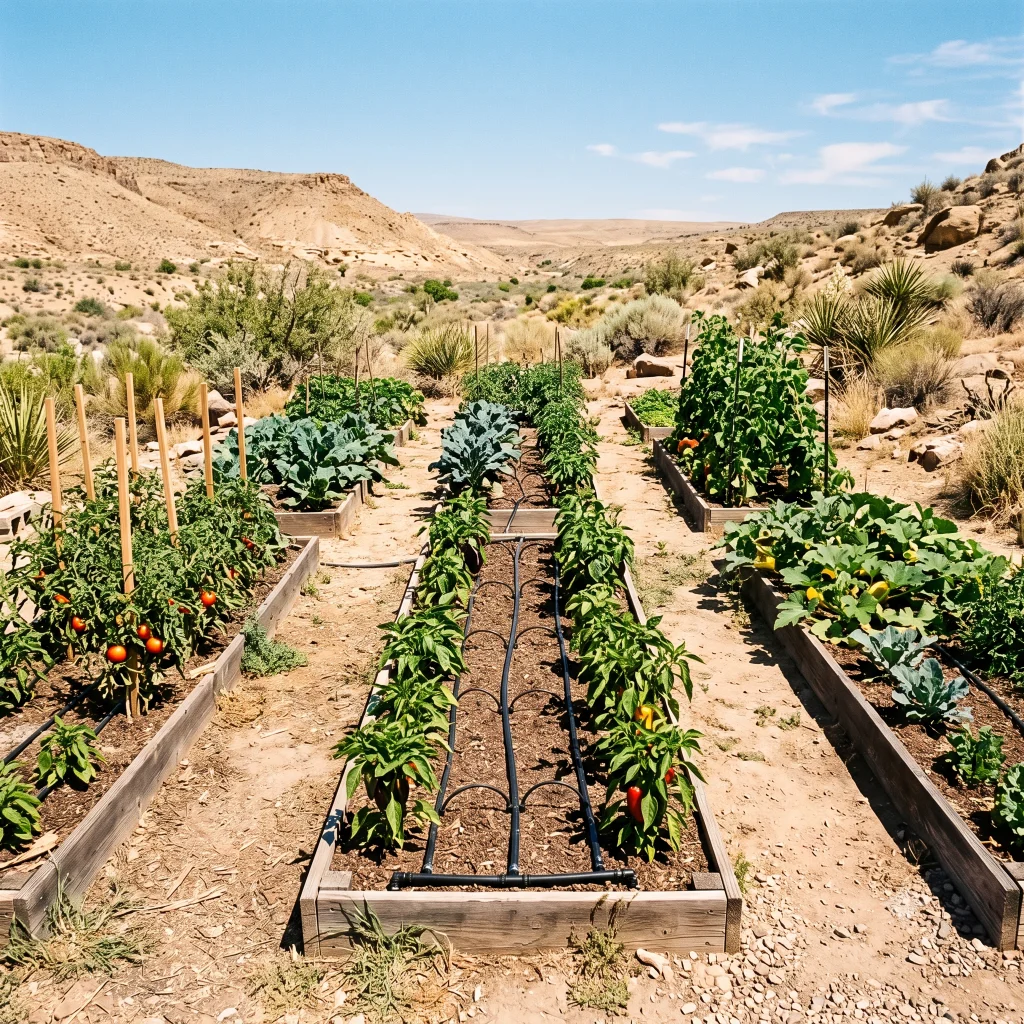
Short answer: combine drought-tolerant crop choices with genuine water-saving technique. Legumes like tepary or moth bean, grains like pearl millet, and deep-rooted crops like chickpea cope with limited water far better than thirstier alternatives. Alongside that, thick mulch, deep-but-infrequent watering, and grouping thirsty crops together so limited water reaches where it matters most all make a real, measurable difference. This applies well beyond classic desert zones -- Mediterranean, Subtropical and Continental gardens face real drought stretches too.
Working With Limited Water, Not Against It
The single biggest lever in a drought-prone garden is crop choice. Some crops have been shaped by generations of selection specifically for low-water conditions -- tepary and moth bean are genuinely desert-region legumes, pearl millet is a classic drought-tolerant grain, and chickpea's deep root system lets it access moisture that shallower-rooted crops simply can't reach. Choosing these over thirstier conventional alternatives is worth more than almost any watering technique layered on top.
Technique still matters, though. Mulching -- a thick layer of straw, leaves, compost, or similar organic material spread over the soil surface -- is one of the most effective, lowest-cost interventions available, since it dramatically slows evaporation, moderates soil temperature, and suppresses weeds that would otherwise compete for the same limited water. Watering deeply but infrequently, rather than little and often, encourages roots to grow downward in search of moisture, building a plant that's more resilient between waterings than one trained by frequent shallow watering to stay shallow-rooted itself.
One more practical point: drought isn't exclusive to classic arid or desert zones. Mediterranean summers are famously dry for months at a stretch, Subtropical zones can have real dry seasons, and even Temperate Continental climates can face genuine dry spells during their hot summer months. These crop and technique choices are worth knowing for any gardener facing an unreliable or limited water supply, not only those in a zone formally classified as arid. For the full set of crops best suited to a genuinely arid climate as the norm, see the Arid / Semi-Arid zone crop guide.
Frequently Asked Questions
How do I grow food successfully in a drought-prone climate?
Combine genuinely drought-tolerant crop choices (legumes like tepary or moth bean, grains like pearl millet, deep-rooted crops like chickpea) with water-saving techniques -- thick mulch to reduce evaporation, watering deeply but infrequently to encourage deep roots rather than little and often, and grouping thirstier crops together so limited water goes where it matters most rather than being spread thin across the whole plot.
Does mulching really make a meaningful difference to water use?
Yes, substantially -- a thick layer of mulch (straw, leaves, compost, or similar organic material) over soil dramatically reduces evaporation from the surface, keeps roots cooler, and suppresses competing weeds that would otherwise use water the main crop needs, making it one of the single most effective, low-cost interventions for a drought-prone garden.
Is drought only a problem in classic arid or desert zones?
No -- drought-like conditions and unreliable rainfall can affect Mediterranean, Subtropical and Temperate Continental zones too, particularly during their driest months, so drought-tolerant crop choices and water-saving techniques are worth knowing even for gardeners whose zone isn't classified as arid overall.