
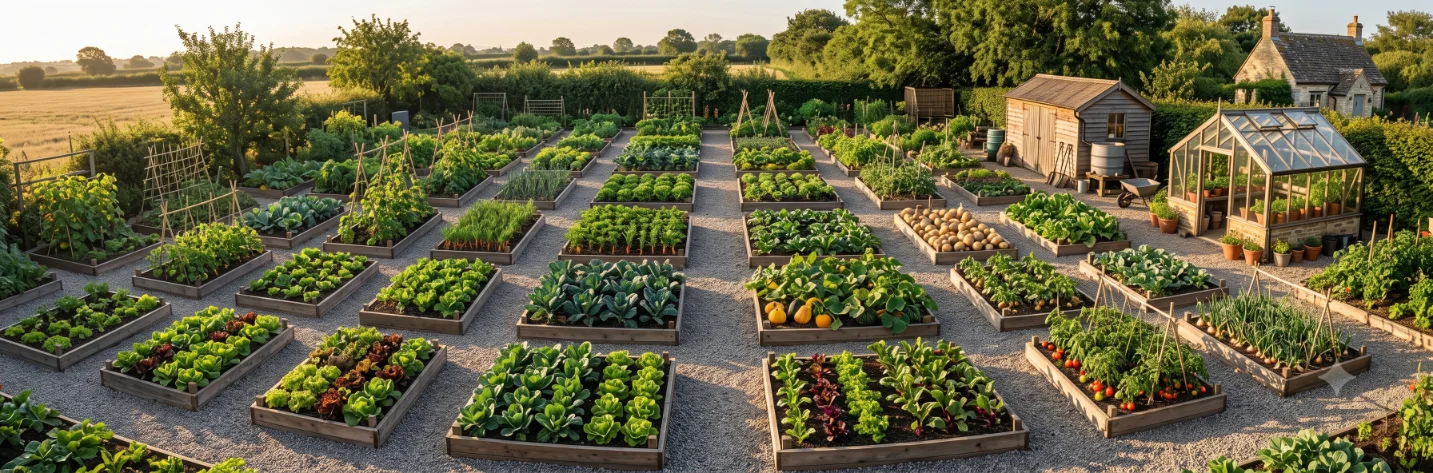
Short answer: several years, not one season. Year one is mostly about learning your soil, climate and pests, and rarely hits full calorie targets even with a good plan. Years two and three usually see real improvement as fertility, skill and systems mature. Genuine year-round reliability -- where a bad week doesn't threaten the whole plan -- typically takes three to five years to build. Anyone promising full self-sufficiency in a single season is skipping the part where you actually learn your land.
Why the Timeline Is Measured in Years
Two things drive how long real self-sufficiency takes to build, and neither of them is fixable by working harder in a single season: soil fertility and experience. Soil that's been fed compost and managed well for three years produces noticeably better harvests than the same ground in its first season under cultivation -- there's no shortcut to that, only time and consistent inputs.
Experience works the same way. The first time you grow a crop in your specific soil and microclimate, you're learning in real time -- when it actually needs water, what pests show up and when, how your particular growing season really runs versus the seed packet's generic guidance. That knowledge compounds every year, which is why second and third seasons routinely outperform the first even without changing much else.
Perennial crops add their own timeline on top of this -- fruit trees and bushes often take three to five years to reach meaningful yield, which is exactly why this site treats them separately from the main annual-crop calculator (see the Orchard & Soft Fruit Calculator) rather than pretending they behave like a vegetable bed. None of this means the first year or two are wasted -- they're the foundation the later, more reliable years are built on.
Frequently Asked Questions
How long does it take to become self-sufficient in food?
Realistically, several years rather than a single season -- the first year is mostly about learning your soil and climate and rarely hits full calorie targets, the second and third years usually see yields improve substantially as soil fertility, skill and systems like perennial crops and seed-saving mature, and genuine year-round reliability typically takes three to five years to establish.
Why doesn't the first growing season usually work as planned?
Because the first year is when soil fertility, pest and disease pressure, watering needs, and the grower's own experience are all unknowns at once -- even a well-planned first season tends to underperform its targets simply because so much is being learned for the first time under real conditions rather than on paper.
What takes the longest to establish?
Perennial crops and soil fertility both take multiple years to reach their full potential -- fruit trees and bushes often take three to five years before meaningful yields, and soil built up with years of compost and good management produces noticeably better harvests than soil in its first season of cultivation.