
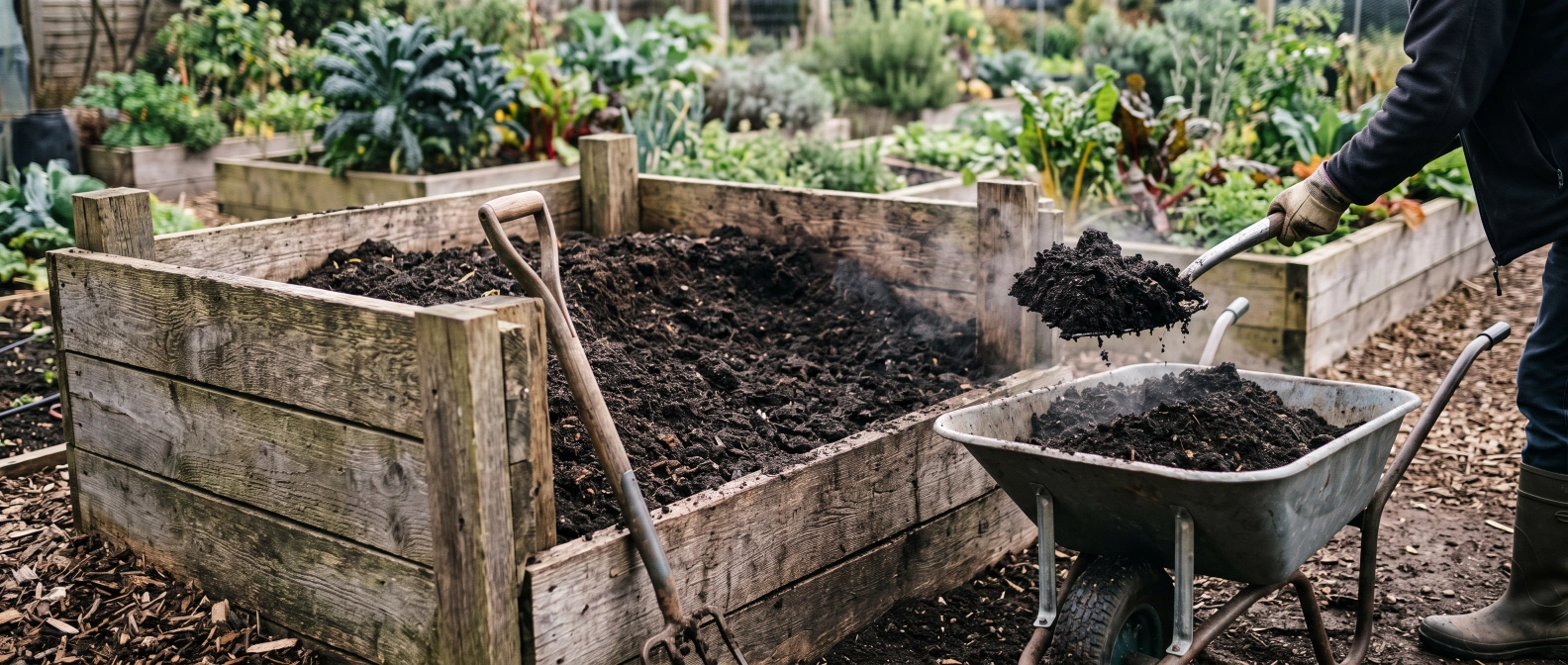
Short answer: compost, green manures, crop rotation and minimal disturbance -- no bag required. Compost returns nutrients from kitchen and garden waste back to the soil. Green manures -- crops grown specifically to be dug in rather than harvested -- add organic matter, and legume green manures fix nitrogen straight from the air for free. Rotating crop families around the plot stops the same nutrients being stripped from the same ground year after year. None of it costs anything beyond time and a bit of planning.
Fertility Is Built, Not Bought
Bought fertiliser solves a symptom -- it adds specific nutrients back into soil that's been depleted. Compost, green manures and rotation address the underlying cause, building soil that holds and cycles its own nutrients rather than needing them topped up externally every season. The difference matters most over years, not any single season: fertiliser feeds this year's crop and nothing more, while genuinely built soil fertility compounds, producing better harvests with less external input as years go by.
Compost is the obvious starting point -- it's the only source of fertility that costs nothing and never runs out, since it's made entirely from what a household and garden already produce. Green manures are the less obvious but equally powerful tool: sowing a cover crop specifically to be dug in rather than harvested might feel like "wasting" a growing season on nothing, but a legume green manure like clover or vetch pulls nitrogen directly from the air (via bacteria living on its roots) and leaves that nitrogen in the soil when it's cut down -- genuinely free fertility that a bag of fertiliser would otherwise supply at a cost.
Crop rotation rounds this out by preventing the same demands being placed on the same ground every year. Different plant families draw on different nutrients and are vulnerable to different soil-borne pests and diseases -- growing the same family repeatedly in one spot both depletes specific nutrients and lets problems build up. A rotation that moves plant families around the plot over a multi-year cycle spreads that demand out and interrupts the cycle for many pests and diseases. This site's dedicated compost section covers all of this -- compost, green manures, rotation and the no-dig approach -- in full detail for each of the 8 climate zones.
Frequently Asked Questions
How do I build healthy soil without bought fertiliser?
Through compost, green manures, crop rotation and minimal disturbance of the soil structure -- compost returns nutrients from kitchen and garden waste back into the ground, green manures (crops grown specifically to be dug in or cut down rather than harvested) add organic matter and, for legumes, fix nitrogen directly from the air, and rotating crop families around the plot prevents the same nutrients being stripped from the same spot year after year.
What is a green manure, and how does it help the soil?
A green manure is a crop grown specifically to improve the soil rather than to be harvested and eaten -- typically sown to cover bare ground between main crops, then cut down and dug in (or left on the surface in a no-dig system) before it seeds, where it breaks down and adds organic matter; legume green manures like clover or vetch also fix nitrogen from the air into the soil as they grow, a genuine free source of fertility.
Does crop rotation actually make a measurable difference to soil fertility?
Yes -- different crop families draw on soil nutrients differently and are vulnerable to different pests and diseases, so growing the same family in the same spot every year depletes specific nutrients and lets pest and disease populations build up in the soil, while rotating families through a multi-year sequence spreads that demand out and breaks the cycle for many soil-dwelling pests and diseases.