
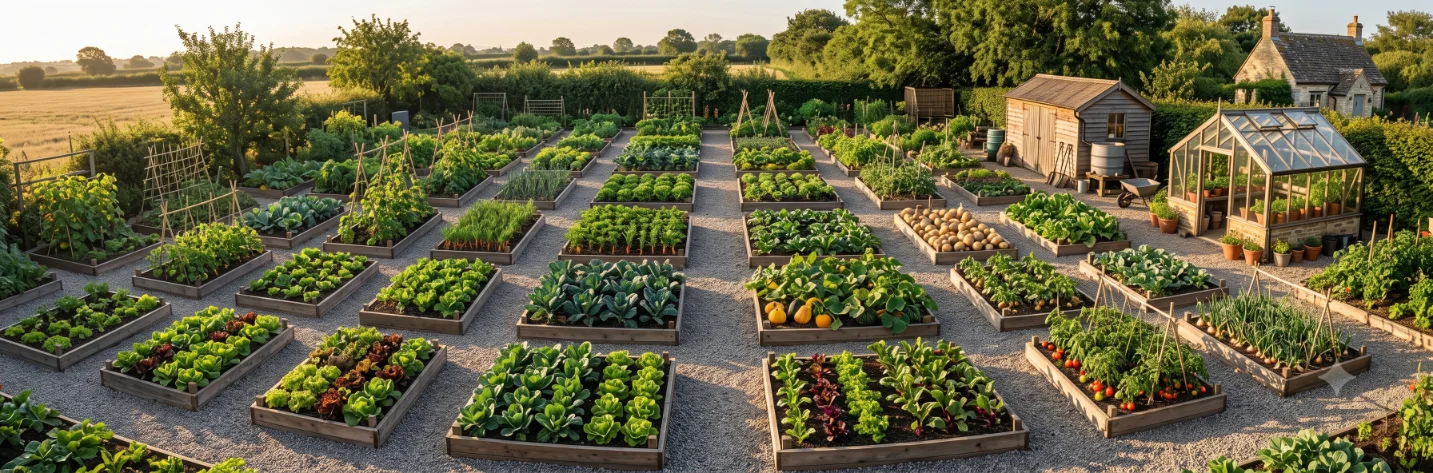
Short answer: somewhere between 100 and 400 square metres per person is a commonly cited rough range for a calorie-sufficient, plant-based diet -- roughly the size of a large allotment plot up to a generous back garden. But that range is wide for a reason: your climate zone, which crops you grow, and how intensively you manage the ground all move the real number a lot. The only way to get a figure that actually applies to you is to calculate it from your own household size, zone and crop choices.
Why "It Depends" Is the Honest Answer
Most "how much land do you need" answers online quote a single number as if it applies everywhere. It doesn't. Three things move the real figure enormously:
- Your climate zone. The same crop planted in a Mediterranean zone with a long, warm growing season will out-yield the same crop in a Cool/Boreal zone with a short one -- sometimes by two or three times. A land estimate that doesn't specify a zone is really just a guess.
- What you're growing. Calorie staples like potatoes, wheat and maize are what actually keep a household fed through a year, but they need real land -- a lot more per calorie than fast, space-efficient vegetables like lettuce or radish, which fill a plate but not a pantry.
- How intensively you grow. Wide-spaced traditional row cropping uses more land than tightly-spaced, heavily-composted intensive beds -- both are legitimate approaches, but they lead to very different area figures for the same harvest.
That's why this site doesn't lead with one number. Instead, the calculator works out your actual figure from your own household size, your climate zone, and the specific crops you choose -- the same way it works out seed quantities.
Frequently Asked Questions
How much land do I need to grow enough food for one person?
As a rough rule of thumb, somewhere between 100 and 400 square metres per person is commonly cited for a calorie-sufficient, vegetable-and-grain-based diet -- but the real figure for your situation depends heavily on your climate zone, which crops you grow, and how intensively you manage the ground, so treat any single number as a starting estimate rather than a fact.
Why does land requirement vary so much between sources?
Because the figures depend on three things that vary enormously: how many calories come from land-hungry staples like grain and potatoes versus space-efficient vegetables, how favourable your climate zone is for growing (a Mediterranean zone yields far more per square metre than a Boreal one), and how intensively the ground is managed, from wide-spaced row cropping to tight biointensive beds.
Does keeping livestock change how much land I need?
Yes, substantially -- livestock generally need far more land per calorie produced than crops do, since the animal is itself fed from land you could otherwise grow food on directly, so a self-sufficiency plan built around meat and dairy needs considerably more space than one built around crops alone.