
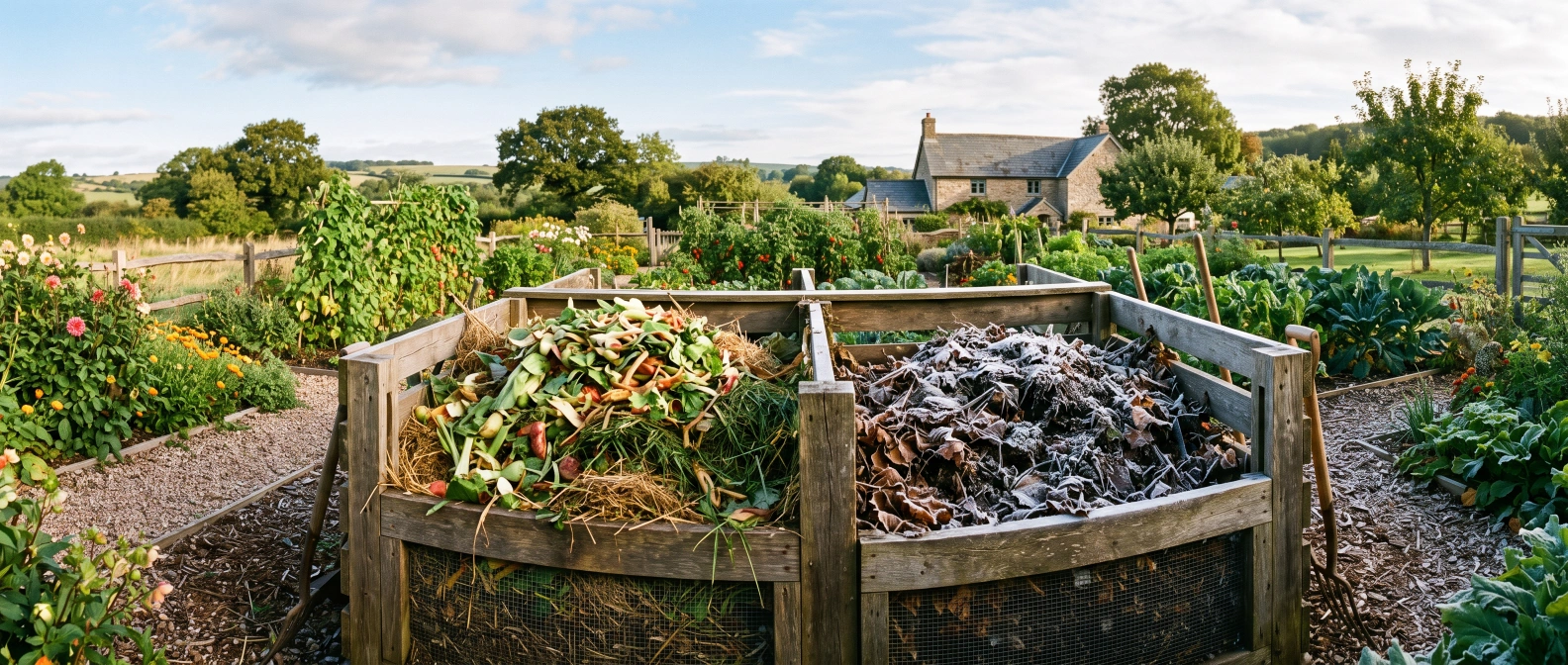
A temperate continental climate -- the inland regions of the US Midwest and Northeast, much of Central and Eastern Europe, and similar continental-interior zones worldwide -- gets a genuine four-season year: real summer heat, often with peak rainfall arriving as summer thunderstorms, and a real hard winter freeze, well beyond the mild dampness of a maritime winter. The golden rule here: build a system flexible enough to handle both extremes, feed it hard through the long warm season, and let it rest properly through the freeze.
The Challenges
- A genuinely wide seasonal temperature swing means a heap has to cope with real summer heat and a real hard winter freeze within the same year.
- Hard winter freeze stops microbial activity almost completely for a real stretch of months, though not as long as a boreal winter.
- Summer heat and thunderstorm rain together can swing a heap between drying out and waterlogging within the same week.
- Spring thaw brings its own mess, meltwater and mud that need managing before the heap can restart properly.
The Advantages
- A long, genuinely hot growing season drives strong plant growth and gives an active heap sustained warmth, well beyond a short boreal summer.
- Dramatic deciduous autumn leaf-fall provides one of the most abundant, genuinely free carbon sources of any climate in this guide.
- Huge volumes of crop stubble and residue from inland grain farming, a resource most coastal climates simply don't produce in the same quantity.
- Often naturally excellent soil -- deep, fertile prairie soils across much of this zone give composting here a genuinely strong starting point.
19 Chapters, In Order
Each builds on the last, but every chapter also stands alone if you're looking for something specific.
Frequently Asked Questions
What's the single biggest composting challenge in a temperate continental climate?
The sheer size of the seasonal swing. A heap here has to cope with genuine summer heat, sometimes well above 30°C, and a genuine hard winter freeze, sometimes well below freezing for months, within the same year, a far wider range than a milder maritime climate ever sees. Almost every technique in this section exists to build a system flexible enough to handle both extremes rather than being optimised for only one.
What real advantages does this climate have for composting?
Genuinely several. A long, hot, often thunderstorm-wet growing season drives strong plant growth and gives a heap real sustained warmth to work with, unlike a short boreal summer. Dramatic deciduous autumn leaf-fall provides an abundant, free carbon source, and inland grain-farming regions produce huge volumes of crop stubble and residue that most coastal climates simply don't have access to.
Does this climate need completely different techniques to a mild maritime one?
Less than you might expect. Because the underlying methods, like the two-chamber system and leafmould-making, already suit a genuine four-season cycle well, most of what changes here is degree rather than kind: more insulation needed for a harder winter, more shade and moisture care needed for a hotter summer, and a wider temperature range to plan around throughout the year.