
No-dig matters here for two genuinely different reasons across the year, not just one, a dual case distinct from any single-season zone in this guide: it helps a bed cope with summer heat stretches, and it protects soil against the specific stress of a real winter freeze-thaw cycle.
Two Reasons, Not One
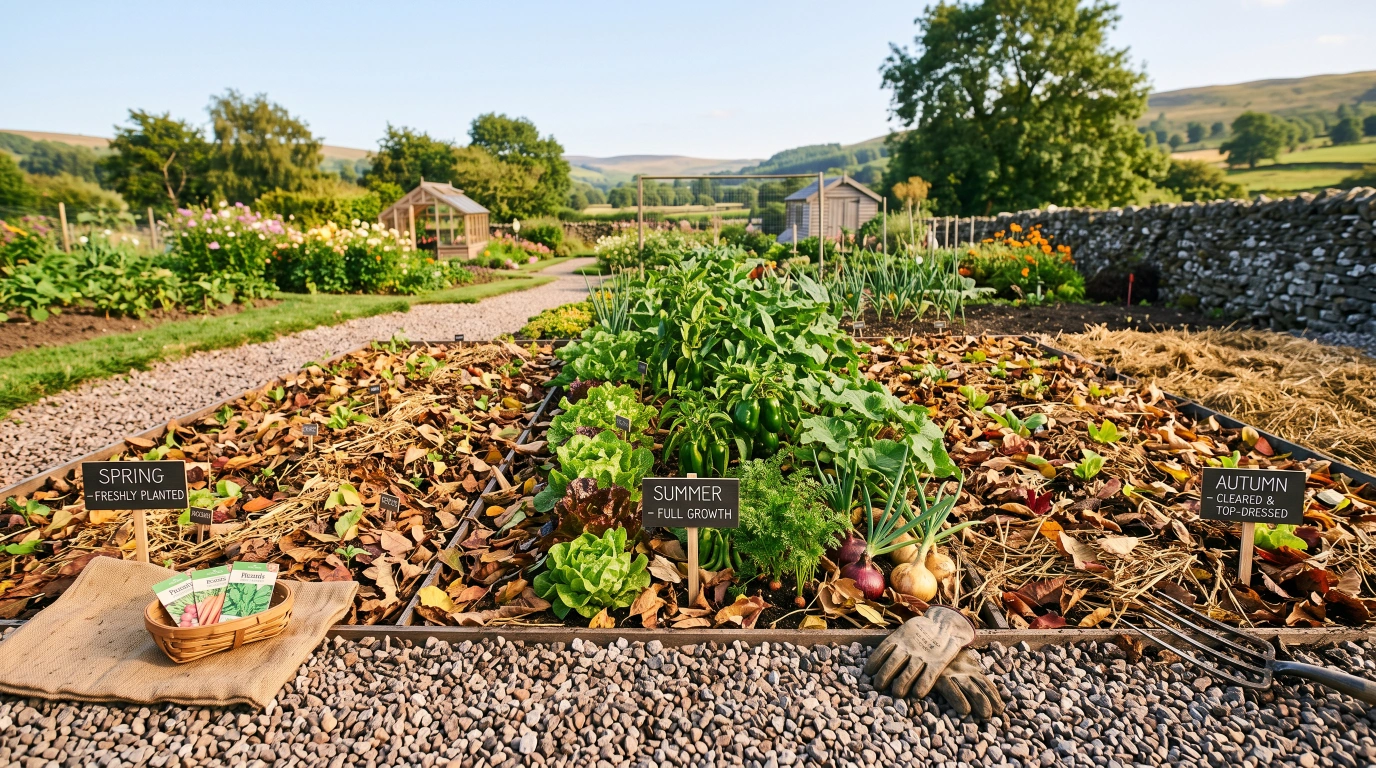
Summer: retaining moisture between thunderstorms
A mulched, undisturbed bed holds moisture much better during hot summer stretches between thunderstorms, per the challenges outlined in Chapter 1. It's a milder version of the case made for an arid climate, since this zone is generally wet enough overall, but the same principle applies during a genuine hot spell.
Winter: protecting against freeze-thaw heaving
Repeated freezing and thawing can heave and disrupt bare dug soil, breaking up structure and disturbing soil biology in a way mulched, undisturbed ground resists far better. This is a genuinely climate-specific argument, distinct from any other zone in this guide, since it depends on a real hard freeze cycling through the ground season after season.
The Core Method
The method itself is the same one used everywhere: a thick layer of compost or mulch applied straight to the surface, cardboard laid underneath first to suppress weeds, and planting directly into that surface layer rather than digging it into the soil below.
Abundant Mulch Material Makes This Easy Here
Because this climate genuinely produces abundant mulch material of its own, autumn leaves (see Chapter 11) and crop stubble (see Chapter 6), stretching finished compost with generous mulch is easy and natural here, rather than a scarcity-driven necessity the way it is in an arid or tropical climate.
Twice a Year, Tied to the Real Seasons
Apply mulch in autumn ahead of the freeze, to protect against winter heaving through the coldest months, then refresh or add to it in late spring once the soil has properly warmed, to protect against summer drying. This is genuinely a twice-yearly practice tied to the real seasonal boundaries, rather than a single application maintained year-round.
Frequently Asked Questions
Why is no-dig particularly useful in this climate specifically?
For two genuinely different reasons across the year. A mulched, undisturbed bed helps retain moisture during hot summer stretches between thunderstorms, a milder version of the argument for an arid climate. It also protects soil structure and biology from the stress of repeated winter freeze-thaw cycling, which can heave and disrupt bare dug soil in a way mulched, undisturbed ground resists better, a genuinely climate-specific advantage.
What does the no-dig method actually involve?
The same core method used everywhere: a thick layer of compost or mulch applied to the surface, cardboard laid down first to suppress weeds, and planting directly into that surface layer rather than digging it in.
When should mulch be applied through the year here?
Twice, tied to the real seasonal boundaries. Applied in autumn ahead of the freeze, it protects against winter freeze-thaw heaving. Refreshed or added to in late spring once the soil has properly warmed, it protects against summer drying. This genuinely twice-yearly rhythm is distinctive to a climate with two separate seasonal threats to guard against.