
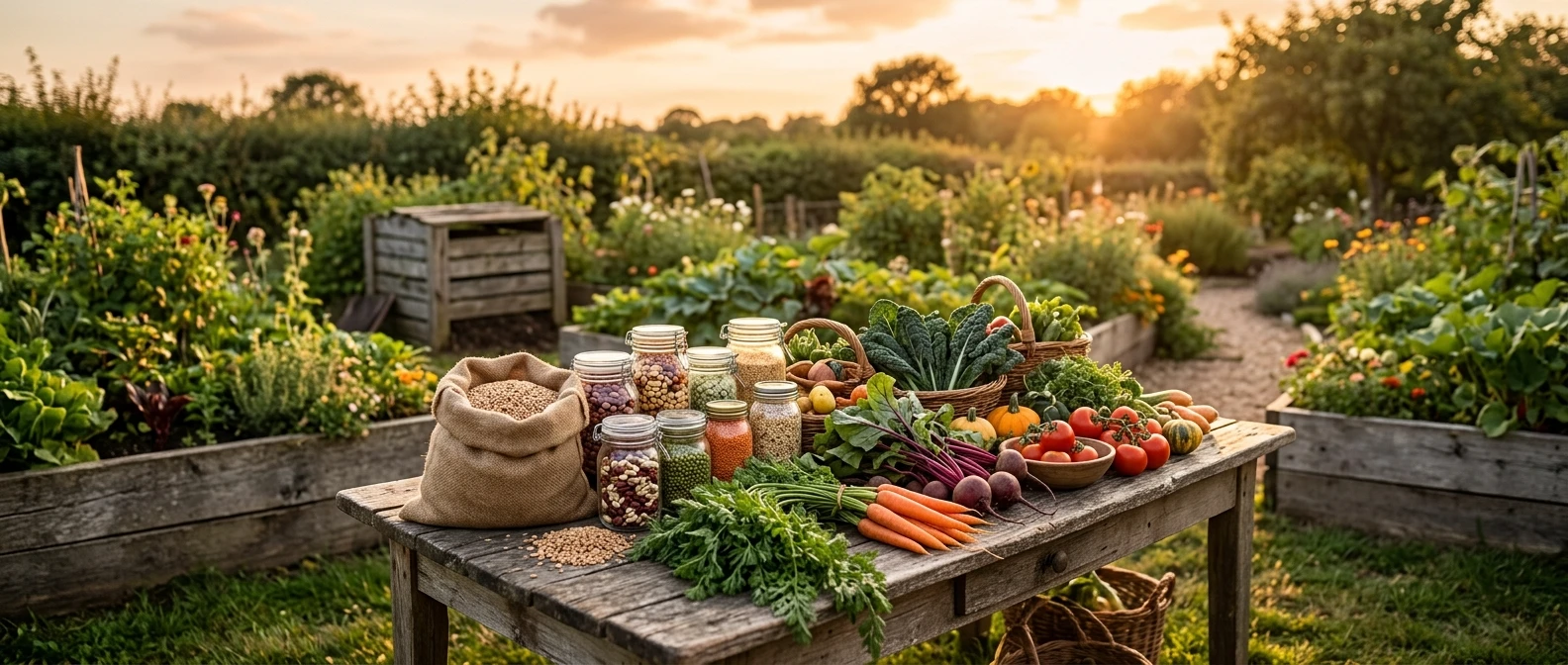
Short answer: cool, dark and dry -- in that order of importance, roughly. Properly dried seed kept in an airtight container, somewhere consistently cool, away from direct light and humidity swings, will stay viable far longer than seed left in a damp shed or a warm kitchen drawer. Moisture is the single biggest threat, since it triggers the biochemical processes that age a seed even while it sits in storage doing nothing. Heat and light matter too, just less dramatically.
Why Some Seed Outlasts Others by Years
Seed viability doesn't decline evenly across crops. Onion, parsnip and leek seed are notoriously short-lived, often unreliable within a year or two even in good storage -- these are crops worth saving fresh most years rather than stockpiling far ahead. At the other end, tomato, lettuce, cucumber and many brassica seeds can remain viable for five years or more under good storage conditions, which makes them realistic candidates for a genuine long-term seed reserve.
The storage conditions that maximise viability are the same across nearly all crops, even though the baseline lifespan differs: dry the seed thoroughly before storing it, keep it in an airtight container to exclude humidity, store it somewhere consistently cool rather than somewhere that swings with the seasons, and keep it out of direct light. A simple, effective setup is a sealed jar or airtight bag with a silica gel packet, labelled with the crop and year, kept in the coolest, darkest cupboard in the house -- or in a freezer for the longest possible storage life, provided the seed is genuinely dry first (freezing seed with residual moisture in it can damage or kill it outright).
Labelling matters more than people expect. A jar of unlabelled saved seed a few years old is a jar of unknowns -- crop, variety and year all matter for deciding whether it's still worth planting or should be test-germinated first. A simple label at the point of saving avoids that problem entirely.
Frequently Asked Questions
How do I store seeds long-term?
Keep saved seed properly dried, then store it somewhere cool, dark and dry -- an airtight container in a consistently cool spot, away from direct light and humidity swings, is usually enough. Moisture is the single biggest threat to seed viability, followed by heat and light, so the goal is simply to minimise all three as consistently as possible over months or years of storage.
How long do saved seeds actually stay viable?
It varies enormously by crop -- onion and parsnip seed tends to lose viability within a year or two even stored well, while tomato, lettuce and many brassica seeds can remain viable for five years or more under good conditions, so a seed-saving plan needs to account for which crops need saving fresh every year and which can be stockpiled further ahead.
Does freezing seed extend its storage life?
Yes, properly dried seed stored in a sealed, airtight container generally lasts longer in a freezer than at room temperature, since lower temperatures slow the biochemical processes that gradually reduce viability -- the key caveat is that the seed must be thoroughly dried first, since freezing seed with residual moisture in it can damage or kill it outright.