
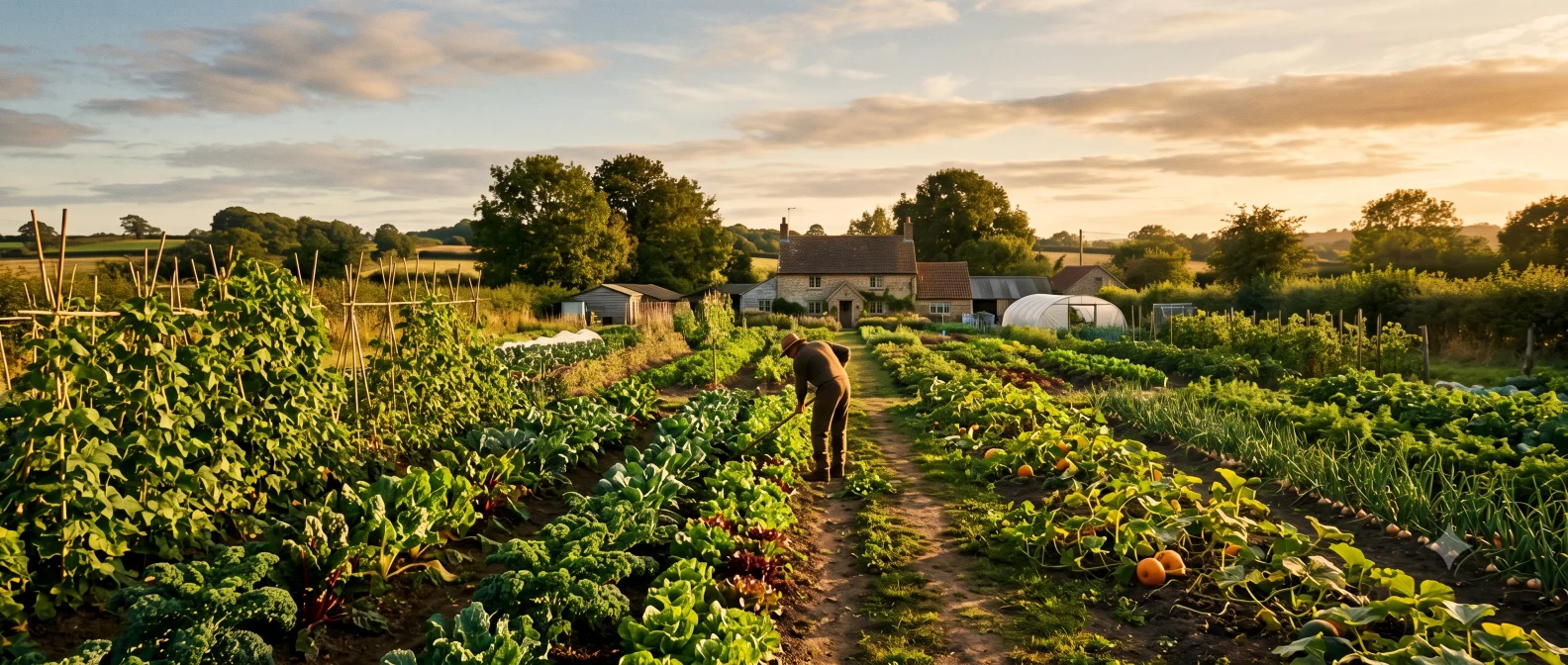
Short answer: a lot more than most people expect. Feeding four people for a year means hundreds of seeds for calorie staples like potatoes, grain and beans, and dozens more for most other crops -- one seed packet of carrots from the garden centre is nowhere near a year's supply. The exact quantity depends on your household's calorie needs, your climate zone, and which crops you choose, which is why this site's whole calculator exists: to turn "a lot more than you'd think" into an actual shopping list.
Why a Single Seed Packet Is Never Enough
Seed packets sold at a garden centre are sized for a hobby garden -- a few plants for fresh eating through the season, not a year's food supply for a household. The gap between "a packet of seeds" and "enough seeds to actually feed four people" is much bigger than it looks, for a simple reason: most vegetables provide surprisingly few calories per plant.
A family of four eating a full, calorie-sufficient diet for a year needs their food to come from somewhere -- and vegetables alone, however many you grow, rarely supply enough energy to carry a household through. That's why calorie staples (potatoes, grains, dried beans and peas) matter so much: they're the crops that need to be grown at real scale, while vegetables round out the diet with nutrition and variety rather than bulk calories.
Add in realistic losses -- seeds that don't germinate, seedlings lost to pests, plants that don't make it to harvest -- and the gap between "enough to feed a family" and "what fits in a seed packet" becomes clear. This is exactly what this site's calculator works out for you: your household's real calorie need, translated into actual seed quantities per crop, for your climate zone.
Frequently Asked Questions
How many seeds do I need to feed a family of 4 for a year?
Far more than a single packet or two of each vegetable -- feeding four people for a year typically means hundreds of seeds for calorie staples like potatoes and grain, and many dozens for most other crops, because a few salad leaves are nowhere near enough calories to matter, while the staples that actually keep a household fed take real quantity to grow. The exact number depends on your climate zone, activity levels and which crops you choose, which is why a generic answer is only ever a rough starting point.
Why do seed catalogues undersell how many seeds you actually need?
Seed packets are sized for a hobby garden, not for feeding a household -- a typical packet of, say, carrot seed is nowhere near enough to grow a year's supply for four people, and most people don't realise this until they actually do the maths on how many calories a family needs and how few calories most vegetables provide per plant.
Do I need the same number of seeds for every crop?
No -- calorie staples like potatoes, wheat and beans need to be grown in real quantity because they carry the bulk of a household's energy needs, while high-value, fast-growing vegetables like lettuce or radish contribute much less per plant and are usually grown in smaller, repeated batches through the season rather than one huge sowing.