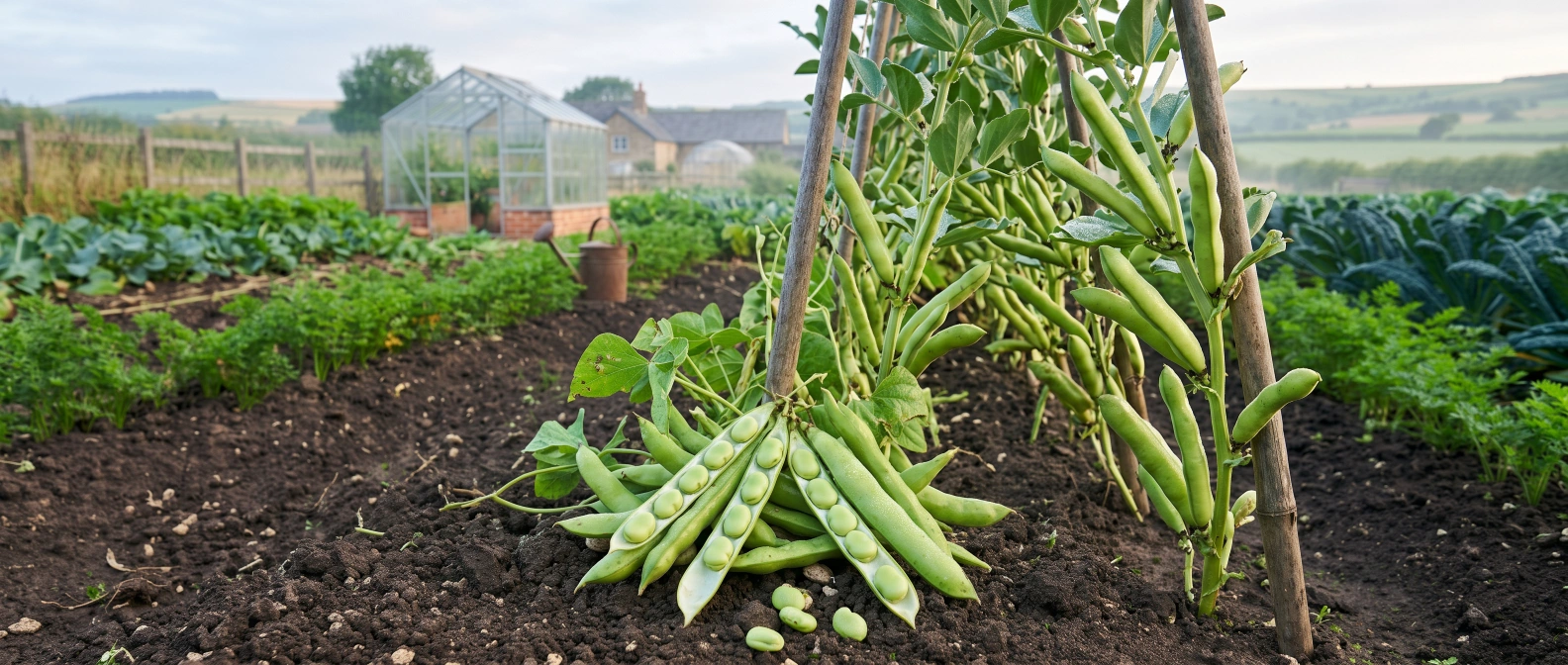
Cross-pollination risk varies more within this category than any other on the site. The headline story: kidney bean, black bean, pinto bean, navy bean and cannellini bean join the existing Borlotti/Haricot and French bean as all Phaseolus vulgaris underneath -- seven crops in one same-species cluster, the biggest cross-pollination cluster on this whole hub. Broad bean gained a genuine same-species partner too, field bean, and cowpea turns out to be the same species as yardlong bean and honey bean. Peanut sits at the opposite extreme -- its flowers self-pollinate before they even open, essentially zero real-world crossing risk. Below, the well-known kitchen staples are grouped as Common Pulses, and the more regional or specialist crops as Specialist & Regional Legumes -- and one safety note up front: kidney bean genuinely must be boiled vigorously before eating (see the warning below), not just a cultivation preference.
(!)
Kidney bean must be boiled vigorously for at least 10 minutes before eating. Raw or undercooked kidney beans -- particularly red kidney beans, and especially when only slow-cooked -- contain enough phytohaemagglutinin (a lectin) to cause genuine, well-documented food poisoning: nausea, vomiting and diarrhoea within a few hours. This is a real safety rule, not a cooking preference. Velvet bean and sword bean also need thorough cooking/processing for their own reasons -- see each crop's own page for full detail.
(!)
Seven crops on this hub are genuinely the same species, Phaseolus vulgaris, and can cross-pollinate with each other. Borlotti/Haricot bean, French bean, kidney bean, black bean, pinto bean, navy bean and cannellini bean are all common bean underneath, with modest bee-driven outcrossing. If you're saving seed from more than one in the same year, treat them as one shared isolation problem. Lima bean looks similar but is a different species, Phaseolus lunatus, and does NOT cross with this cluster.
Common Pulses
The kitchen staples most households already know -- dried and fresh beans, peas, lentils, chickpeas and soya.
Specialist & Regional Legumes
Less familiar outside their native growing regions, but genuinely valuable -- several are among the most drought-tolerant crops on this whole site.
(*)
Cowpea, yardlong bean and honey bean are genuinely the same species, Vigna unguiculata. Yardlong bean is just a long-podded subspecies (sesquipedalis) and honey bean a Nigerian white-seeded variety -- treat all three as one shared isolation problem if saving seed from more than one. Mung bean, adzuki bean and black gram share the same genus, Vigna, but are different species and don't cross with this cluster or with each other.
(*)
Several of these crops fix their own nitrogen. Broad bean, field bean, peanut and bambara groundnut all draw nitrogen from the air via root bacteria and leave the soil richer than they found it -- worth factoring into a wider rotation plan, not just a calorie one.