Garden pea is about as forgiving as seed saving gets -- its flower structure means it pollinates itself before it even opens, so multiple varieties can be grown side by side in a small garden with essentially no risk of crossing.
New to terms like isolation distance or outcrossing? See the Seed-Saving Glossary.
Seed-Saving Difficulty
How It's Pollinated
Self-pollinating (flowers fertilise before opening)
(Very low crossing risk)
Scientific name: Pisum sativum
Domestic Crops It Can Cross With
- Essentially none between pea varieties -- flowers self-pollinate before they even open, so different varieties can be grown right next to each other
Wild Relatives & Feral Species
- No significant wild relatives in most home garden regions
Separation Distances Required
Minimum: Not usually needed
Recommended: A few metres is generally sufficient as good practice
Strict: Not usually needed
Seed-Saving Strategies
- Leave pods on the plant until they turn brown, dry and papery
- Shell dried pods to extract seed
- Finish drying seed fully before storing
- Store dry -- viable 3-4 years
Why Peas Are the Beginner's Crop for Seed Saving
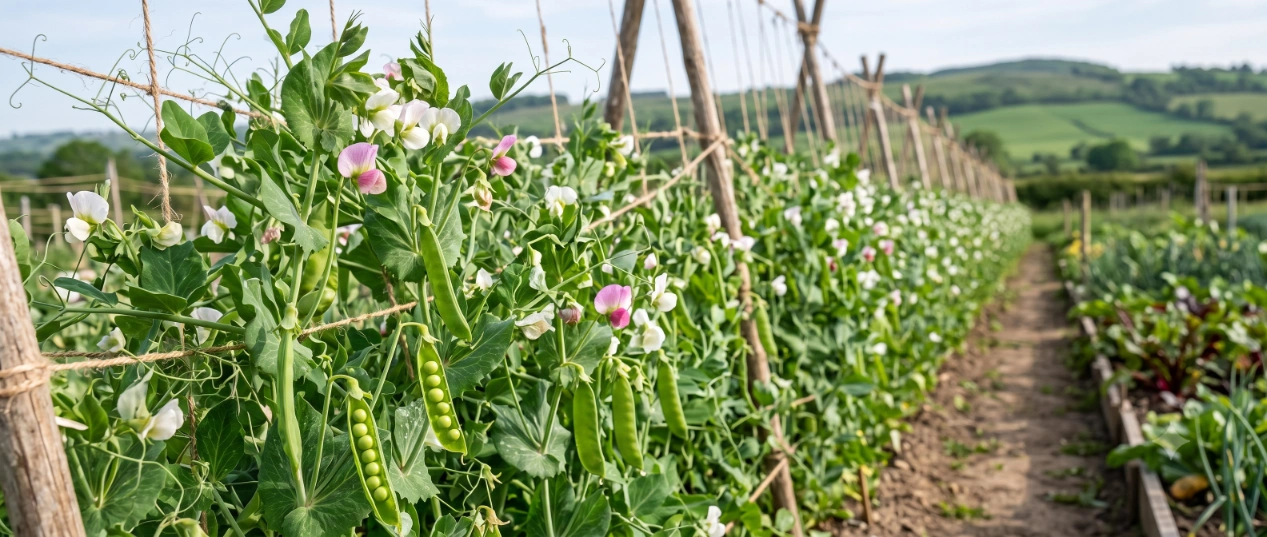
If you're new to seed saving and want a low-risk crop to start with, pea is one of the best choices on this site. Unlike beans, which have some insect-visited crossing risk, or virtually anything wind- or insect-pollinated, pea's self-contained flower structure makes accidental crossing a genuine non-issue for the home gardener. You can focus entirely on harvest timing and storage without worrying about isolation at all.