
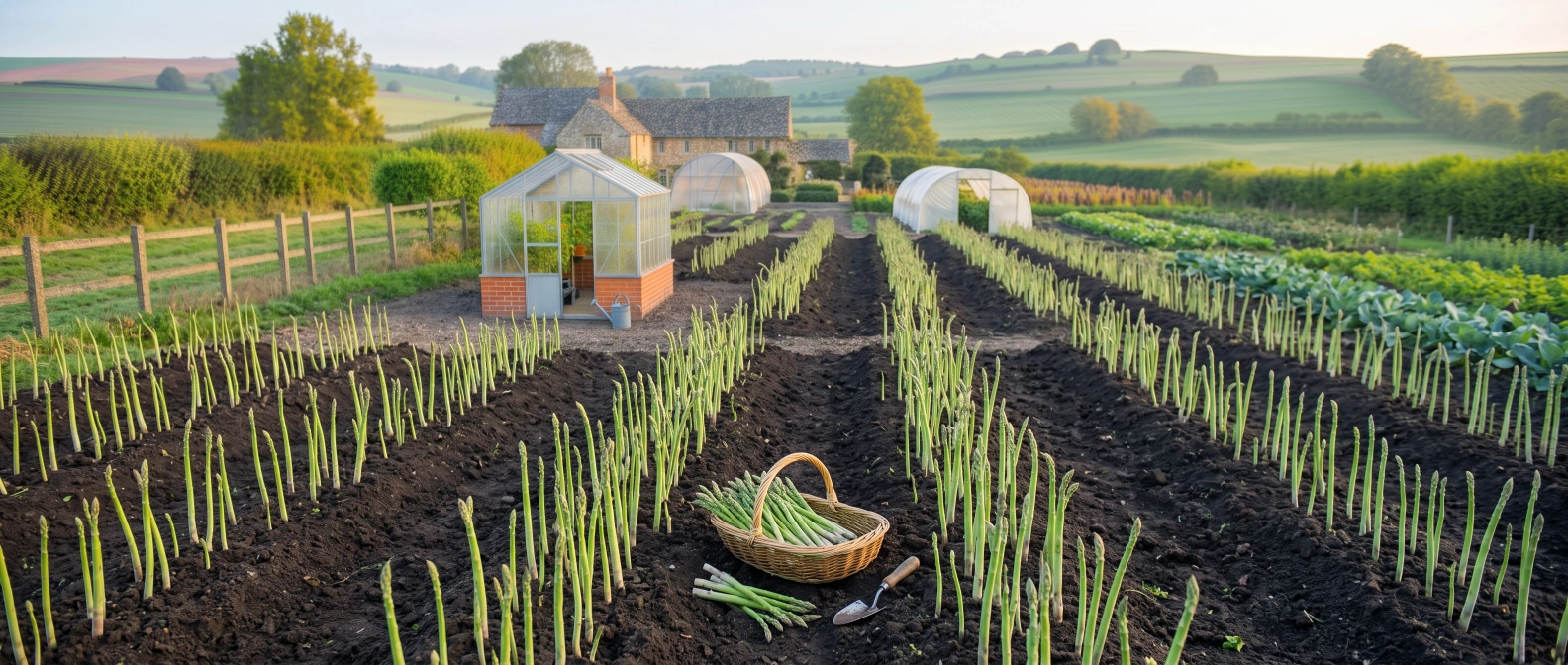
A bed of established asparagus spears ready for harvest on a homestead
Vegetables

Perennial Vegetables

Vegetables/Perennial Vegetables

Every other category on this site is planted, harvested and (mostly) sown again the following year. This one is different: plant these crops once and they keep cropping for years -- 20+ years for asparagus, 4-5 for nine star broccoli, per the site's own crop data. The headline surprise: nine star broccoli is genuinely Brassica oleracea, the same species as every crop on the Brassicas hub, and cross-pollinates with all of them despite its perennial habit. Moringa is the outlier in the other direction -- a frost-tender tropical tree rather than a hardy perennial, and by far the most calorie-dense crop here. The rest carry no meaningful cross-pollination risk; the real work is patience up front and propagating by division, crowns, cuttings or bulbils rather than saving seed each season.

Asparagus Guide available
Globe Artichoke Guide available
Rhubarb Guide available
Jerusalem Artichoke Guide available
Sea Kale Guide available
Nine Star Broccoli Guide available
Walking Onion Guide available
Moringa Guide available
Lovage Guide available
Alexanders Guide available
(!)
Nine star broccoli genuinely cross-pollinates with the entire Brassicas hub. It's Brassica oleracea -- the same species as kale, cabbage, broccoli, cauliflower, Brussels sprouts, kohlrabi and more. If you're saving seed from any of them in the same year, treat it as part of that shared isolation problem.
(*)
Jerusalem artichoke is also a genuine perennial -- plant once and it comes back on its own, since any tuber fragment left in the ground regrows. It's covered in full under Root Vegetables & Tubers instead, since it's grown and eaten as a root crop rather than a stem or flower-bud crop like the others here.
(*)
Moringa is the outlier in the other direction: a frost-tender tropical tree, not a hardy perennial. Every other crop on this hub is chosen for hardiness -- moringa earns its place on sheer tropical calorie density instead, and needs a polytunnel outside the warmest zones.