
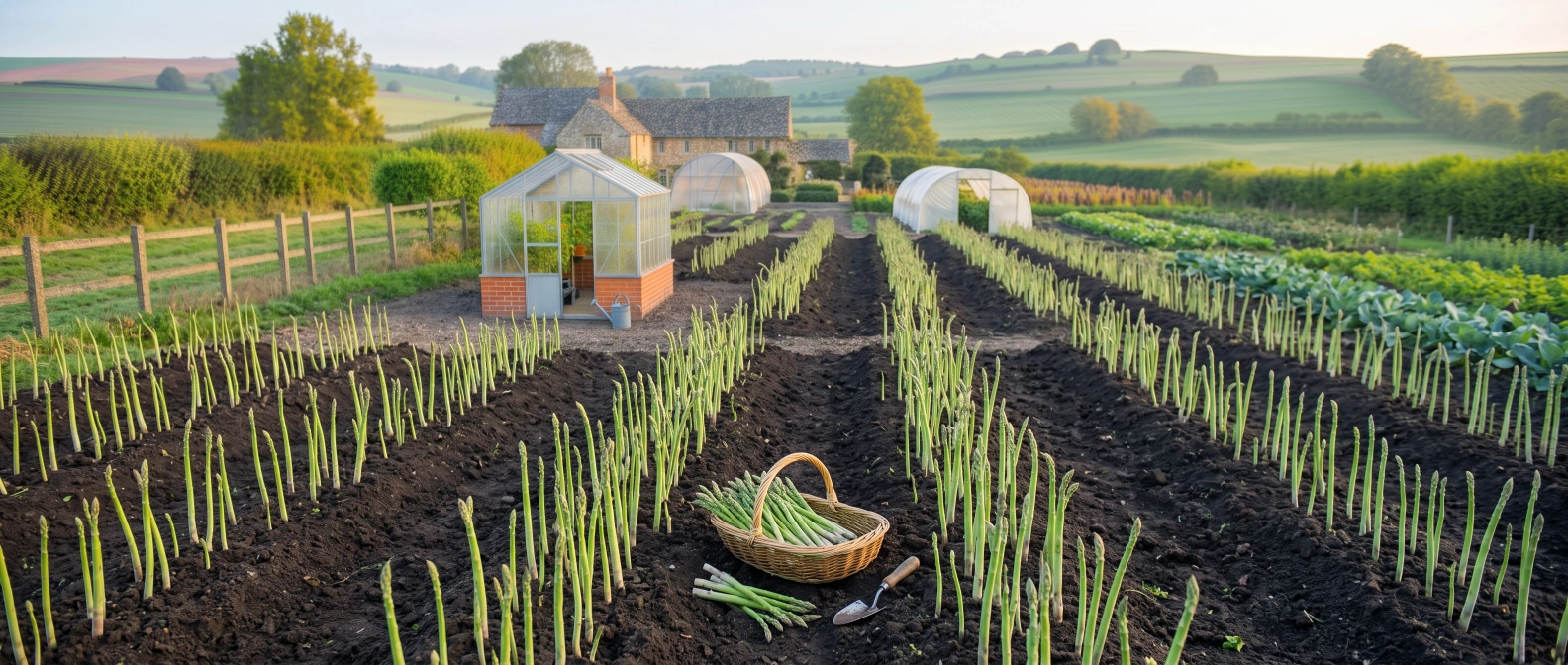
Asparagus is dioecious -- individual plants are entirely male or entirely female, so you need both sexes present just to get seed, and only female plants will show the telltale red berries that make harvest possible.
New to terms like isolation distance or outcrossing? See the Seed-Saving Glossary.
Seed-Saving Difficulty
●
Difficult
High crossing risk between varieties; requires both sexes
How It's Pollinated
Insect-pollinated -- and dioecious (separate male and female plants)
(High crossing risk between varieties; requires both sexes)
Scientific name: Asparagus officinalis
Domestic Crops It Can Cross With
- Any other asparagus variety flowering nearby -- both male and female plants are needed to set seed at all
Wild Relatives & Feral Species
- Wild and naturalised asparagus can occur in some regions and will cross freely
Separation Distances Required
Minimum: 400m between varieties
Recommended: 800m+ for reliable purity
Strict: Isolate a female plant with a chosen male under cover for guaranteed purity
Seed-Saving Strategies
- Perennial -- takes 2-3 years to establish before flowering reliably
- Identify female plants by their red berries in late summer
- Allow berries to fully ripen and soften
- Extract seed from ripe berries, wash off pulp, and dry
- Store dry -- viable 3 years