
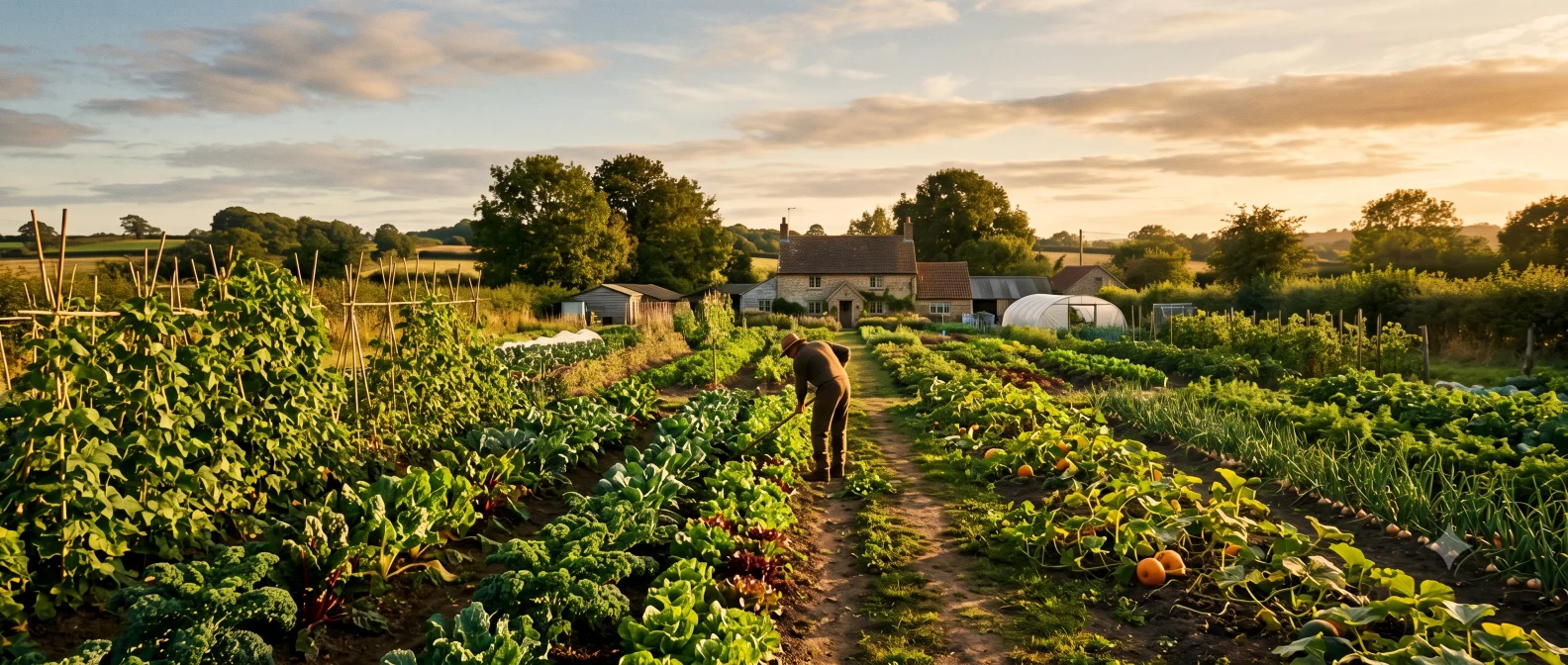
Short answer: yes, genuinely -- but it takes more than most people expect. With enough land, the right crop mix, and realistic planning that accounts for losses and storage, a household can grow a meaningful share or even all of its food. The households that actually manage it aren't the ones with the most enthusiasm; they're the ones who work out real numbers before they start, rather than discovering the true scale of the task halfway through a growing season.
What "Enough" Actually Requires
The honest answer to this question is yes -- but "enough" is doing a lot of work in that sentence. Growing a meaningful amount of food for fresh eating through a season is genuinely achievable in a modest garden. Growing all the calories a household needs for a full year is an entirely different scale of undertaking, requiring real land (often measured in hundreds of square metres per person, not a few raised beds), a crop mix weighted toward calorie staples rather than salad vegetables, and storage systems to carry a harvest through the months nothing is growing.
The households that actually manage full self-sufficiency, or come close, share a few things in common: they plan from real numbers rather than optimism, they build in a buffer for losses (not every seed germinates, not every crop survives to harvest), and they don't rely on crops alone -- most combine growing with stored food, some livestock, or foraging, so a single bad harvest doesn't leave them short.
This is exactly the gap this site's calculator is built to close. Instead of guessing whether your land, your household size and your chosen crops actually add up to "enough," it works out your real numbers -- seed quantities, land area, and a calorie shortfall or surplus -- before you've spent a season finding out the hard way.
Frequently Asked Questions
Can I really grow enough food to survive on my own land?
Yes, it's genuinely possible with enough land, the right crops and realistic planning, but it takes considerably more space, labour and time than most people expect -- the households that succeed are the ones who work out real numbers in advance rather than assuming a garden will naturally scale up to full self-sufficiency.
What's the biggest reason people fail to grow enough food?
Underestimating scale -- most people plant a garden sized for fresh eating through the season and assume it's roughly self-sufficient, when in reality the land, seed and labour needed to cover a household's full calorie needs for a year is far larger than a typical hobby garden, often by several multiples.
Does growing enough food mean giving up other food sources entirely?
Not necessarily -- a realistic self-sufficiency plan usually combines grown crops with other sources like stored food, livestock, or foraging, since relying on crops alone, especially in the first year or two, leaves little margin if a harvest underperforms.