
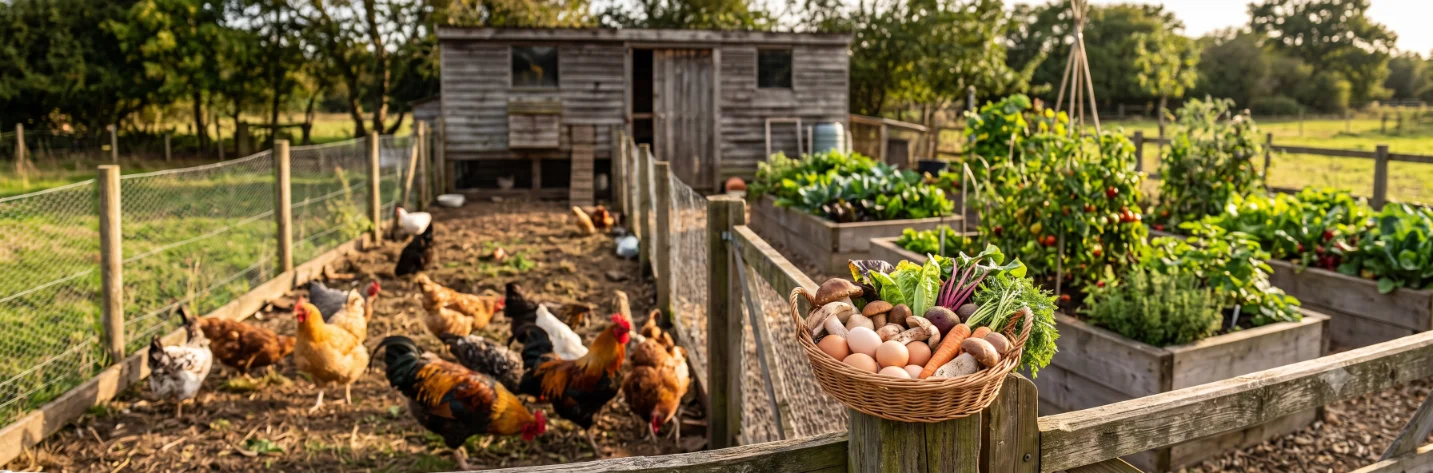
Short answer: it depends almost entirely on what you feed them. Chickens fed on bought grain are often close to break-even, or even a net calorie cost, once feed is properly accounted for -- you're essentially converting purchased grain into eggs, at a loss. Chickens that forage a real share of their own diet, or are fed on kitchen scraps and garden waste that would otherwise go to compost, are a genuinely different calculation: real calories in, for very little purchased input.
The Question Isn't "Chickens or Not" -- It's "Fed How"
The honest calorie case for keeping chickens comes down almost entirely to what goes into them. A hen converts feed into eggs, but that conversion is never 100% efficient -- some of every calorie fed in is lost to the bird's own metabolism rather than turned into egg. If that feed is bought grain, you're paying (in money, and in the land that grain itself took to grow) for a conversion that loses calories along the way.
The calculation changes completely if a meaningful share of a chicken's diet comes from sources that would otherwise go to waste -- foraging on pasture or scraps, garden and kitchen waste, spoiled produce not fit for the table. None of that has an opportunity cost the way purchased grain does, so chickens fed this way genuinely add calories to a household's food supply rather than converting existing calories at a loss.
There's also real value outside the raw calorie calculation: manure that builds soil fertility for free, pest control from free-ranging birds, and a source of protein that doesn't rely on refrigeration the way stored meat does. This site's livestock and other food sources step lets you model your own animals -- including whether their feed costs leave them net positive or net negative for your household's calorie plan.
Frequently Asked Questions
Is it worth keeping chickens for self-sufficiency?
It depends on whether you can feed them cheaply -- chickens fed on purchased grain are often close to break-even or even a net calorie cost once feed is accounted for, while chickens that forage a meaningful share of their own diet, or are fed on kitchen scraps and garden waste, can be a genuine net positive, providing eggs and eventually meat for relatively little ongoing land or purchased input.
Do chickens produce more calories than they cost to feed?
Only if their feed costs are kept low -- a hen fed entirely on bought grain converts that grain into eggs at a real calorie loss, so the calorie case for chickens depends heavily on how much of their diet comes from foraging, scraps and garden waste rather than purchased feed.
What do chickens add beyond calories?
Chickens contribute things a pure calorie calculation misses -- pest control, converting kitchen and garden waste that would otherwise be discarded, and manure that improves soil fertility for free, all of which matter for a genuinely self-sufficient system even when the raw calorie maths is close to break-even.