
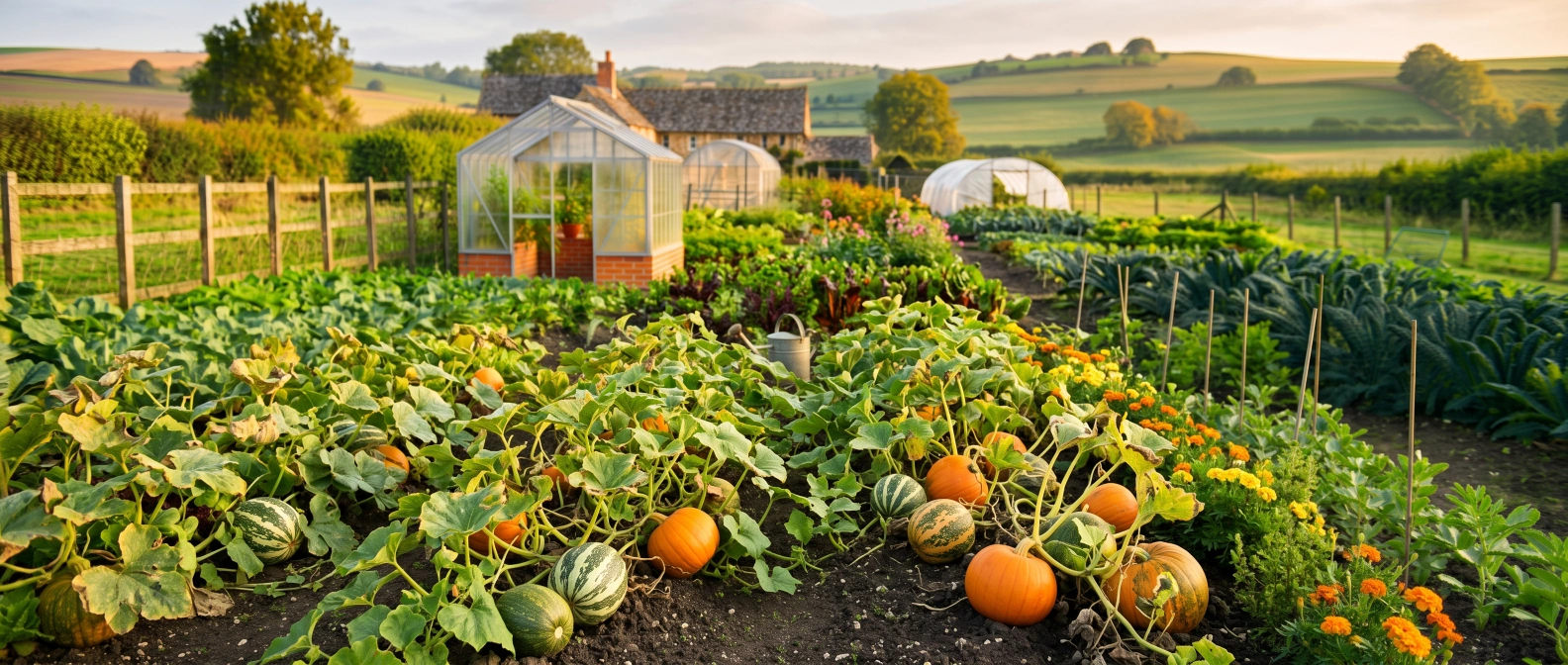
"Squash" actually spans four different Cucurbita species that mostly don't cross with each other -- a pumpkin, a butternut and a Hubbard squash can sit side by side without crossing, despite all being called squash. Its real strength is storage: cured properly, winter squash keeps for months with no power needed, and it's one of very few crops on this site viable in all eight climate zones -- a genuinely reliable calorie contributor almost everywhere.
Water need
Consistent moisture through summer supports steady fruit development, particularly as fruit are sizing up.
Calories at a glance
340 kcal/kg -- combined with a large per-plant yield, one of the more reliable calorie contributors in this category (scale is log-based across all 55 crops in the calculator).
Temperature Range by Month
Month on the bottom, temperature up the side. The pale green background is what the plant can survive at all -- fatal above or below it, labelled directly on the chart where that applies to your zone. The coral band is its ideal range, and only fades in during the months this zone would actually have the crop in the ground -- reusing the exact same sowing/harvesting data as the calendar further down the page. The blue line is real monthly climate data (not a modelled estimate) for a representative rural/agricultural location in this zone -- a small farming town or agricultural research station rather than a major city, to avoid the warmer bias city weather stations have. For the actual verdict on how well this crop does in your zone, see the badge at the top of the page -- that's based on the site's own researched yield figures, not this chart.
Quick Start: Sowing to Storage
- Sow direct or start under cover. Sow direct once the soil has genuinely warmed in spring, or start a few weeks earlier under cover for a head start in cooler zones -- squash resents root disturbance, so use biodegradable pots if starting indoors.
- Give it real space. Winter squash vines sprawl widely -- allow generous spacing between plants, or train vines up a sturdy support if space is tight.
- Keep watering even. Consistent moisture through summer supports steady fruit development, particularly as fruit are sizing up.
- Harvest before frost, with the stem intact. Cut fruit from the vine leaving a few centimetres of stem attached -- a squash without its stem stub rots far faster in storage. Harvest the whole crop before the first frost, regardless of whether every fruit has fully ripened.
- Cure before storing. Cure fruit for 10-14 days somewhere warm (around 25°C) before moving to cool, dry storage -- this hardens the skin and heals minor wounds, and is the single step that most affects how long the crop actually keeps.
Sowing & Harvesting Calendar
Pick your zone under "Temperature Range by Month" above and this updates too. Every zone shows a genuine window here -- winter squash is one of very few crops on this site viable everywhere it models.
Calories & Yield
Winter squash is a genuine calorie crop at about 340 kcal per kg, combined with a large yield per plant. Mediterranean, Maritime and Continental zones all give the same best yield here.
| Climate Zone | Yield per plant | Calories per plant | Viability |
|---|---|---|---|
| Tropical / Humid | 2.5 kg | 850 kcal | Viable |
| Subtropical | 4.0 kg | 1,360 kcal | Viable |
| Mediterranean | 5.0 kg | 1,700 kcal | Viable -- best yield |
| Temperate Maritime | 5.0 kg | 1,700 kcal | Viable -- best yield |
| Temperate Continental | 5.0 kg | 1,700 kcal | Viable -- best yield |
| Cool / Boreal | 3.0 kg | 1,020 kcal | Viable |
| Arid / Semi-Arid | 2.0 kg | 680 kcal | Viable |
| Highland / Alpine | 2.0 kg | 680 kcal | Viable |
Figures per plant, from the site's own crop database. Winter squash is viable in every one of this site's eight zones, one of very few crops that can claim that.
Varieties Worth Knowing
Squash splits into summer types (eaten young, thin-skinned, no storage) and winter types (mature, thick-skinned, genuinely good long-term keepers). All the varieties below are open-pollinated (OP), meaning seed saved from them breeds true and is worth keeping under this site's seed-saving approach; none are F1 hybrids. The species badge matters for seed-saving too: varieties of the same species will cross-pollinate with each other, but rarely cross between different species -- so growing one variety from each species side by side is a simple way to save true seed from more than one without isolating them.
Seed Saving -- Quick Guide
"Squash" and "pumpkin" actually span several different Cucurbita species that mostly don't cross each other -- so which full guide you need depends on your variety. Grow a Red Kuri (Uchiki Kuri) next to a Hubbard, for example, and you'll get crossed, unpredictable seed from both -- they're the same species (C. maxima), so they cross just like two varieties of anything else would. Pick the closest match below:
Not sure? See all C. pepo types
- Zucchini / Courgette
- Yellow Crookneck
- Yellow Straightneck
- Pattypan / Scallop
- Acorn squash
- Delicata
- Spaghetti squash
- Sweet Dumpling
- Gem squash
- Small pie pumpkins (Small Sugar, Connecticut Field, Jack Be Little, Baby Boo)
- Most ornamental/novelty gourds
Not sure? See all C. maxima types
- Hubbard (Blue, Golden, Green)
- Kabocha
- Buttercup
- Turban squash
- Banana squash
- Red Kuri (Uchiki Kuri)
- Golden Nugget
- Marina di Chioggia
- Queensland Blue
- Jarrahdale
- Rouge Vif d'Etampes (Cinderella pumpkin)
- Atlantic Giant and most giant/show pumpkins
Not sure? See all C. moschata types
- Butternut
- Waltham Butternut
- Tromboncino (Trombetta)
- Long Island Cheese pumpkin
- Dickinson (commercial canning pumpkin)
- Musquée de Provence
- Seminole pumpkin
- Calabaza
Variety names on seed packets aren't always a reliable guide to species -- if in doubt, the safest approach is to isolate or hand-pollinate as if every variety you grow could cross.
SERVINGS, NOT DAILY CALORIES This works out plate-sized servings of squash from your seed during its fresh harvest window only, not your group's full daily calorie needs. For that, use the main calculator.
Estimated for your selected zone above, using this site's own germination, loss and yield figures for squash -- a helping is roughly what you'd put on a plate as part of a meal with other veg. Treat it as a planning estimate, not a promise.
Storage & Preservation
The site's own crop data is specific about this crop's real storage method: cure for 10-14 days at around 25°C before moving to cool storage, and a well-cured fruit of a good storage variety keeps for up to around 6 months.
Beyond curing and cool storage, winter squash also freezes well once cooked and mashed or cubed -- a practical way to use up any fruit that's damaged or unlikely to store well raw.
Growing Winter Squash Without Bought Inputs
Powdery mildew is the main disease risk, especially later in the season -- a white, dusty coating on the leaves that's worsened by dry roots and humid air, the same combination that affects cucumber.
Consistent watering at the roots reduces the plant stress that lets powdery mildew take hold, without needing any bought treatment.
Good spacing for airflow between the sprawling vines further discourages mildew, and also makes it easier to spot developing fruit and harvest them cleanly with their stems intact.
Frequently Asked Questions
Do all winter squash and pumpkin varieties cross-pollinate with each other?
No -- "squash" actually spans four different Cucurbita species (pepo, maxima, moschata and argyrosperma) that mostly don't cross with each other at all. Varieties within the same species cross readily, but a pepo-type courgette or pumpkin won't cross with a maxima-type Hubbard squash or a moschata-type butternut. Check which species your variety belongs to before assuming two squash will or won't cross.
Does squash cross-pollinate with cucumber?
No -- despite sharing the same plant family (Cucurbitaceae), squash/pumpkin (Cucurbita) is a different genus from cucumber (Cucumis), and different genera don't cross.
Why does curing matter so much for winter squash?
Because a freshly harvested squash isn't actually ready for long-term storage yet -- about 10-14 days at warm temperatures (around 25°C) hardens the skin and heals any minor wounds from harvest, both of which dramatically improve how well the squash then keeps in cool storage afterward.
How cold and hot can winter squash survive?
Roughly 1°C to 35°C, though winter squash has essentially no frost tolerance -- even a light frost is usually fatal to the vine, and the crop needs to be harvested before it arrives regardless of how much of the fruit has ripened.
Is winter squash a good calorie crop for self-sufficiency?
Yes -- around 340 kcal per kg combined with a genuinely large yield per plant and viability in every zone this site models, winter squash is one of the more reliably useful calorie crops in this whole category, not just this section.