
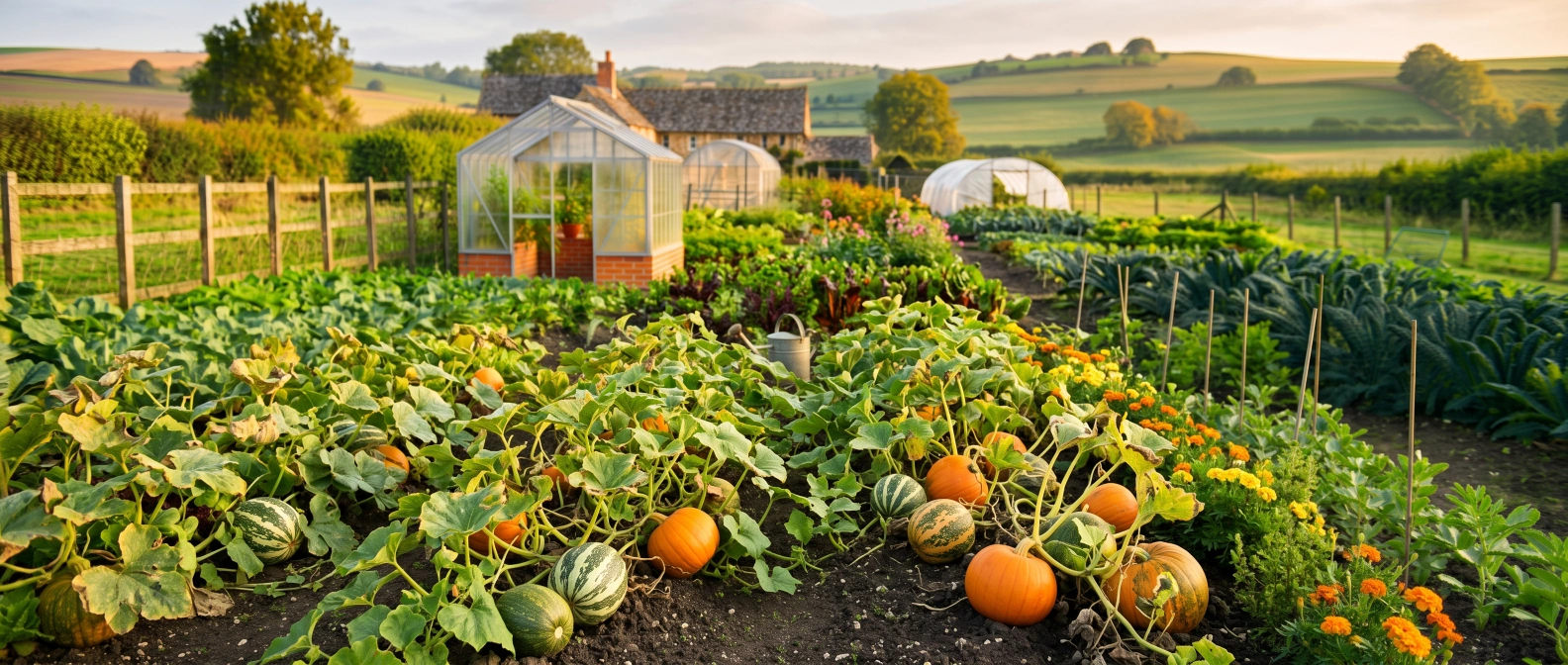
Butternut is the best-known member of Cucurbita moschata, a squash species distinct from both the zucchini group and true winter squash -- which means it won't cross with either of those, only with other moschata types.
New to terms like isolation distance or outcrossing? See the Seed-Saving Glossary.
Moschata Types Covered by This Guide
All of these are Cucurbita moschata and will cross with each other:
Some pumpkin varieties sold generically as "pumpkin" are actually moschata types rather than the maxima species most giant pumpkins belong to -- check the variety if you're growing more than one pumpkin-type squash and want pure seed.
Seed-Saving Difficulty
How It's Pollinated
Insect-pollinated (bees -- separate male/female flowers)
(High crossing risk within species)
Scientific name: Cucurbita moschata
Domestic Crops It Can Cross With
- Any other C. moschata variety flowering at the same time (see types below)
- Does not cross with zucchini-type summer squash (C. pepo) or true winter squash like Hubbard (C. maxima) -- different species. See our Summer Squash and Winter Squash pages for those species groups
Wild Relatives & Feral Species
- No significant wild C. moschata populations in most home garden regions
- Volunteer seedlings from compost are the main practical risk -- pull them before they flower
Separation Distances Required
Minimum: 300m between varieties
Recommended: 500m for reliable purity
Strict: Hand-pollinate for guaranteed purity in small gardens
Seed-Saving Strategies
- Hand-pollinate: tape male and female flowers shut the evening before they open, then transfer pollen yourself the next morning
- Leave fruit on the vine well past eating size -- skin should be hard and matte, not glossy
- Cure whole fruit 2-4 weeks in a warm, dry spot before extracting seed
- Scoop out seeds, rinse off pulp, and dry fully before storing -- viable 4-6 years