
Dried pea and this site's fresh/mangetout pea are the same species -- Pisum sativum -- grown for different endpoints, but pea's overwhelming self-pollination (the flower fertilises itself before it even opens) makes it one of the easiest legumes on this site to keep pure. It's also genuinely cold-hardy, more so than any bean here, and when dried it becomes a real calorie staple rather than the light, fresh-eating crop its mangetout counterpart is grown to be.
Water need
Even moisture while flowering and podding matters more than at any other stage -- inconsistent watering here is the main cause of a poor set.
Calories at a glance
3,390 kcal/kg dried -- essentially matching broad bean and common bean in this site's calorie-dense pulse tier, far above fresh/mangetout pea (scale is log-based across all 55 crops in the calculator).
Temperature Range by Month
Month on the bottom, temperature up the side. The pale green background is what the plant can survive at all -- fatal above or below it, labelled directly on the chart where that applies to your zone. The coral band is its ideal range, and only fades in during the months this zone would actually have the crop in the ground -- reusing the exact same sowing/harvesting data as the calendar further down the page. The blue line is real monthly climate data (not a modelled estimate) for a representative rural/agricultural location in this zone -- a small farming town or agricultural research station rather than a major city, to avoid the warmer bias city weather stations have. For the actual verdict on how well this crop does in your zone, see the badge at the top of the page -- that's based on the site's own researched yield figures, not this chart.
Quick Start: Sowing to Drying
- Sow direct, early. Pea's cold-hardiness means it can go in the ground well before frost-tender crops -- sow direct as soon as the soil can be worked.
- Provide support. Even dwarf varieties benefit from a little twiggy support to keep pods off the soil; taller varieties need a proper trellis or netting.
- Keep watering even through flowering. Even moisture while the plant flowers and pods matters more than at any other stage -- inconsistent watering here is the main cause of a poor set.
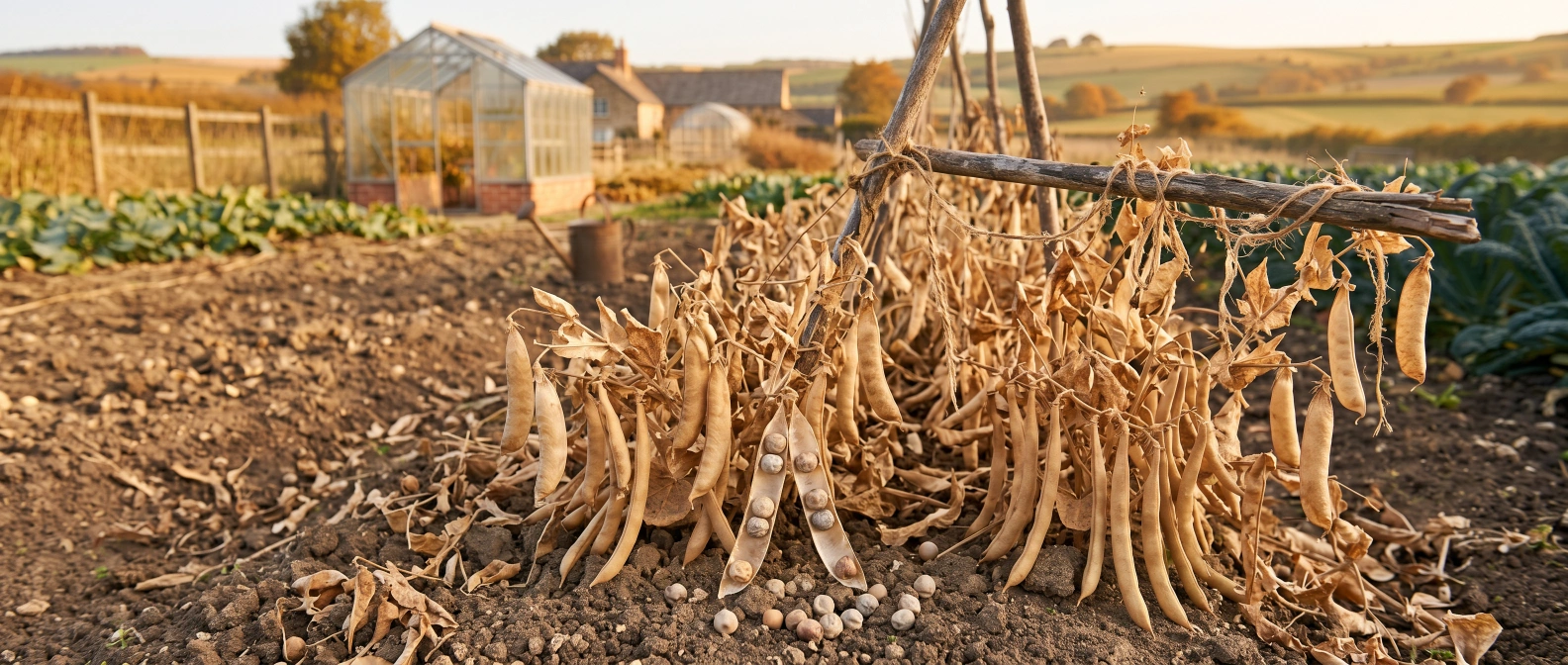
- Leave pods on the plant to dry fully. For dried peas, let pods stay on the plant until they've dried and turned papery, rather than picking them young the way you would for fresh eating.
- Shell and store in airtight containers. Shell the dried pods and store the peas in an airtight container somewhere cool and dark.
Sowing & Harvesting Calendar
Pick your zone under "Temperature Range by Month" above and this updates too. Notice the Arid zone shows an autumn sowing window rather than spring -- pea's cold-hardiness makes an overwintered crop realistic there, avoiding the worst of summer heat during flowering.
Calories & Yield
Dried pea is a genuine calorie staple at about 3,390 kcal per kg -- essentially matching broad bean and common bean. Subtropical, Mediterranean, Maritime and Continental zones all give the same best yield here.
| Climate Zone | Yield per plant | Calories per plant | Viability |
|---|---|---|---|
| Tropical / Humid | 0.12 kg | 406.8 kcal | Viable |
| Subtropical | 0.15 kg | 508.5 kcal | Viable -- best yield |
| Mediterranean | 0.15 kg | 508.5 kcal | Viable -- best yield |
| Temperate Maritime | 0.15 kg | 508.5 kcal | Viable -- best yield |
| Temperate Continental | 0.15 kg | 508.5 kcal | Viable -- best yield |
| Cool / Boreal | 0.1 kg | 339 kcal | Viable |
| Arid / Semi-Arid | 0.1 kg | 339 kcal | Viable |
| Highland / Alpine | 0.1 kg | 339 kcal | Viable |
Figures per plant sown, dried weight, from the site's own crop database. Dried pea is viable in every one of this site's eight zones.
Varieties Worth Knowing
Dried/soup pea varieties differ mainly in seed colour and pattern. Both below are open-pollinated (OP), meaning seed saved from them breeds true and is worth keeping under this site's seed-saving approach; neither is an F1 hybrid.
Seed Saving -- Quick Guide
Garden pea pollinates itself before the flower even opens -- different varieties, including fresh and dried types, can be grown right next to each other with essentially no crossing risk.
SERVINGS, NOT DAILY CALORIES This works out plate-sized servings of pea from your seed during its fresh harvest window only, not your group's full daily calorie needs. For that, use the main calculator.
Estimated for your selected zone above, using this site's own germination, loss and yield figures for pea -- a helping is roughly what you'd put on a plate as part of a meal with other veg. Treat it as a planning estimate, not a promise.
Storage & Preservation
Grown here specifically for dried storage -- pods are left on the plant until fully dry, then shelled and the peas stored in an airtight container.
Stored this way in a cool, dry place, dried peas keep for a long time -- the same storage league as wheat, oats and this site's other dried staples.
Growing Pea Without Bought Inputs
Pea moth and powdery mildew are the main risks -- pea moth larvae tunnel into developing pods, and powdery mildew shows as a white coating on leaves, worsened by dry soil at the roots combined with humid air around the foliage.
Early sowing is a genuine input-free defence against pea moth, since it times flowering to miss the main egg-laying period of the moth's adult flight.
Like other legumes, pea fixes some of its own nitrogen, a modest soil benefit worth factoring into a wider rotation.
Frequently Asked Questions
Does dried pea cross-pollinate with fresh/mangetout pea?
Technically they can -- both are Pisum sativum, the same species, just grown for different endpoints. In practice the risk is low: pea pollen sheds and fertilises the flower before it even opens, so genuine crossing is uncommon even when varieties are grown fairly close together.
Does pea cross with any of the beans on this site?
No. Pea (Pisum) is a different genus entirely from broad bean (Vicia), common bean (Phaseolus vulgaris) and runner bean (Phaseolus coccineus).
How cold and hot can pea survive?
Genuinely cold-hardy -- roughly -12°C to 30°C, among the most frost-tolerant crops in this whole category. Heat is the real limit: sustained temperatures above about 30°C during flowering sharply cuts both yield and seed quality.
Why is pea one of the easiest legumes here for a first-time seed saver?
Because its overwhelming self-pollination does most of the isolation work for you -- unlike broad bean or runner bean, a modest separation between varieties is normally enough to keep pea seed true to type.
Is pea a good calorie crop for self-sufficiency?
Very good when dried -- around 3,390 kcal per kg, matching broad bean and common bean in the same calorie-dense pulse tier as wheat. That's dramatically higher than fresh/mangetout pea's calorie figure, since drying concentrates the seed rather than eating the pod fresh and mostly water.