
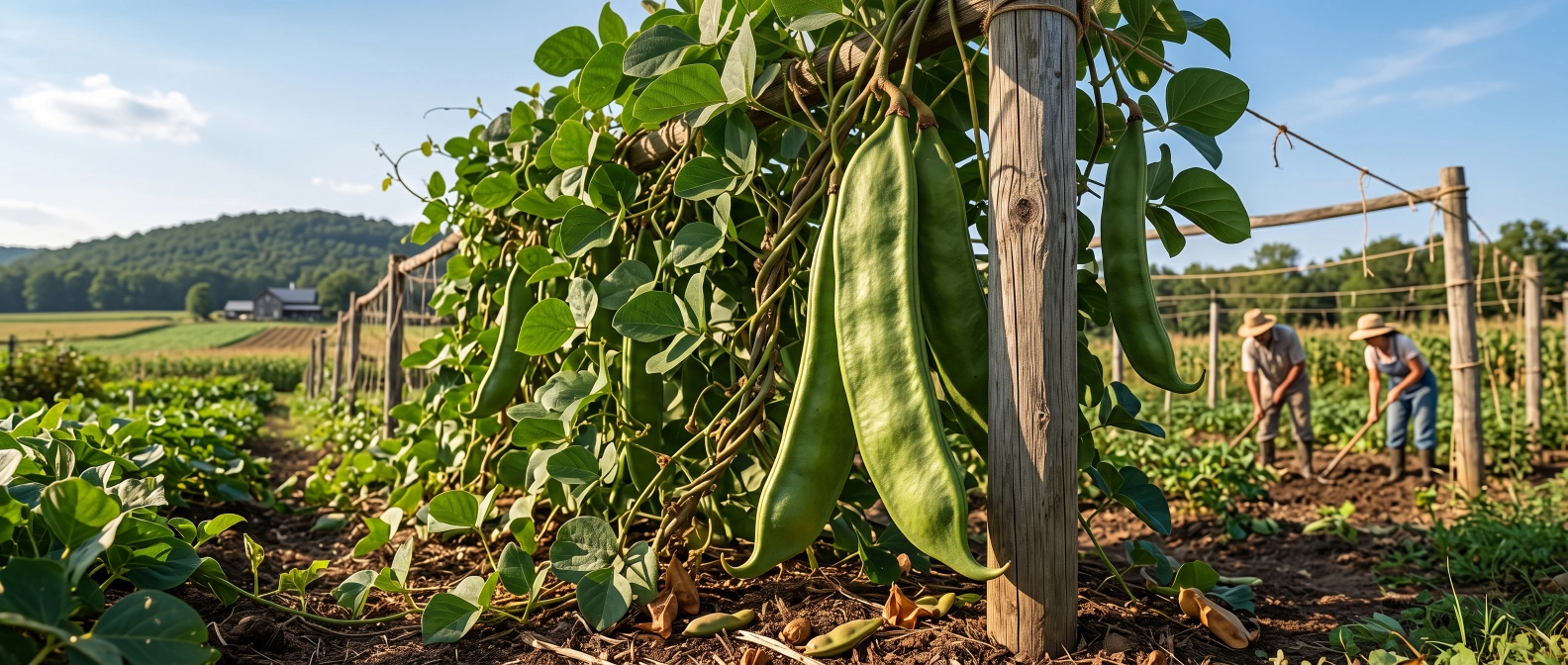
Per the crop database's own description: a tropical legume with large pods, that must be cooked thoroughly since raw seeds are toxic. Sword bean is a vigorous, heat-loving climbing legume grown for its genuinely oversized pods and dried seeds -- but it demands real respect in the kitchen, for the reasons in the safety note above.
Water need
Even moisture while flowering and podding supports the large pods; reasonably tolerant of dry spells once established.
Calories at a glance
3,470 kcal/kg dried -- a genuine calorie contributor once properly, thoroughly cooked (scale is log-based across all 55 core crops in the calculator).
Temperature Range by Month
Month on the bottom, temperature up the side. The pale green background is what the plant can survive at all -- fatal above or below it, labelled directly on the chart where that applies to your zone. The coral band is its ideal range, and only fades in during the months this zone would actually have the crop in the ground -- reusing the exact same sowing/harvesting data as the calendar further down the page. The blue line is real monthly climate data (not a modelled estimate) for a representative rural/agricultural location in this zone -- a small farming town or agricultural research station rather than a major city, to avoid the warmer bias city weather stations have. For the actual verdict on how well this crop does in your zone, see the badge at the top of the page -- that's based on the site's own researched yield figures, not this chart.
Quick Start: Sowing to Safe Eating
- Sow direct once it's warm. Sow direct into warm soil -- this is a genuine tropical legume that needs sustained heat to establish and grow well.
- Build a sturdy support structure. Install a genuinely sturdy trellis or strong fence before sowing -- sword bean produces large pods on a vigorous vine, and a light structure won't hold up.
- Leave pods to mature and dry on the vine. Let pods mature and dry fully on the vine for the best dried storage crop, rather than picking them early.
- Shell the dried pods. Shell the dried pods once they've fully dried, keeping the beans separate for the thorough cooking process ahead.
- Cook thoroughly before eating. Cook thoroughly -- raw seeds toxic, per the crop database -- using a trusted traditional preparation with prolonged boiling and often multiple water changes, never a quick or partial cook.
Sowing & Harvesting Calendar
Pick your zone under "Temperature Range by Month" above and this updates too. Maritime, Continental, Boreal and Alpine show no window at all, since this site's own yield data marks sword bean as not viable there -- it needs sustained tropical or subtropical heat.
Calories & Yield
Sword bean is a genuine calorie contributor once thoroughly cooked at 3,470 kcal per kg dried. Tropical zones give the best yields here.
| Climate Zone | Yield per plant | Calories per plant | Viability |
|---|---|---|---|
| Tropical / Humid | 3.0 kg | 10,410 kcal | Viable -- best yield |
| Subtropical | 2.5 kg | 8,675 kcal | Viable |
| Mediterranean | 0.9 kg | 3,123 kcal | Challenging (60% yield) |
| Temperate Maritime | -- | -- | Not viable |
| Temperate Continental | -- | -- | Not viable |
| Cool / Boreal | -- | -- | Not viable |
| Arid / Semi-Arid | 1.2 kg | 4,164 kcal | Challenging (60% yield) |
| Highland / Alpine | -- | -- | Not viable |
Figures per plant sown, dried weight, from the site's own crop database. Mediterranean and Arid already reflect the 60% penalty applied to challenging zones.
A note on varieties: sword bean is mostly grown as regional landrace populations rather than widely marketed named cultivars -- real, verifiable named-variety diversity for home growers is genuinely thin.
Seed Saving -- Quick Guide
Sword bean produces some of the largest pods and seeds of any legume here, and its big, conspicuous flowers draw more pollinator attention than most self-pollinating beans -- worth a little more isolation caution.
SERVINGS, NOT DAILY CALORIES This works out plate-sized servings of sword bean from your seed during its fresh harvest window only, not your group's full daily calorie needs. For that, use the main calculator.
Estimated for your selected zone above, using this site's own germination, loss and yield figures for sword bean -- a helping is roughly what you'd put on a plate as part of a meal with other veg. Treat it as a planning estimate, not a promise.
Storage & Preservation
Sword bean is grown here for dried storage -- pods are left on the vine to mature and dry, then shelled before a final week of airing indoors.
Stored dry, cool and airtight, the beans keep for a genuinely long time, years rather than months -- but remember every batch still needs thorough cooking before eating, no matter how long it's been stored.
Growing Sword Bean Without Bought Inputs
Genuinely tough and vigorous once established -- few pests bother it seriously, and the large, heavy pods deter most casual browsing.
Its dense climbing growth shades out weeds effectively while it's in the ground, reducing the work needed elsewhere in the bed.
Sword bean fixes its own nitrogen via bacteria in root nodules, genuinely improving the soil for whatever's grown there next.
Frequently Asked Questions
Can I eat sword bean seeds raw?
No -- never. The crop database is direct: cook thoroughly, raw seeds toxic. Sword bean seeds contain anti-nutritional compounds including canavanine, and traditional preparation involves prolonged boiling, often with multiple water changes, to make them safely edible. Undercooked beans are a genuine digestive-toxicity risk, not a minor inconvenience.
How big do sword bean pods actually get?
Genuinely large -- the crop database calls them out directly: large pods. That's the whole character of this crop, and it's why it needs a genuinely sturdy support structure rather than a light trellis.
Is sword bean a tropical crop only?
It's described in the crop database simply as a tropical legume, and its viability data on this site does reflect that -- it needs sustained heat and doesn't perform in cooler climate zones.