
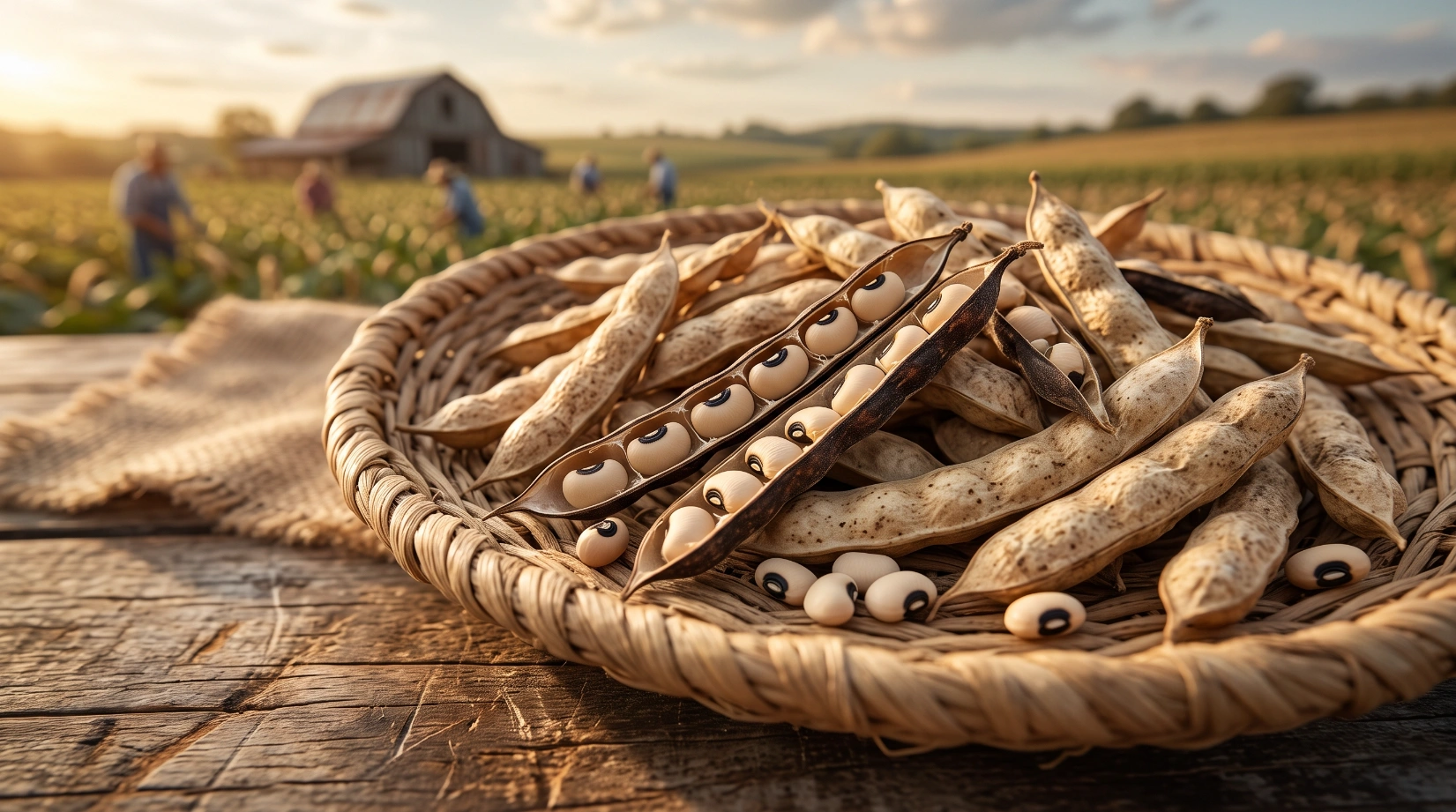
Cowpea (black-eyed pea), yardlong bean, and honey bean look like different crops grown for different purposes -- dried beans, long green pods, and a Nigerian specialty variety -- but they're all the same species, Vigna unguiculata, and cross-pollinate with each other. Even cowpea leaves, grown purely as a leafy green in parts of Africa, come from this same plant. Learn which crops share this species, crossing risk, and seed-saving strategies below.
New to terms like isolation distance or outcrossing? See the Seed-Saving Glossary.
Crops Covered by This Guide
All of these are Vigna unguiculata and will cross with each other:
Despite the name, cowpea does not cross with common bean (Phaseolus vulgaris), mung bean, or other Vigna species like black gram or moth bean -- different species entirely, even within the same genus.
Seed-Saving Difficulty
How It's Pollinated
Mostly self-pollinating, with some insect-carried outcrossing
(Low to moderate crossing risk)
Scientific name: Vigna unguiculata
Domestic Crops It Can Cross With
- Any other cowpea, yardlong bean or honey bean variety flowering at the same time
- Does not cross with common bean, mung bean, black gram, or moth bean -- different Vigna/Phaseolus species
Wild Relatives & Feral Species
- Wild Vigna unguiculata populations exist in parts of Africa but are not a practical concern outside that range
Separation Distances Required
Minimum: 10-20m between varieties
Recommended: 50m for increased purity
Strict: Bag flower clusters for guaranteed purity
Seed-Saving Strategies
- Allow pods to dry fully and turn brown/tan on the plant
- Yardlong bean pods need extra time -- pick a few pods well past eating size and leave them to dry rather than harvesting everything young
- Shell dried pods and finish drying seed indoors
- Store dry -- viable 3-4 years