
Knowing compost is ready is only half the job. In this climate, timing its use around the two natural windows the seasons offer, spring thaw and autumn harvest, matters just as much as the quality of the compost itself.
Knowing When It's Ready
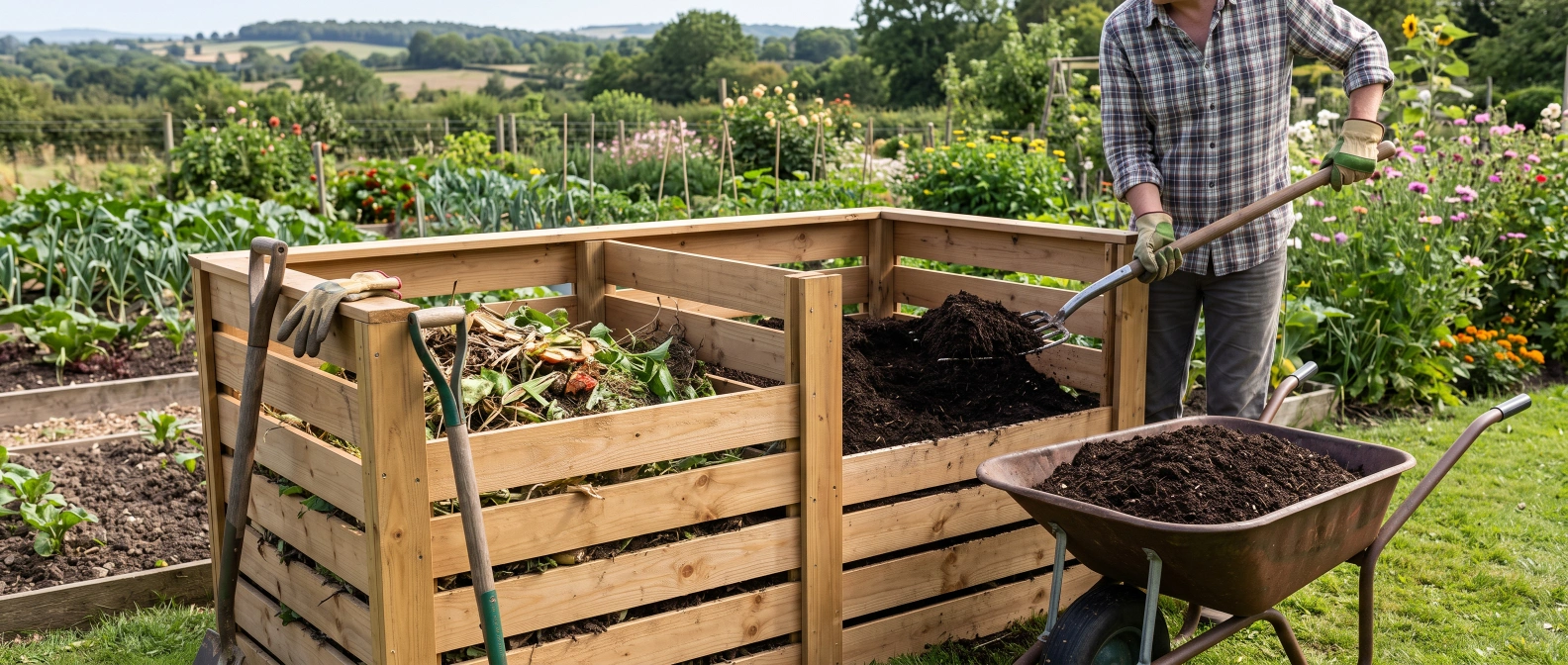
The signs are the same universal ones as any climate: dark colour, a crumbly texture, an earthy smell rather than anything sour or ammonia-like, and none of the original materials still recognisable as what they started out as. If you can still pick out whole leaves, stalks or scraps, it needs more time.
Two Natural Application Windows
Spring, ahead of the main planting season
As soon as the ground is workable after thaw, work finished compost in ahead of the main planting season. This gives the whole long growing season ahead to benefit from it, rather than applying partway through once crops are already established.
Autumn, after harvest
Once beds are cleared for the season, work finished compost into ground being put to rest for winter, or top-dress it ahead of a winter-killed cover crop (see Chapter 12). Either way it's already incorporated into the soil and ready to go by the time spring planting begins.
A natural fit with the two-chamber rhythm
The two-chamber system's rhythm (see Chapter 3) means one chamber typically finishes right around one of these two windows each year, a convenient natural fit rather than a coincidence, since the fill-through-summer, rest-through-winter cycle lines up neatly with spring thaw and autumn harvest.
Sieving for Seed-Starting Mix
Sieving finished compost separates fine material, useful for starting seedlings indoors ahead of the outdoor planting window, a common practice in a climate with a real hard frost date to plan around, from coarser material better used as general soil conditioner or mulch. Neither portion goes to waste, they're simply matched to different jobs (see Chapter 17 for how this fits the wider calendar).
Frequently Asked Questions
How do I know when compost is actually ready to use?
The same universal signs apply in any climate: it's dark, crumbly, smells like earth rather than anything sour or rotten, and none of the original materials are still recognisable. If you can still identify individual leaves, stems or scraps, give it more time.
When is the best time to apply compost in this climate?
There are two natural windows here. Spring, as soon as the ground is workable after thaw and ahead of the main planting season, gives the whole long growing season to benefit. Autumn, after harvest, lets you work finished compost into beds being put to rest for winter, or top-dress it ahead of a winter-killed cover crop, so it's already incorporated and ready by the time spring planting begins.
What should I do with compost that's too coarse to use directly on beds?
Sieve out the fine material for seed-starting mix, useful for starting seedlings indoors ahead of the outdoor planting window in a climate with a real hard frost date to plan around, and use the coarser leftover material as general soil conditioner or mulch rather than discarding it.