
Most of what goes wrong with a compost heap in this climate is genuinely seasonal, tied to a real four-season cycle rather than one chronic failure mode. Knowing which problem belongs to which season, and which ones are worth fixing versus simply waiting out, saves a lot of wasted effort.
Winter Freeze and Spring Thaw
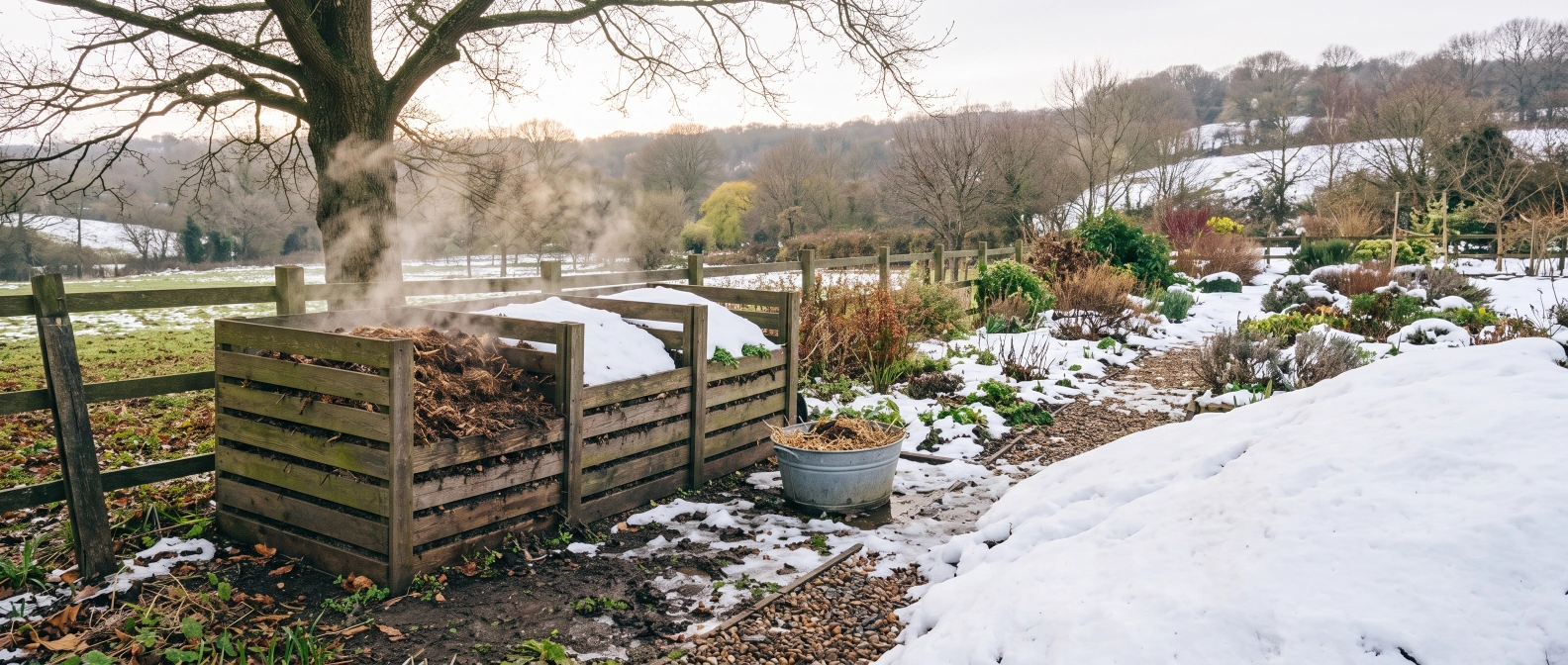
The heap froze solid over winter
This isn't really "fixable" mid-winter, and it doesn't need to be, similar in principle to the reasoning covered for a boreal winter, though here the frozen stretch is usually shorter. A genuinely frozen heap is dormant, not damaged. The practical response is accepting the pause, resuming normal management once the thaw genuinely arrives, not at the first mild day, and using the experience to insulate or site the heap a little better the following autumn.
The heap turned to mud at spring thaw
Meltwater saturating material that's still cold underneath is normal here, not a sign anything was done wrong. Improve drainage at the base of the bin if water is pooling rather than passing through, turn the heap once conditions genuinely allow to reintroduce air, and be patient: a few weeks of slow restart before things pick back up properly is entirely normal, not a fault to chase.
Summer Heat and Thunderstorms
The heap dried out fast between thunderstorms
Genuine summer heat can dry out the top and sides of a heap quickly between rain events. Check moisture more often during a hot spell, add a mulch cap to slow evaporation, and water directly if a dry stretch runs on longer than usual. This is an occasional hot-spell issue in an otherwise generally wet-enough climate, distinct from the chronic dryness a heap in an arid climate has to manage all season.
The heap got briefly waterlogged after a heavy storm
A sudden, intense summer downpour can leave a heap sitting in excess water for a short while. Make sure the base drains well and turn the heap once the excess water has passed through. This version of waterlogging generally self-resolves faster than the spring-thaw version, since the ground itself isn't still cold, it's just briefly saturated.
Running Low on Carbon, and Wildlife Pests
Running low on carbon mid-summer
If a heap turns slimy or smells off in mid-summer, it's usually short on carbon because not enough autumn leaves were stockpiled the previous year (see Chapter 11 and Chapter 4). The real fix is better stockpiling next autumn; in the meantime, seek out crop stubble or straw as a substitute carbon source.
Raccoons, deer or other wildlife getting into the heap
Wildlife pressure on a compost heap is common across this climate zone, and food scraps left exposed on the surface are usually what draws it in. Bury fresh scraps under existing material rather than leaving them on top, avoid meat and dairy entirely, and switch to a secure enclosed structure (see Chapter 2) if wildlife pressure is significant in your specific area.
Frequently Asked Questions
My heap has frozen solid over winter. Can I do anything to fix it?
Not really, and trying to force it mid-winter usually isn't worth the effort. A genuinely frozen heap is dormant, not broken, and it will resume working on its own once a real thaw arrives. The practical response is accepting the pause, and using the experience to insulate or site the heap a little better the following autumn.
My heap turned to mud at spring thaw. What went wrong?
Nothing went wrong exactly, this is normal. Meltwater saturates material that's still too cold to process it properly, leaving a heap that looks like a failure when it's really just mid-restart. Improve drainage at the base, turn the heap once conditions genuinely allow, and give it a few weeks of slow restart before judging it, that timeline is normal here.
My heap dried out fast during a hot spell. Is that a sign of a bigger problem?
No, it's a normal occasional issue in genuine summer heat between thunderstorms, not a chronic problem the way it would be in a dry climate. Check moisture more often during hot spells, add a mulch cap to slow evaporation, and water directly if a dry stretch runs longer than usual.