
A temperate maritime heap needs different management across the year. What works in July -- frequent turning, heavy green inputs -- can actively harm a heap in January, and knowing which mode you're in matters as much as any single technique.
The Compost Year at a Glance
| Season | Heap Activity | Key Tasks | What to Add |
|---|---|---|---|
| Spring (Mar-May) | Warming up; microbial re-activation | Turn heap; check moisture; start new chamber if needed | Fresh nettles, grass clippings, seaweed, comfrey |
| Summer (Jun-Aug) | Peak activity; highest temperatures | Maintain moisture in dry spells; turn monthly; harvest mature compost | Grass, kitchen waste, urine, more seaweed |
| Autumn (Sep-Nov) | Slowing; still active if insulated | Insulate heap; stockpile dry leaves and straw for winter | Fallen leaves, straw, bracken, last grass cuts |
| Winter (Dec-Feb) | Near-dormant; slow cold composting | Cover well; add kitchen waste centrally; avoid turning | Kitchen scraps, cardboard, wood ash, occasional urine |
Winter Management in Detail
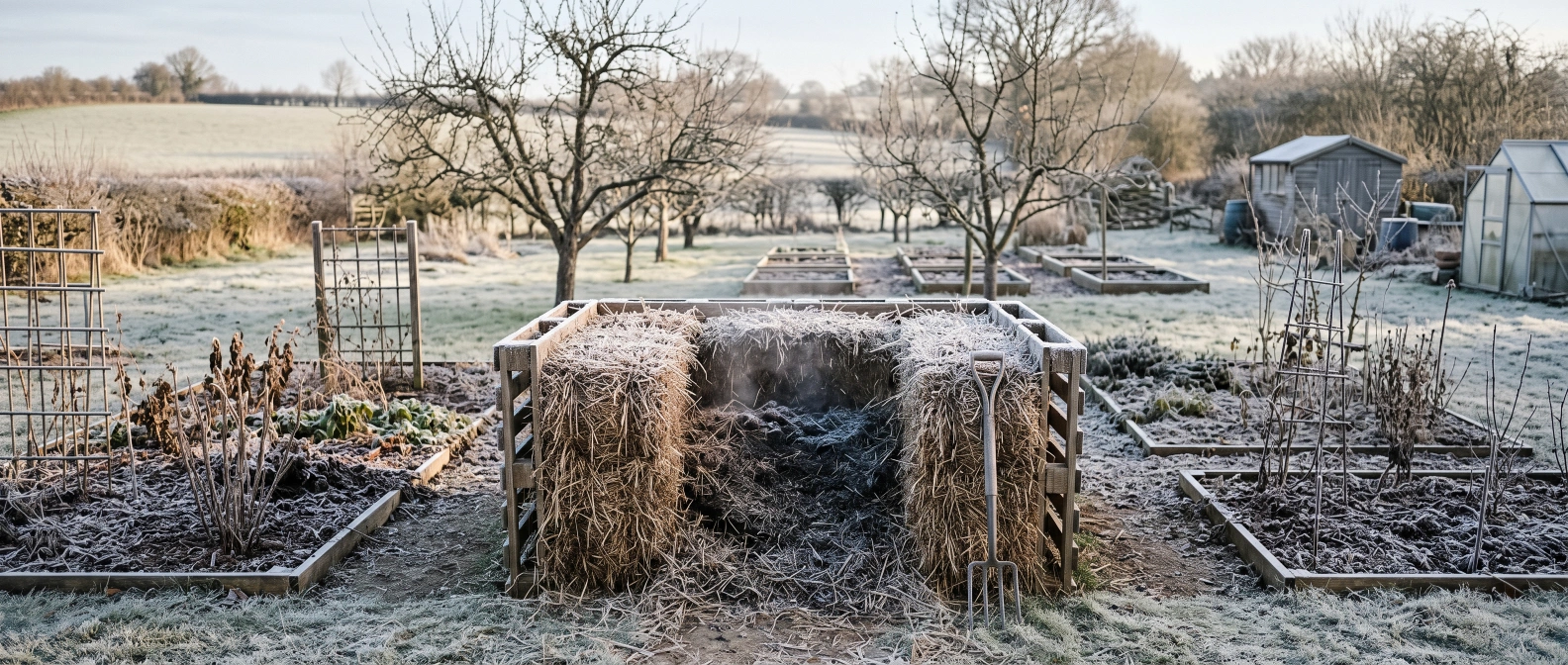
Winter is the critical test of a maritime compost system. The goal is not to stop decomposition entirely but to slow it in a controlled way while maintaining conditions for a rapid spring restart.
- Apply maximum insulation before the first hard frosts -- extra straw bales around the sides, insulating cover on top.
- Continue adding kitchen waste through winter, burying it centrally to retain heat.
- Add urine regularly for nitrogen and warmth to the core.
- Do not turn the heap in cold weather -- turning releases accumulated heat.
- Check moisture -- rain can penetrate covers; you want damp, not saturated.
- Stockpile carbon material -- straw, dried leaves -- under cover for use when needed.
Frequently Asked Questions
Why shouldn't I turn my compost heap in winter?
Turning releases whatever heat the heap has managed to accumulate at exactly the point in the year when it can least afford to lose it. In deep winter the goal is to slow decomposition in a controlled way, not to stop it, so leaving the heap undisturbed and well insulated matters more than keeping it aerated.
What should I add to my heap during deep winter?
Kitchen scraps buried centrally to retain heat, cardboard, wood ash, and the occasional dose of urine for nitrogen and warmth to the core. Avoid large volumes of wet green material, and keep a stockpile of straw or dried leaves under cover for whenever extra carbon is needed.
When does a maritime compost heap reach peak activity?
Summer, June through August, when ambient warmth combines with plentiful high-nitrogen inputs like grass clippings and kitchen waste to drive the highest temperatures and fastest decomposition of the year.