
Every heap runs into trouble occasionally, and in a cool, wet climate the same handful of problems recur again and again. Almost all of them trace back to moisture, oxygen, or the carbon-to-nitrogen balance -- here's how to diagnose and fix the most common ones.
General Heap Problems
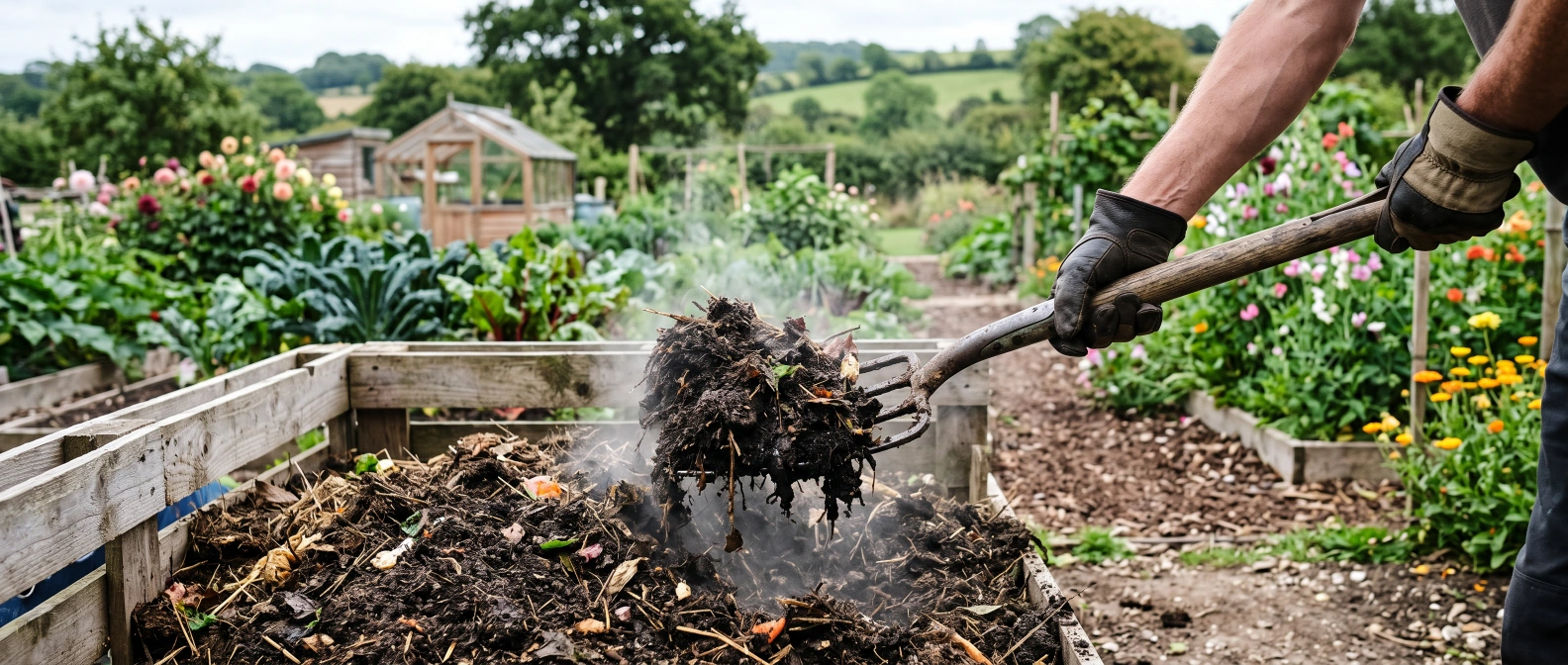
Heap smells bad -- rotten egg smell
Cause: anaerobic conditions, lack of oxygen, usually excess moisture or compaction.
Fix: turn the heap immediately (single most important action); add dry carbon material (straw, torn cardboard) as you turn; improve the cover to reduce rain penetration; check base drainage (heap may be sitting in water).
Heap smells of ammonia
Cause: excess nitrogen, too many green materials without enough browns.
Fix: add large quantities of carbon material (bracken, straw, cardboard); turn to mix thoroughly; don't add more nitrogen materials until balance is restored.
Nothing seems to be happening
Cause: too cold, too dry, or wrong C:N ratio.
Fix: add activator (urine, nettles, comfrey); check moisture (squeeze a handful, a few drops should emerge); add water if dry, improve insulation if cold; ensure heap is large enough (below one cubic metre in cool weather it won't heat).
Heap full of flies
Cause: food waste exposed at surface.
Fix: always bury kitchen waste and humanure in the centre of the heap; cover the surface with a thick layer of carbon material after each addition; ensure the covering lid or carpet is in good repair.
Weed seeds surviving
Cause: heap not reaching sufficient temperature in the active zone.
Fix: turn the heap to move outer cooler material into the hot centre; add activators to raise temperature; alternatively, avoid adding seeding weeds, only add before flowering.
Compost looks finished but smells earthy and rich yet feels wet
Cause: normal for maritime conditions, may need curing.
Fix: leave the resting chamber uncovered on a dry summer day to air; turn once with a fork to improve drainage; this material is safe to use, excess moisture does not mean poor compost.
Heap not heating sufficiently in winter
Cause: cold ambient temperature combined with insufficient mass or insulation.
Fix: add extra straw bale insulation around all sides and top; add diluted urine generously to restart biological activity; add a layer of fresh animal manure if available; accept that in deep winter the heap may not reach pathogen-killing temperatures -- this is why the two-year minimum cycle exists, time compensates for cold.
Strong smell from the collection toilet
Cause: insufficient carbon cover material or wrong type.
Fix: switch to drier material (bracken or straw rather than wet leaves); increase the quantity of cover per deposit (a generous handful is the minimum); add a layer of wood ash (particularly effective at neutralising odour); ensure the toilet has ventilation.
Flies in the collection or compost area
Cause: exposed material at surface or inadequate cover.
Fix: every deposit must be immediately covered with carbon material, no exceptions; ensure the compost heap has a fly-proof cover when not being added to; a fine mesh screen over the toilet vent pipe prevents flies entering via the vent; in summer, empty collection buckets more frequently.
Unsure whether humanure compost is fully processed
Cause: uncertainty about temperature history and pathogen kill.
Fix: when in doubt, extend the resting period by a further six months; apply only to fruit trees and established shrubs rather than the vegetable garden; a compost thermometer inserted into the heap centre gives confidence (sustained readings above 55°C for several weeks indicate effective pasteurisation); two years from the last addition to the resting chamber is a conservative, safe standard for a temperate maritime climate without temperature monitoring.
Worms dying in the humanure heap
Cause: heap too hot, too acidic, or ammonia levels too high.
Fix: worms should only be in the cooler outer layers of an active heap (if well-managed and hot in the centre, this is normal and correct); if worms are dying throughout, the heap may be too acidic (add wood ash to raise pH); excessive fresh urine addition can raise ammonia to harmful levels (dilute urine before adding or reduce frequency).
Frequently Asked Questions
Why does my compost heap smell like rotten eggs?
That smell means the heap has gone anaerobic, usually from excess moisture or compaction cutting off oxygen. Turn the heap immediately -- this is the single most important action -- adding dry carbon material such as straw or torn cardboard as you go, and check that the cover is keeping enough rain out and that the base isn't sitting in standing water.
How do I know if my humanure compost is genuinely safe to use?
A compost thermometer inserted into the heap centre gives real confidence -- sustained readings above 55°C for several weeks indicate effective pasteurisation. Without monitoring, two years from the last addition to the resting chamber is a conservative, safe standard for a temperate maritime climate, and when in doubt it's safer to extend the resting period by a further six months and apply only to fruit trees and established shrubs rather than the vegetable garden.
Why are weed seeds surviving in my finished compost?
It means the heap isn't reaching sufficient temperature in its active zone, usually because outer, cooler material never cycles through the hot centre. Turning the heap to move that outer material inward, and adding activators to raise temperature, both help -- or simply avoid adding seeding weeds in the first place and only add them before they flower.