
Activators introduce nitrogen, microbial populations, or enzymatic activity that speeds decomposition and helps establish or re-establish the biological community in the heap. They're especially valuable in spring and after winter dormancy in this climate.
The Best Traditional Activators
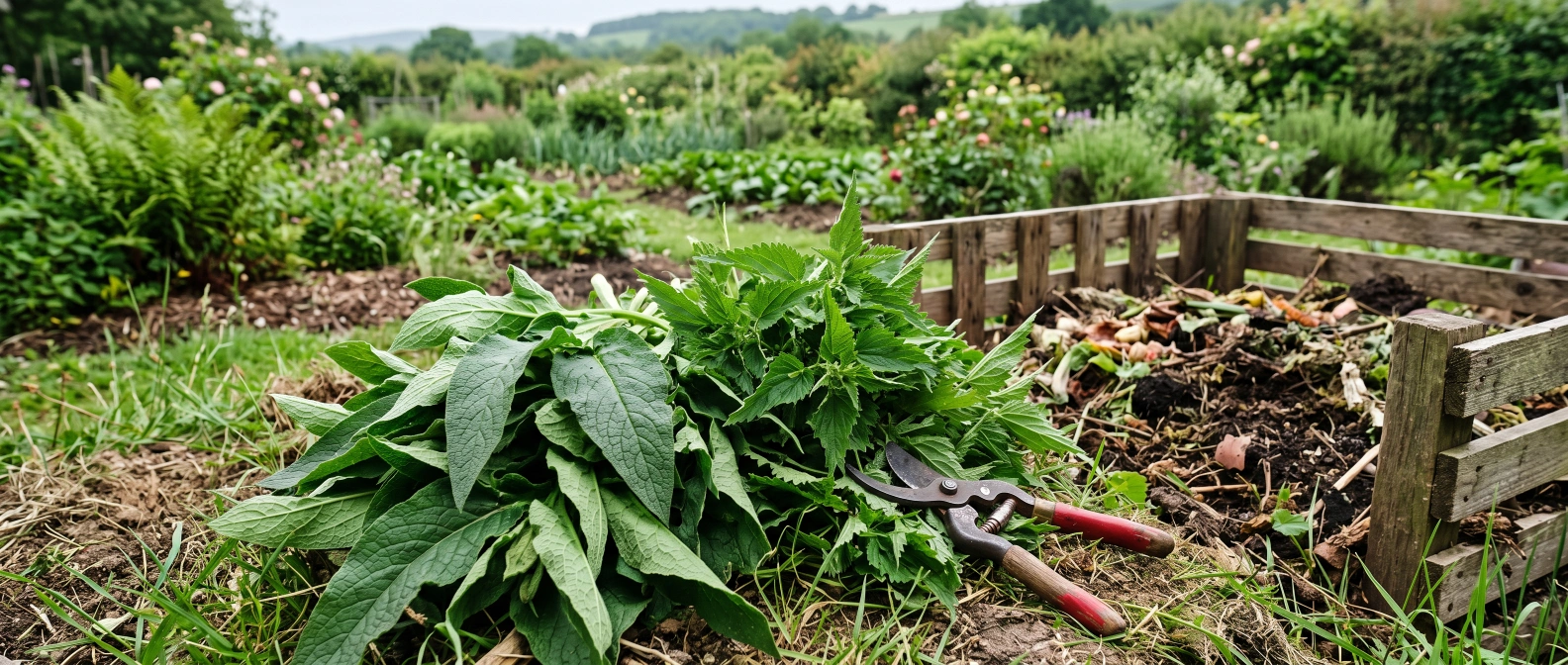
Comfrey (Symphytum officinale)
The single best garden activator. Extraordinarily deep roots mine subsoil minerals, producing leaves with a C:N ratio of around 10:1 and very high potassium content. Add leaves in generous layers throughout summer. Plant a comfrey patch -- once established it requires no care and provides cutting after cutting all season. Bocking 14 is the recommended non-seeding variety.
Nettles (Urtica dioica)
The other classic activator, rich in iron, nitrogen and silica. Add young spring nettles in quantity; they decompose rapidly and kick-start spring heap activity. Also makes excellent liquid feed by steeping in water.
Yarrow (Achillea millefolium)
A traditional biodynamic activator; adds minerals and volatile compounds that appear to stimulate microbial diversity. Add a handful to each layer.
Diluted urine
The most readily available and effective activator for most people. Free, always available, remarkably effective at restarting a cold or sluggish heap.
Finished compost
Adding a shovelful of mature compost to a new heap introduces a ready-made microbial community, like a sourdough starter. One of the most effective methods for getting a new heap established quickly.
Animal manure
Fresh chicken manure is very high in nitrogen and extremely effective, but can be too hot if used in excess (use in thin layers). Cattle or horse manure is gentler and adds enormous microbial diversity.
Herbal and Mineral Additions
- Wood ash -- raises pH, adds potassium and calcium, partially suppresses pathogens; use in moderation, no more than a thin scattering per layer, as excess alkalinity inhibits microbial activity.
- Calcified seaweed (maerl) -- slow-release calcium and magnesium source, excellent pH buffer, traditional in Atlantic coastal farming.
- Crushed eggshells -- slow-release calcium, worms love them, add freely.
- Spent coffee grounds -- slightly acidic nitrogen source, worms strongly attracted to them, excellent in moderate quantities.
- Rock dust -- crushed basalt or granite adds a broad spectrum of minerals similar to glacial silt, slow release but very long-lasting benefit.
Frequently Asked Questions
What's the single best natural activator for a cold, sluggish compost heap?
Diluted urine is the most readily available and effective activator for most people. It's free, always available, and remarkably effective at restarting a cold or sluggish heap -- especially valuable in winter when the heap needs a nitrogen boost to get going again.
Why is comfrey considered the best garden activator?
Comfrey's extraordinarily deep roots mine subsoil minerals, producing leaves with a C:N ratio of around 10:1 and very high potassium content. Once a patch is established it requires no care and provides cutting after cutting all season, making it the single best garden activator available. Bocking 14 is the recommended non-seeding variety.
Can I use too much wood ash in my compost?
Yes. Wood ash raises pH, adds potassium and calcium, and partially suppresses pathogens, but it should be used in moderation -- no more than a thin scattering per layer -- because excess alkalinity inhibits microbial activity rather than supporting it.