
This is the most safety-critical chapter in the whole guide. Human waste is a complete fertiliser, and for thousands of years societies across Asia and Europe used it to maintain soil fertility -- the principle is sound. The issue is pathogen safety, and the guidance below must be followed in full, not selectively.
Why Use Humanure?
Human waste is a complete fertiliser -- it contains the nitrogen, phosphorus and potassium that our food contained, returned to the ground it came from. For thousands of years, societies across Asia and Europe used it to maintain soil fertility. The issue is pathogen safety, not the principle.
The Collection System
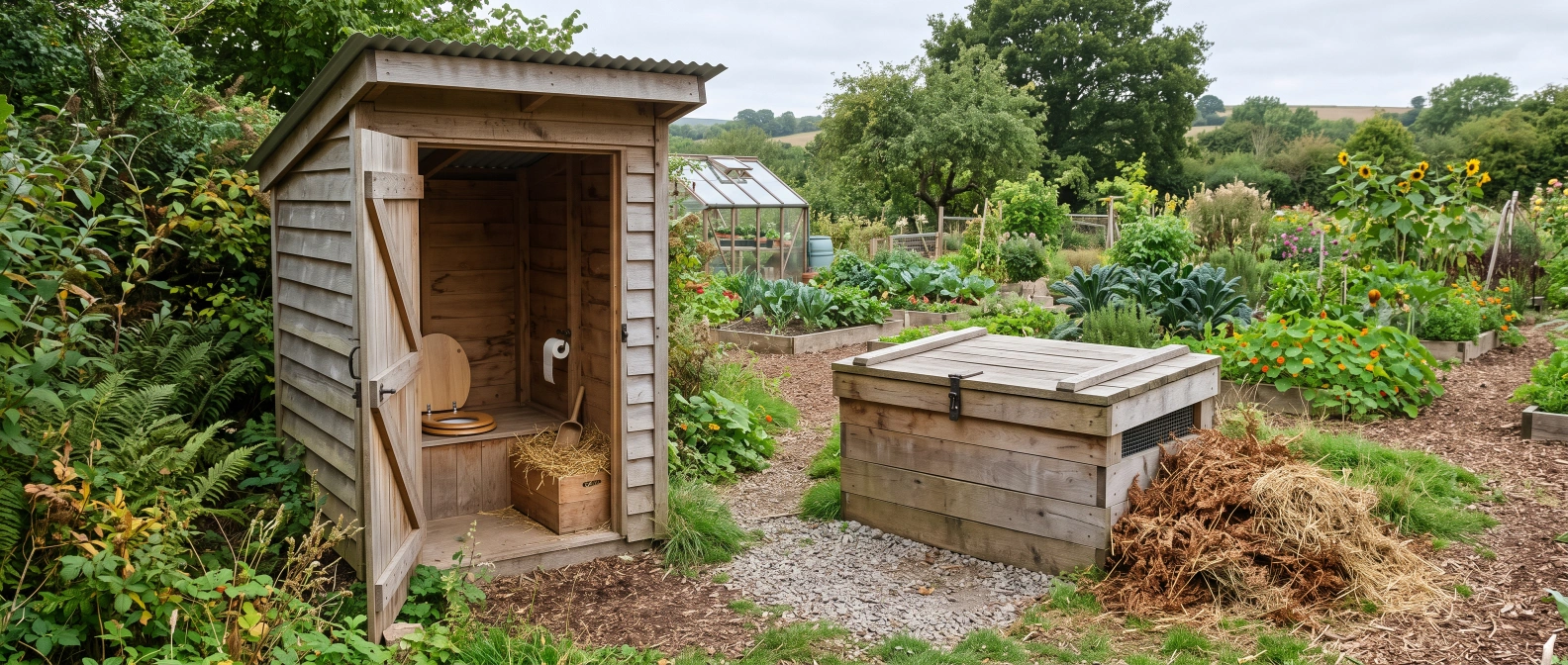
A simple wooden compost toilet or bucket system works well. The essentials:
- A seat over a removable bucket or directly over a vault below.
- A supply of carbon cover material beside the toilet (dried leaves, bracken, or straw).
- Cover every deposit immediately with a generous handful of carbon material -- controls smell and flies within seconds.
- Empty buckets regularly (every few days for a family) into the dedicated humanure compost chamber.
- Separate urine if possible -- dramatically reduces the pathogen challenge and produces a clean, near-sterile liquid fertiliser.
Cover Materials for a Maritime Temperate System
Without sawdust, which needs power tools, this climate offers plenty of alternatives:
- Dried bracken fern -- best overall substitute, cut/dry in late summer, stores well, very effective odour control.
- Wood ash -- partially suppresses pathogens, adds potassium, historically the most universal amendment, use freely.
- Oat or wheat straw -- widely available, chop with a spade to improve coverage.
- Dried rushes or sedges -- cut from wetland margins, dry before use.
- Dried autumn leaves -- gather and store in autumn for year-round use.
- Peat -- effective but a finite resource, use sparingly if at all.
Processing for Safety -- The Two-Year Minimum
- Dedicated chamber -- separate from general garden compost for the full processing period.
- Build heap mass -- minimum one cubic metre; larger heaps generate more internal heat and maintain it longer.
- Insulate thoroughly -- straw bales, old carpet, or wooden boards against all sides.
- Add animal manure if available -- mixing with cattle/horse manure provides microbial diversity and additional heat.
- Twelve months filling, twelve months resting -- the two-chamber cycle applied strictly; no new additions to the resting chamber.
- Monitor for heat -- push your hand into the heap; it should feel warm to hot in the centre throughout summer. A compost thermometer is a worthwhile investment.
- Turn twice during the rest year -- to expose all material to the high-temperature core.
Safe Application -- What to Apply Where
- Fruit trees and established shrubs -- the safest application, surface mulch only, edible parts never contact the soil, apply freely.
- Autumn dig-in for following year's brassicas -- fully composted material dug in during autumn for planting the following late spring gives maximum additional safety time.
- Avoid entirely: salad crops, root vegetables, strawberries, any crop where the edible part contacts the soil or compost directly.
Urine -- The Forgotten Fertiliser
Fresh urine from a healthy person is essentially sterile and an excellent nitrogen-rich fertiliser (urea, potassium, phosphorus). Treat it entirely separately from faecal composting:
- Dilute 10 parts water to 1 part urine before applying to soil or plants.
- Apply directly to the compost heap as an activator -- especially valuable in winter when the heap is cold and needs a nitrogen boost.
- Apply diluted to fruit trees and established plants in spring for a rapid nitrogen boost.
- Best applied to soil rather than direct on leaves; water in after application.
Frequently Asked Questions
Is humanure genuinely safe to use in the vegetable garden?
Yes, when it is processed correctly -- but that safety depends entirely on following the full process, not a shortened version of it. Composted correctly, humanure is a complete fertiliser and genuinely safe. Handled carelessly, it carries real risk of disease transmission. The two-year minimum, dedicated chamber, heap mass and heat monitoring described in this chapter are not optional extras -- they are what make the difference between the two outcomes.
Why does humanure need two full years to process safely in this climate?
Cool temperatures slow the microbial activity that generates pathogen-killing heat, and a temperate maritime climate rarely offers the sustained tropical warmth that lets composting cultures elsewhere use shorter cycles. Twelve months filling and twelve months resting, with heat monitoring and two turns during the rest year, gives the process the extra time this climate's cooler conditions genuinely require to destroy pathogens reliably.
Can I apply humanure compost to root vegetables or salad crops?
No, never. Salad crops, root vegetables, strawberries and any crop where the edible part contacts the soil or compost directly should be avoided entirely. Fully processed humanure compost is safest applied to fruit trees and established shrubs as a surface mulch, or dug in during autumn ahead of the following year's brassicas. Applying fresh or under-composted material is the source of virtually all humanure-related health problems historically.