
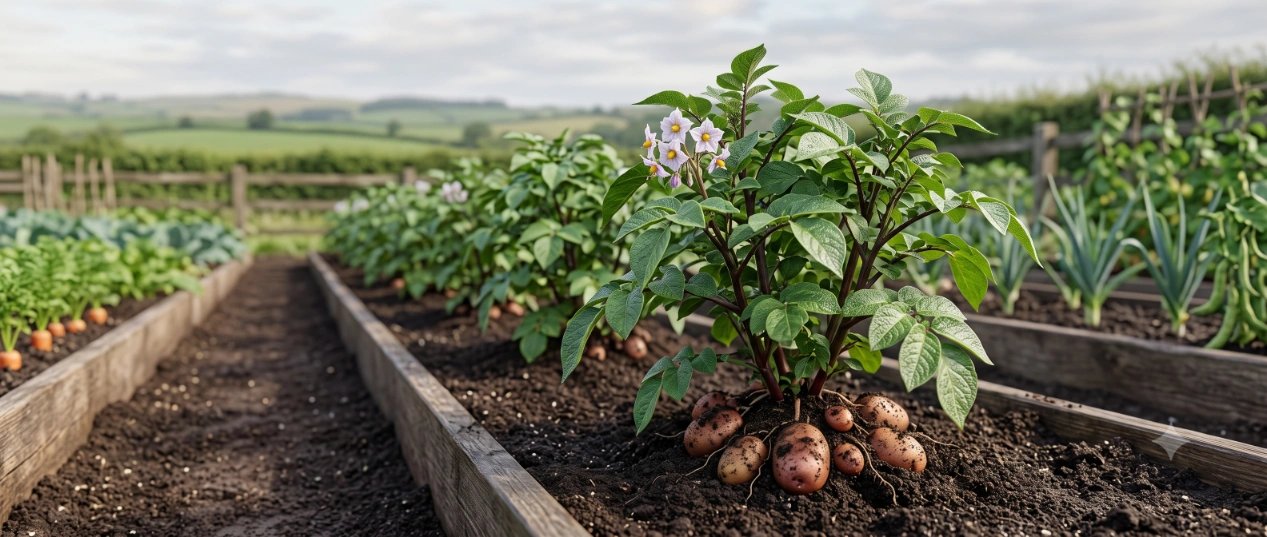
Not every crop is "saved" from seed. Some are propagated vegetatively -- grown on from a piece of the parent plant itself (a tuber, a cutting, a rooted slip, a divided crown) rather than from a seed produced by pollination. This sidesteps cross-pollination, isolation distance, and every other concern on this site entirely, because you're not growing a new genetic individual -- you're cloning the one you already have. This page covers the two true root/tuber staples that work this way, plus points you to the other crops on this site that are usually propagated the same way.
Crops Covered by This Guide
These are propagated vegetatively as standard practice, not from true seed:
Several other crops on this site are also normally grown this way rather than from seed -- each has its own dedicated guide with the specific technique:
Potato: Saving Seed Tubers
- Select small-to-medium tubers from your healthiest, most productive plants
- Never save from plants that showed blight, virus symptoms, or poor vigour
- Store in a cool, dark, frost-free place -- a paper sack in a shed or cellar works well
- Replant the following season; each tuber grows into a genetic clone of the parent
Sweet Potato: Saving Slips
- Save a handful of healthy roots from harvest, cured and stored somewhere warm and dry
- In spring, suspend a root half in water (or bed it in damp compost) to sprout "slips" -- small rooted shoots
- Twist off slips once they have roots and a few leaves, then plant out after frost risk has passed
- One stored root can produce a dozen or more slips
Cassava: Saving Stem Cuttings
- Cassava is grown almost entirely from woody stem cuttings, not seed or root
- At harvest, cut mature stems into 20-30cm lengths, choosing healthy, disease-free plants
- Store cuttings upright in a shaded, humid spot until the next planting window
- Plant cuttings at an angle, burying roughly two-thirds -- new roots and shoots form from the buried nodes
Why Not Grow These From Seed?
All three can technically produce true seed, but it's rarely used in practice. Potato and sweet potato seed is genetically unpredictable -- like an F1 hybrid, the seedling won't match the parent plant, since these crops are highly heterozygous. Cassava rarely flowers reliably in cultivation at all. Vegetative propagation is simply the only practical way to keep growing the exact variety you have.
Garlic: Saving Cloves
- Garlic almost never sets viable true seed -- cultivated garlic is propagated entirely by cloves
- Save the largest, healthiest cloves from your best bulbs at harvest
- Store in a cool, dry, well-ventilated place until autumn planting
- Each clove grows into a genetic clone of the parent bulb
Walking Onion: Saving Bulbils
- Walking onion is a hybrid that produces small bulbils (topsets) on its flower stalk instead of true seed
- Let the stalk bend over and the bulbils touch the ground, or harvest and replant them by hand
- Each bulbil grows into a new, genetically identical plant -- hence the "walking" habit as clumps migrate over the years
The One Risk: Virus Build-Up
Vegetative propagation clones the parent plant exactly -- including any virus it's carrying. Potato and sweet potato in particular accumulate viral load over repeated seasons of home-saved stock, which shows up as declining yield and vigour over several years even though nothing looks obviously wrong. Commercial "seed potato" and certified sweet potato slips are grown from virus-tested stock specifically to avoid this. If your own saved stock starts underperforming after a few years, it's worth buying in fresh certified stock every 3-4 years to reset, rather than assuming it's a soil or weather problem.