
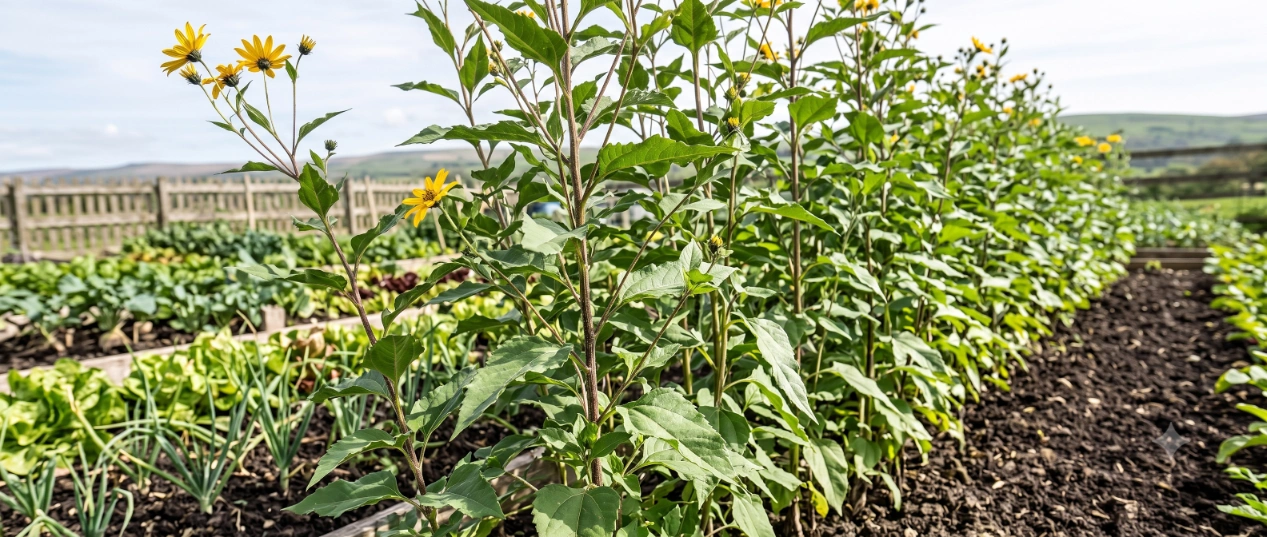
Jerusalem artichoke is the odd one out on this list -- it's almost always propagated by saving and replanting tubers rather than seed, and in many climates it barely flowers at all. If you want "true to type" plants next year, saving tubers is simpler and more reliable than any seed-saving technique. See our Vegetative Propagation guide for the general technique, shared with potato, sweet potato, and several other crops.
New to terms like isolation distance or outcrossing? See the Seed-Saving Glossary.
Seed-Saving Difficulty
✓
Safe to Save
Not usually propagated by seed
How It's Pollinated
Insect-pollinated, but rarely relevant -- most growing is vegetative
(Not usually propagated by seed)
Scientific name: Helianthus tuberosus
Domestic Crops It Can Cross With
- Other Jerusalem artichoke varieties, in principle -- but most gardeners never see this in practice
Wild Relatives & Feral Species
- Related wild sunflowers can theoretically cross, but this is rarely a practical concern
Separation Distances Required
Minimum: Not applicable for tuber propagation
Recommended: N/A
Strict: N/A
Seed-Saving Strategies
- This crop is normally propagated by saving tubers, not seed -- simply keep back a handful of tubers at harvest to replant
- Many varieties rarely flower or set viable seed in cooler climates
- Store spare tubers somewhere cool and slightly moist, or leave in the ground and dig as needed