
Many Mediterranean-climate food crops are genuinely sown in autumn and carried through the mild winter, driven by real winter rain rather than simply avoiding summer heat. A rotation and compost calendar built around that rhythm gets far more out of both your beds and your compost than one built around a conventional spring-to-autumn growing year.
A Simple Three-Bed Rotation
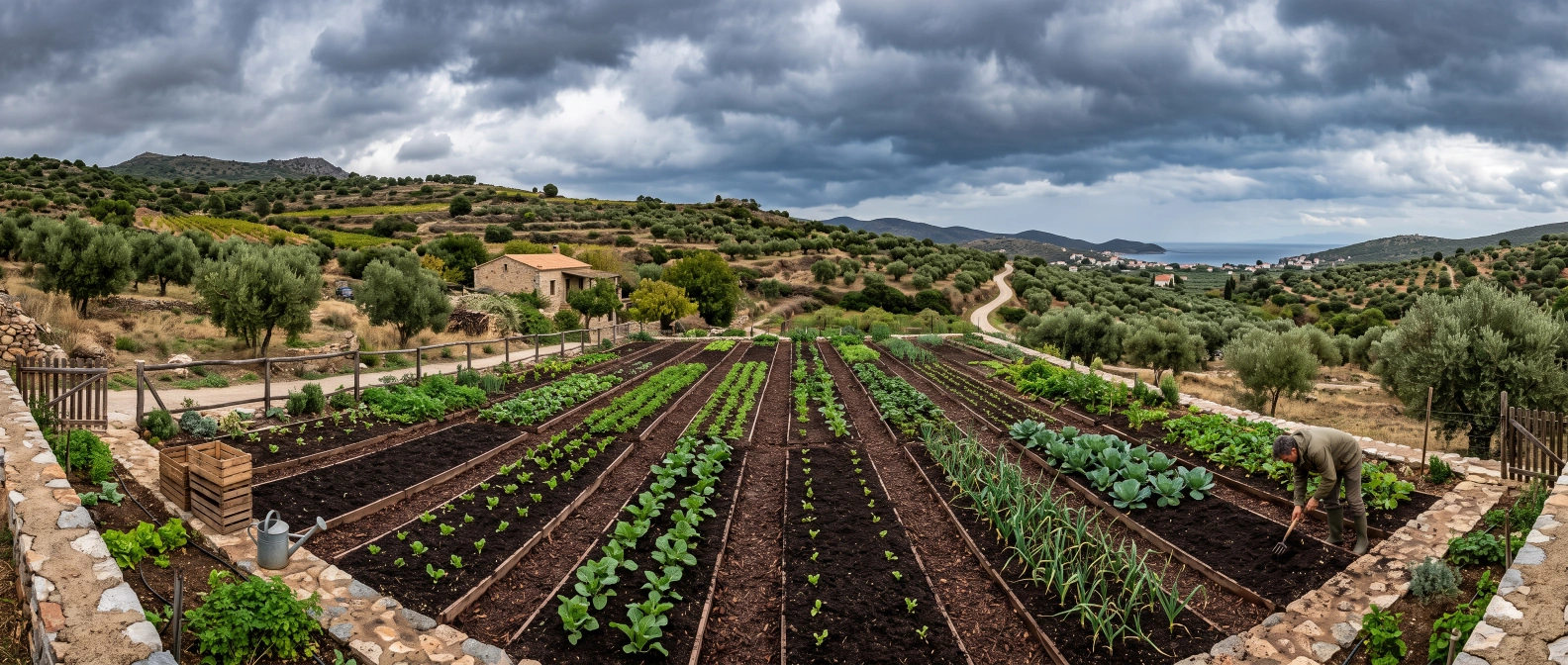
Rotating a small number of beds through wet-season crops, a summer phase, and a rest-or-rebuild stage keeps both soil fertility and the compost supply itself in balance year to year. The table below shows one practical cycle; adapt bed numbers to whatever space you're working with.
| Bed / Stage | Timing | Compost Action |
|---|---|---|
| Bed A -- Main wet-season crop | Sown as autumn rains begin, grown through mild winter | Top-dress with finished compost right before sowing |
| Bed B -- Summer crop or fallow | Heat-tolerant crop under irrigation, or deliberate rest | Mulch heavily; hold compost rather than applying into dry soil |
| Bed C -- Green manure / rebuild | Sown late winter, grown and cut before summer drought sets in | Chop-and-drop into soil; feeds the next wet-season crop |
Using the Wet Season Efficiently
Apply compost as the autumn rains begin, right before or alongside the main sowing window, so nutrients are available exactly when the season's main growth happens, per the timing advice in Chapter 15. This is the single highest-value moment to apply compost all year, don't let a finished batch sit idle waiting for a "better" time that won't come.
Summer: Grow On, or Rest and Rebuild
Through summer, per the drought management in Chapter 11, either grow genuinely heat-tolerant and drought-tolerant crops under irrigation, or treat the bed as a deliberate rest-and-rebuild phase for the compost system itself.
A green manure sown late in the wet season and grown on, per Chapter 12, or simply letting a two-chamber system's resting chamber finish undisturbed as in Chapter 3, both put the quiet summer months to productive use rather than treating them as dead time.
Frequently Asked Questions
Why does this calendar centre on autumn sowing rather than spring?
Because in this climate the mild, rain-fed winter is the main growing window for most food crops, not a dormant season to be waited out. Sowing as the autumn rains begin makes use of naturally moist soil and a long, mild growing stretch, rather than fighting the summer drought that follows.
What should I do with beds through the summer months?
Either grow genuinely heat-tolerant, drought-tolerant crops with irrigation, or treat summer as a deliberate rest-and-rebuild phase for the compost system itself. A summer green manure left to grow and later be cut down, or simply resting a bed under mulch while a two-chamber system's second chamber finishes, both put the quiet season to good use.
When should compost actually go onto the beds in this rotation?
As the autumn rains begin, right before or alongside the main sowing window. This is when compost does the most good, the coming rain works it into the soil and the coming growing season puts its nutrients to immediate use, rather than sitting idle in dry summer ground.