
No other climate in this guide gets quite this dual a benefit from a single practice. A mulched, undisturbed bed here fights both of the year's real extremes, summer drought and winter erosion, rather than just one of them.
The Core Method
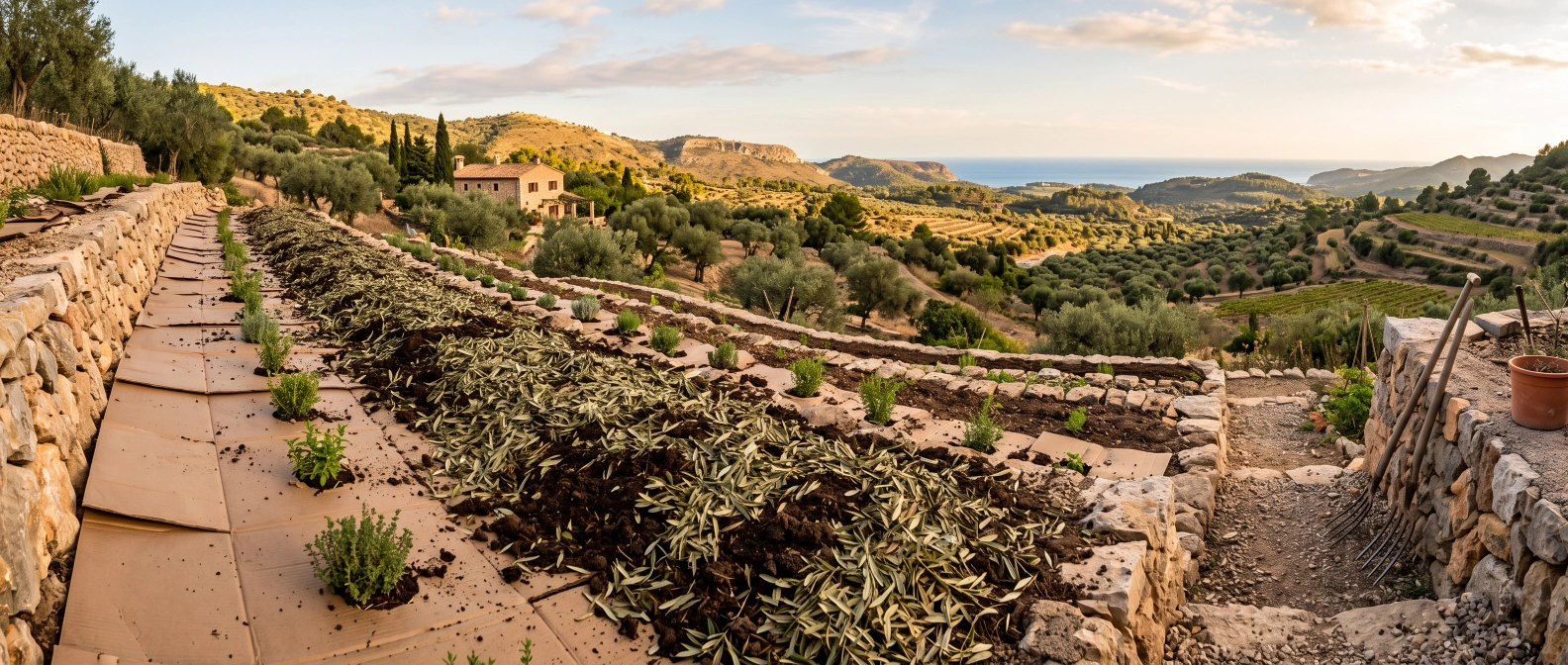
Lay cardboard directly over the bed to suppress weeds beneath it, then build a thick layer of compost and mulch on top. Plant straight into that surface layer rather than digging it into the soil below. The soil structure and biology underneath stay largely undisturbed, and over time the worms and other soil life do the mixing work that a spade used to.
A Genuinely Dual Argument
Through summer, a thick mulch layer shades and insulates the soil beneath it, dramatically slowing moisture loss and helping a bed cope with the long rainless stretch covered in Chapter 11. This is the argument a purely arid climate would make on its own.
But this climate also gets real winter rain, sometimes arriving as heavy downpours after a long dry summer, and on the sloped, terraced terrain common across much of this zone that rain can strip bare or compacted soil badly. A no-dig bed's surface layer absorbs the force of heavy rain and holds the soil beneath it in place, protecting against the erosion that would otherwise wash away a season's worth of built-up fertility.
Stretching a Seasonal Supply
Because compost supply follows the same seasonal rhythm as everything else here, use mulch material generously alongside it rather than relying on finished compost alone. Dried olive leaves, straw, and shredded prunings, per Chapter 6, deliver much of the same moisture-retention and erosion-protection benefit and can stretch a limited compost supply considerably further.
A Twice-a-Year Practice
Because this climate's protection needs genuinely change with the seasons, no-dig mulching here is not a one-off application. Mulch applied ahead of summer protects moisture through the drought months, and the same layer, topped up or refreshed ahead of the winter rains, protects against erosion once the rain returns. Plan on refreshing the surface layer roughly twice a year rather than laying it once and forgetting it.
Frequently Asked Questions
How does the no-dig method actually work?
Lay cardboard directly on the bed to suppress weeds, cover it with a thick layer of compost and mulch, and plant straight into that surface layer without turning or digging the soil beneath. The soil structure and biology underneath stay intact, and the surface layer does the work that digging used to.
Why does no-dig matter so much in a Mediterranean climate specifically?
Because it addresses both of this climate's seasonal extremes at once. A mulched, undisturbed bed retains moisture through the long summer drought, and the same surface layer protects soil from erosion during heavy winter downpours on often-sloped terrain. Few other climates get a benefit this dual from a single practice.
If compost is limited, is no-dig still worth doing?
Yes, and mulch material stretches limited compost a long way. Dried olive leaves, straw, and shredded prunings can be used generously alongside whatever compost is available, providing the moisture-retention and erosion-protection benefits even where finished compost itself is in short supply.