
Every zone in this series has a swapped chapter for an input that doesn't transfer from the original guide, and this is Mediterranean's. Seaweed only works for gardeners with coastal access. Olive and grape cultivation, by contrast, define the agricultural landscape of most of this climate zone, inland as well as coastal, which makes woody prunings the genuinely dominant, characteristic local compost input here.
Olive Prunings, Leaves & Pomace
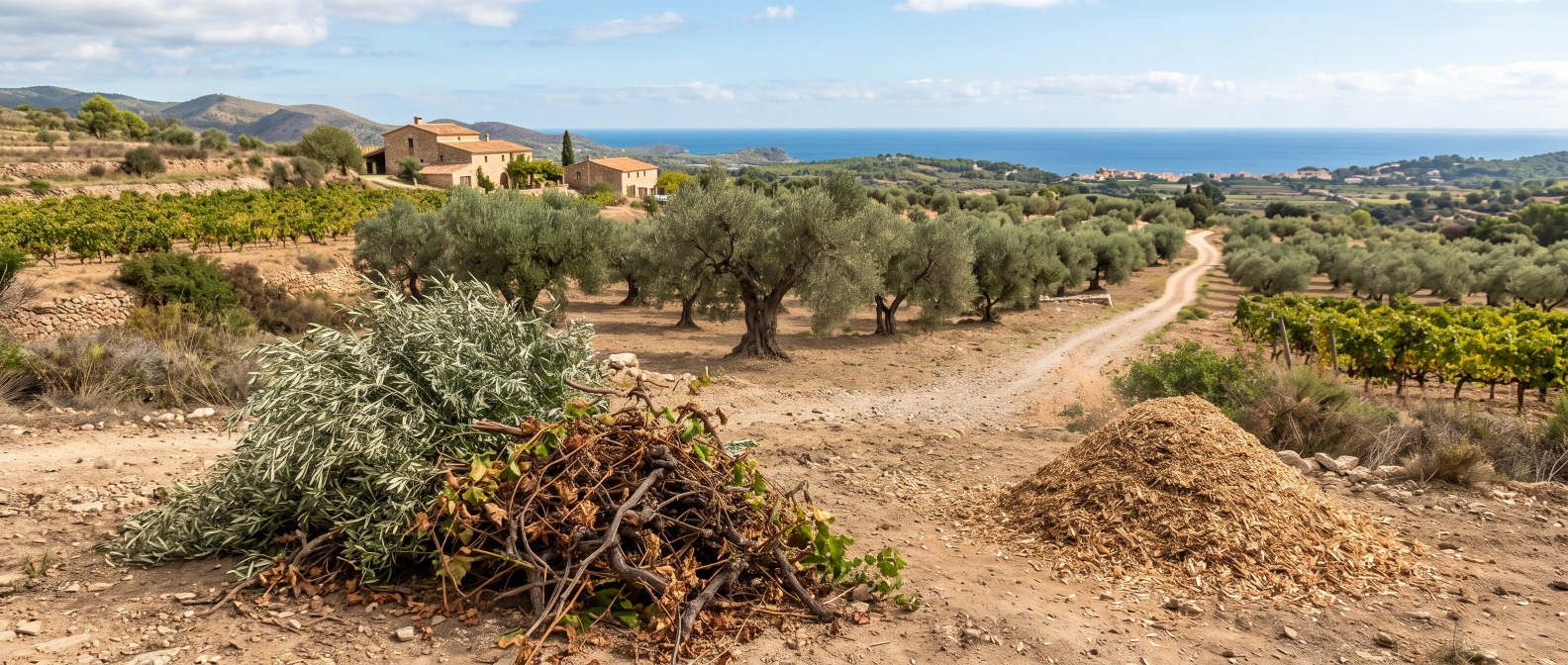
Annual olive pruning produces a genuinely large quantity of woody material every year across most of this zone. Olive wood is dense and slow to break down whole, so it rewards shredding or chipping far more than most prunings do. The leaves that come off with the branches are more moderate, softer, faster to break down, and worth stripping off and composting separately where practical rather than leaving them tangled in with the woody stems.
Where olive oil pressing happens locally, the leftover pomace, the pressed pulp of skins, pits and flesh, is a useful, concentrated byproduct worth composting if it's available. It's richer and breaks down faster than the woody prunings, and makes a good complement to them in the same heap.
Grape Vine Prunings & Marc
Vine prunings are woody too, but thinner and generally easier to break down than olive wood, especially once shredded. Where wine or juice production happens locally, grape marc or pomace, the skins, seeds and stems left over after pressing, is a genuinely valuable, nitrogen-richer byproduct compared to the woody prunings themselves, and well worth seeking out if it's available nearby.
Mixing marc into a heap alongside shredded prunings gives a useful spread across the carbon-to-nitrogen range in a single characteristic local input pairing, similar in spirit to how other zones pair a woody brown with a nitrogen-rich green.
Other Orchard Prunings
Citrus, almond, fig and other fruit trees are common across this climate alongside olives and grapes, and their prunings follow the same principles: woody, slow to break down whole, and much more manageable once shredded or chipped. In a Mediterranean-climate region where olives or grapes aren't the dominant local crop, whatever woody orchard prunings are most abundant nearby step into the same role described throughout this chapter.
Shred or Chip Before Composting
This is the single most important practical point in this chapter. Whole branches and canes, left intact, can genuinely take years to break down in a heap, tying up space and doing very little in the meantime. Shredding or chipping the material first, even with a basic hand tool for smaller volumes, dramatically increases the surface area exposed to composting microbes and turns a multi-year problem into weeks or months. Where the volume of woody material is too great to shred and compost practically, or where the wood is especially resinous or slow to break down, that same material is often excellent biochar feedstock instead (see Chapter 9), a genuinely useful alternative use for exactly the material that composting struggles with most.
Frequently Asked Questions
Why prunings instead of seaweed in this chapter?
Because seaweed only makes sense for gardeners with coastal access, while olive and grape cultivation define the agricultural landscape of most Mediterranean-climate regions, coastal and inland alike. The Mediterranean basin itself, California, central Chile, South Africa's Western Cape and South Australia are all significant olive or wine-growing regions, which makes woody prunings a genuinely universal input across this zone in a way seaweed never could be.
Do olive and grape prunings need to be shredded before composting?
For any realistic timeline, yes. Whole branches and canes are woody enough that they can take years to break down sitting in a heap, tying up space and slowing everything piled around them. Shredding or chipping the material first, even roughly, dramatically increases the surface area microbes can work on and turns a multi-year problem into a manageable compost input.
What if a region doesn't grow olives or grapes specifically?
The same principle still applies. Citrus, almond, fig and other orchard trees are common across this climate, and their prunings behave the same way as olive or vine prunings, woody, slow to break down whole, and much faster once shredded or chipped. Wherever olives or grapes aren't the locally dominant crop, whatever woody orchard prunings are most abundant locally fill the same role.