
Knowing when compost is ready is universal. Knowing when to actually use it is where this climate's genuine seasonal window matters, and getting the timing right makes a real difference to how much good it does.
Knowing When It's Ready
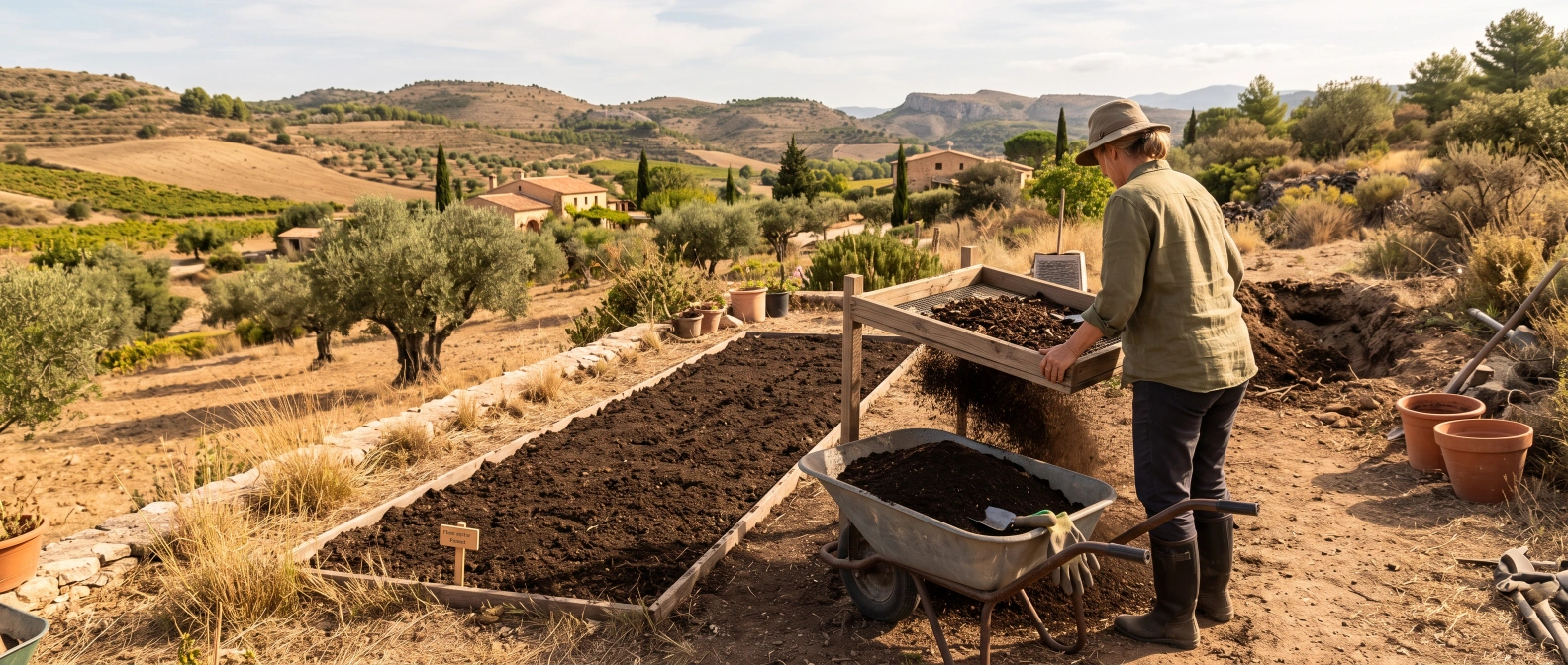
Finished compost is dark brown to black, crumbly rather than clumped or slimy, and smells like fresh earth rather than anything you recognise from the original ingredients. If you can still pick out identifiable scraps, twigs, or leaf shapes, it isn't finished yet, give it more time rather than using it too early. These signs hold regardless of climate, what differs here is what you do next.
Timing the Application
The best timing is applying compost at the start of or during the wet season. The coming rains help work it into the soil, and the coming growth season, covered in Chapter 17, can make immediate use of the nutrients it releases. Compost applied into dry, baked summer soil does far less for you, most of its value sits idle until the rain eventually returns.
This is exactly why the two-chamber system's resting chamber, described in Chapter 3, is such a good fit for this climate. A batch that finishes over summer can simply be held in place rather than applied straight away, ready to go onto beds right as the autumn rains begin, when it will actually do the most good.
Mulch, Not Just Dig-In
Applying finished compost as a surface mulch or top-dress, rather than digging it fully into the soil, protects it and the soil beneath from both summer drying and winter erosion, tying directly into the no-dig approach covered in Chapter 18. Digging still has its place for badly compacted ground, but a surface layer is generally the better default here.
Sieving for Different Uses
Sieve finished compost through a simple mesh screen to produce a fine, even material suited to seed-starting mixes and delicate transplants. The coarser material left behind is still perfectly good, use it as a general soil conditioner or as mulch, nothing needs to be wasted just because it's too chunky for seed trays.
Frequently Asked Questions
How do I know my compost is actually ready to use?
The signs are the same as in any climate. Finished compost is dark, crumbly and smells like earth, not like the materials that went into it. If you can still recognise individual scraps, twigs or leaves, it needs more time. Texture and smell tell you far more reliably than a fixed number of weeks or months.
When is the best time to apply compost in this climate?
At the start of or during the wet season. Applying then lets the coming rains help work the compost into the soil, and the coming growth season can put it to immediate use. A batch that finishes over summer is often better held until the autumn rains begin, since its benefit is much more limited applied into dry summer soil.
Should I dig compost in or use it as a surface mulch?
Applying it as a mulch or top-dress rather than digging it in generally serves this climate better. A surface layer protects both the compost and the soil beneath it from summer drying and from winter erosion, doing double duty rather than just feeding the soil once and being gone.