
A green manure builds soil fertility by growing it in place rather than composting it elsewhere first. In a Mediterranean climate, with its sharply bounded mild wet season and long dry summer, timing is everything: the right winter-growing species, sown and cut at the right points, can add real fertility to a bed before the dry season makes further growth impossible without irrigation.
The Core Principle
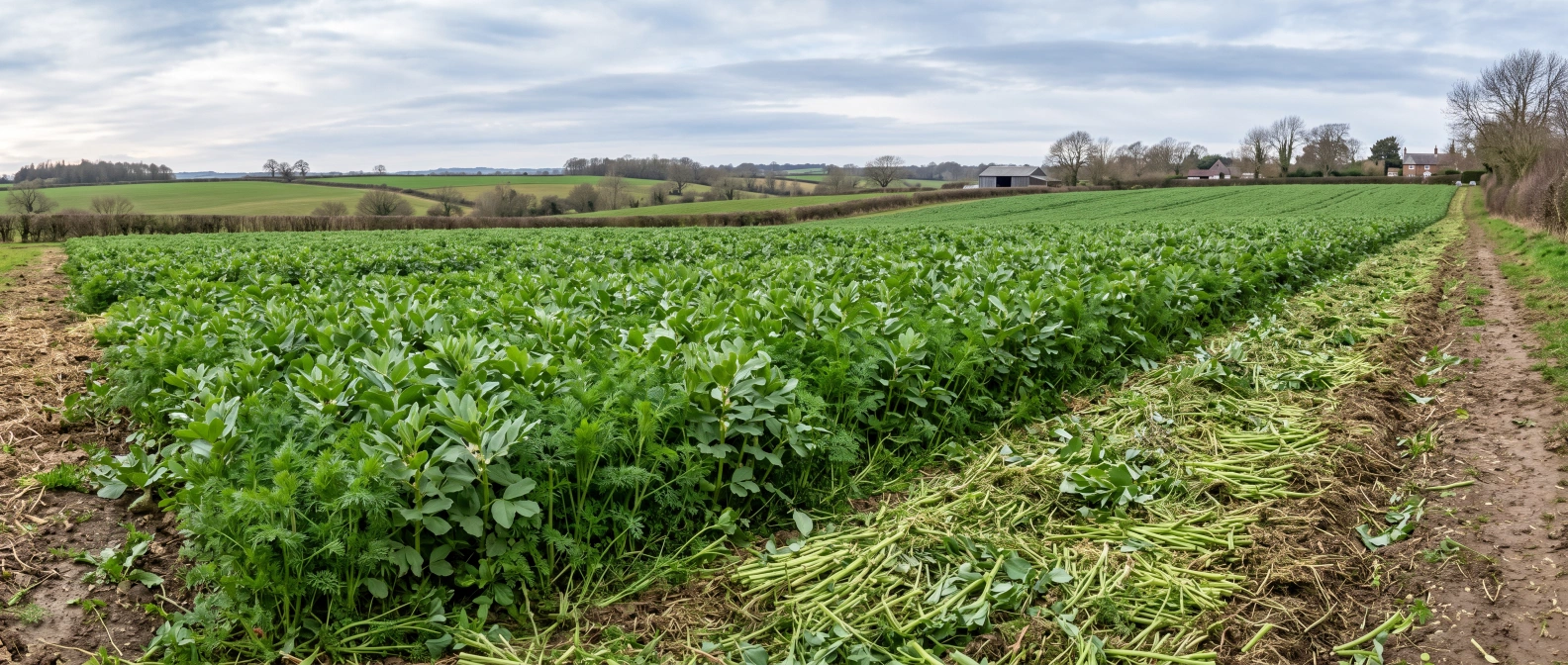
Legume green manures fix nitrogen from the atmosphere through bacteria living in nodules on their roots, converting it into a form plants can use once the crop breaks down. Whether or not a species is a legume, its root system also builds organic matter and soil structure as it grows, opening up compacted soil and leaving channels and organic residue behind once the roots decompose.
Once the crop has done its growing, it's cut and either dug into the soil to speed the return of its nutrients, or left on the surface as a mulch to break down more slowly, protecting the soil surface in the process. Both approaches return fertility to the bed; which one suits a given situation depends mostly on timing and how much surface protection is wanted going into summer.
Classic Mediterranean Winter Covers
- Fava (broad) beans are a genuinely traditional winter-sown crop across the Mediterranean basin, grown both as a green manure and as a food crop in their own right, tolerant of the mild, wet winter conditions here.
- Field peas share much of the same traditional role, a hardy legume cover sown as winter rains begin and grown through to spring, fixing nitrogen and building organic matter along the way.
- Vetch is another classic winter-growing legume, used historically across Mediterranean agriculture as a cover crop valued for vigorous growth and strong nitrogen fixation through the cool season.
Timing: Sow With the Rains, Cut Before the Drought
Sow as the autumn rains begin, when the soil is wetting up and germination conditions are good. The crop then grows through the mild winter and into spring, the same window that drives most other plant growth in this climate (see Chapter 1).
Cut and incorporate or mulch the crop before the summer drought sets in, not after. Like most plants here, these covers will themselves struggle or die back once the dry season arrives without irrigation, so waiting too long simply wastes the growth already made. Getting the sowing and cutting windows right matters more in this climate than somewhere with a longer or less sharply bounded growing season, since there's genuinely no room to run a winter cover crop into summer the way a wetter climate might allow.
Chop and Drop as Pre-Summer Protection
Cutting the crop at ground level and leaving the cut material where it falls, rather than removing it, is the simplest version of using a green manure. Left as a surface mulch, the cut stems and leaves both return nutrients as they break down and help protect the soil surface going into summer, tying directly into this zone's broader drought management strategy (see Chapter 11) and its no-dig approach (see Chapter 18), where an undisturbed, mulched bed handles both summer drought and heavy winter rain better than bare, worked soil.
Frequently Asked Questions
What exactly does a green manure do for the soil?
A green manure is a cover crop grown specifically to build soil fertility rather than to harvest. Legume species fix nitrogen from the air via bacteria in their root nodules, while nearly all green manures build organic matter and improve soil structure through their root systems as they grow. The crop is then cut and either dug into the soil or left on the surface as a mulch, returning that fertility to the bed.
Which green manures actually suit a Mediterranean climate?
Classic winter-growing legumes with a genuine history in Mediterranean-basin agriculture: fava or broad beans and field peas, both traditionally sown as winter cover and food crops across this climate zone, and vetch, another traditional winter-growing legume cover crop used historically throughout the region. All three are sown as the rains begin and grow through the mild winter into spring.
Why does timing matter more here than in other climates?
Because the growing window is sharply bounded. Green manures here are sown in autumn as the rains begin, grown through winter and into spring, then cut and incorporated or left as mulch before the summer drought sets in, since these covers will themselves struggle or die back once the dry season arrives without irrigation. Getting the sowing and cutting dates right matters more here than in a climate with a longer or less sharply defined growing season.