
A Mediterranean climate -- the mild-winter, dry-summer regions found around the Mediterranean basin itself, coastal and inland California, central Chile, South Africa's Western Cape, and South Australia -- is genuinely a two-season climate, not simply a warm one. Understanding this properly, not just as a list of tips but as the actual seasonal rhythm behind it, is the foundation everything else in this guide builds on.
The Challenges
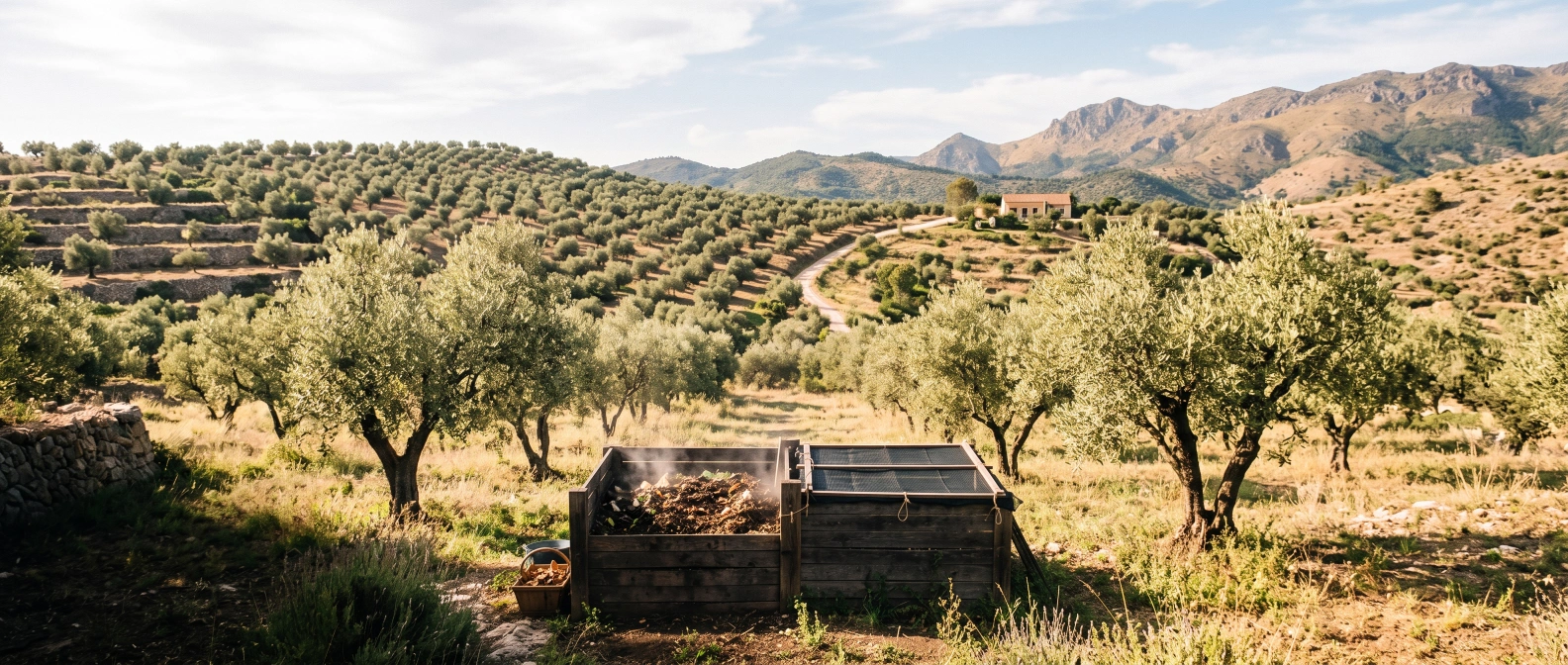
A long, essentially rainless summer can stall a heap completely
This is the central challenge, and it catches out gardeners who assume that because real rain falls the rest of the year, summer will look after itself. It won't. Two to four rainless months combined with strong sun is enough to dry out and stall an unprotected heap just as surely as in a true arid climate, and once dry, a heap doesn't restart on its own, it needs deliberate rewetting. This is why summer drought management runs through this guide as its own core skill (see Chapter 11).
Nitrogen-rich material is seasonal, not scarce
Unlike a genuinely arid climate, this zone gets a real flush of plant growth through the mild wet season, so fresh green material is genuinely abundant, just not year-round. The skill here is timing: making the most of that growth window while it lasts, rather than assuming a steady trickle of greens will be available through summer the way it might be in a wetter climate.
Thin, often calcareous soils start from a lower baseline
Much of this zone has been under cultivation for thousands of years, and the soils reflect it, often thin, stony and calcareous, with less natural organic matter than younger or less heavily worked soils elsewhere. This raises the stakes on consistent composting rather than lowering them (see Chapter 19).
Heavy winter downpours can cause real erosion
After a long dry summer, winter rain often doesn't arrive gently. On the sloped, terraced terrain common across much of this zone, a heavy downpour on bare or compacted ground can cause genuine runoff and erosion, washing away exactly the soil and nutrients a season of careful composting worked to build. Managing this is as much a part of good practice here as managing the summer drought itself.
The Advantages
- A genuinely active, mild wet season drives real plant growth without the extremes of a true monsoon or the deep freeze of a boreal winter, giving a heap a long, workable active period.
- Low fungal disease pressure through the warm, dry summer months, compared to consistently humid climates where mould and fungal issues trouble a heap far more.
- Abundant olive, grape and orchard prunings provide a reliable, characteristic carbon input across most of this zone, coastal or inland (see Chapter 6).
- A genuine rest-and-turn rhythm that suits the two-chamber composting method particularly well, feeding one chamber hard through the wet season while the other finishes through the dry one (see Chapter 3).
Frequently Asked Questions
Is a Mediterranean climate basically the same as an arid one for composting purposes?
No, and treating it that way misses the real opportunity here. An arid climate is dry nearly all year round, while a Mediterranean climate genuinely alternates between a mild, wet, plant-growing winter and a long, dry summer. The techniques that matter most, like deliberately building and feeding a heap hard through the wet season, only make sense once that real seasonal swing is understood, rather than defaulting to arid-style water conservation as the only strategy.
Why does summer stall a compost heap here even though it isn't a true desert?
Because a genuinely rainless stretch of two to four months, combined with strong summer sun, is more than enough to dry out an unprotected heap even in a climate that gets real rain the rest of the year. Composting microbes need consistent moisture, and a heap that dried out fine through spring can still stall completely by late summer without deliberate shade, mulch and at least occasional watering.
Does a Mediterranean climate actually have any advantages for composting?
Genuinely, yes, and they matter as much as the challenges. The mild wet season drives real plant growth without the extremes of a true monsoon or the deep freeze of a boreal winter, giving a heap a long, workable active period with abundant fresh green material. Warm, dry summers also mean low fungal disease pressure, and the region's characteristic olive, grape and orchard prunings provide a reliable, abundant carbon input most other climates don't have in the same quantity.