
Knowing when compost is ready is universal. What changes in this climate is what to do with it once it is: a short growing season means the timing of application matters far more here than it would somewhere with months to spare either side of the main season.
Knowing When Compost Is Ready
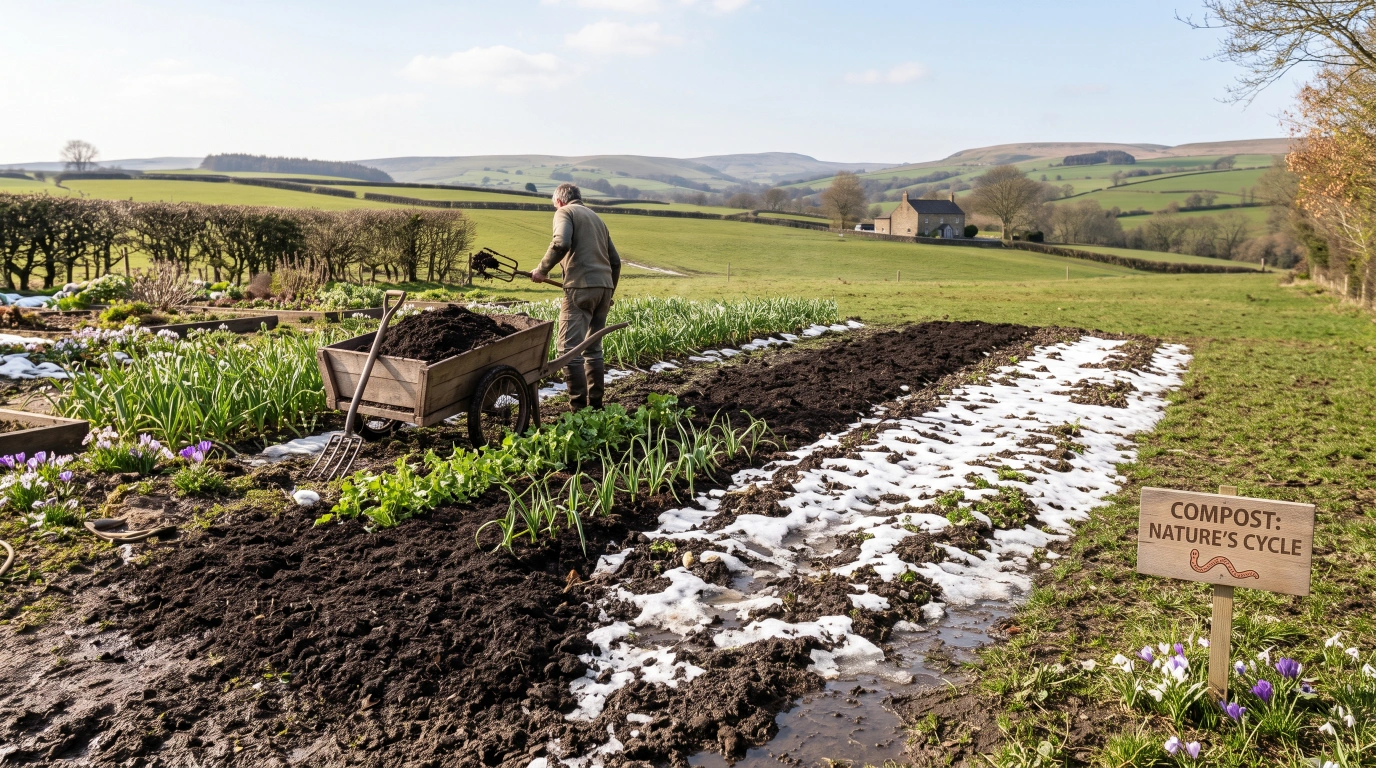
The signs of finished compost don't change with climate. It should be dark and crumbly in texture, smell like fresh earth rather than anything sour, ammonia-like or rotten, and the original materials, whether that's kitchen scraps, garden waste or bedding, should no longer be recognisable as individual items. If you can still see identifiable pieces of what went in, or the pile still feels hot or smells off, give it more time before using it.
Apply Promptly, Don't Hold It Back
Because the growing season here is short, the priority is getting finished compost onto beds as early as the ground is workable in spring, rather than waiting for a larger stockpile or a more convenient moment. Every week compost sits unused is a week of nutrient availability lost from a season that's already compressed. The same logic applies mid-season: if a heap finishes in high summer, apply it right away to benefit that season's crops directly rather than holding it over for next year. Compost that isn't in the ground isn't doing anything for you.
If a Heap Doesn't Finish Before Autumn
Not every batch will finish within a single short season, and that's fine. It's generally better to let an unfinished heap overwinter properly insulated, following Chapter 11, and let it complete and be applied the following spring, rather than trying to force it into use before the ground locks up. Immature compost applied too early can rob the soil of nitrogen as it continues to break down and won't behave the way finished, stable compost does. Patience across the winter costs nothing; a half-finished batch spread too soon can actually work against you.
Sieving for Seed-Starting Mix vs. Coarser Soil Conditioner
Sieving finished compost to produce a fine, even seed-starting mix is particularly valuable in this climate, since starting seedlings indoors ahead of the short outdoor season is a common and often essential strategy here, see Chapter 17. Sieve compost through a coarse mesh to remove twigs, undecomposed fragments and stones, keeping the fine material for trays and pots. The coarser leftovers aren't waste, they still work perfectly well dug into beds or spread as a general soil conditioner where texture matters less than nutrient content.
Frequently Asked Questions
How do I know when compost is actually ready to use?
The signs are the same as in any climate: it should be dark, crumbly, smell like earth rather than anything sour or ammonia-like, and the original materials should no longer be recognisable. If you can still pick out identifiable scraps of what went in, it needs more time.
Should I wait for a bigger batch before applying compost here?
No, generally not. Because the growing season is so short, it's better to apply finished compost promptly once the ground is workable in spring, so nutrients have the maximum possible time to be taken up before the ground freezes again, rather than holding it back and waiting for a larger amount. The same applies to a batch that finishes mid-summer, it can go straight onto the current season's beds rather than being saved for later.
What if my compost isn't finished before autumn?
It's generally better to let it overwinter properly insulated and finish it the following spring, rather than trying to force an incomplete batch into use before the ground freezes. An unfinished batch applied too early can tie up nitrogen and won't have the crumbly, stable structure that makes finished compost effective.