
Liquid feeds give plants a fast, readily available nutrient boost between solid compost applications. The method is simple and doesn't change much by climate, but frost risk here shapes both when you can safely apply them and how you have to store them.
The Basic Compost Tea Method
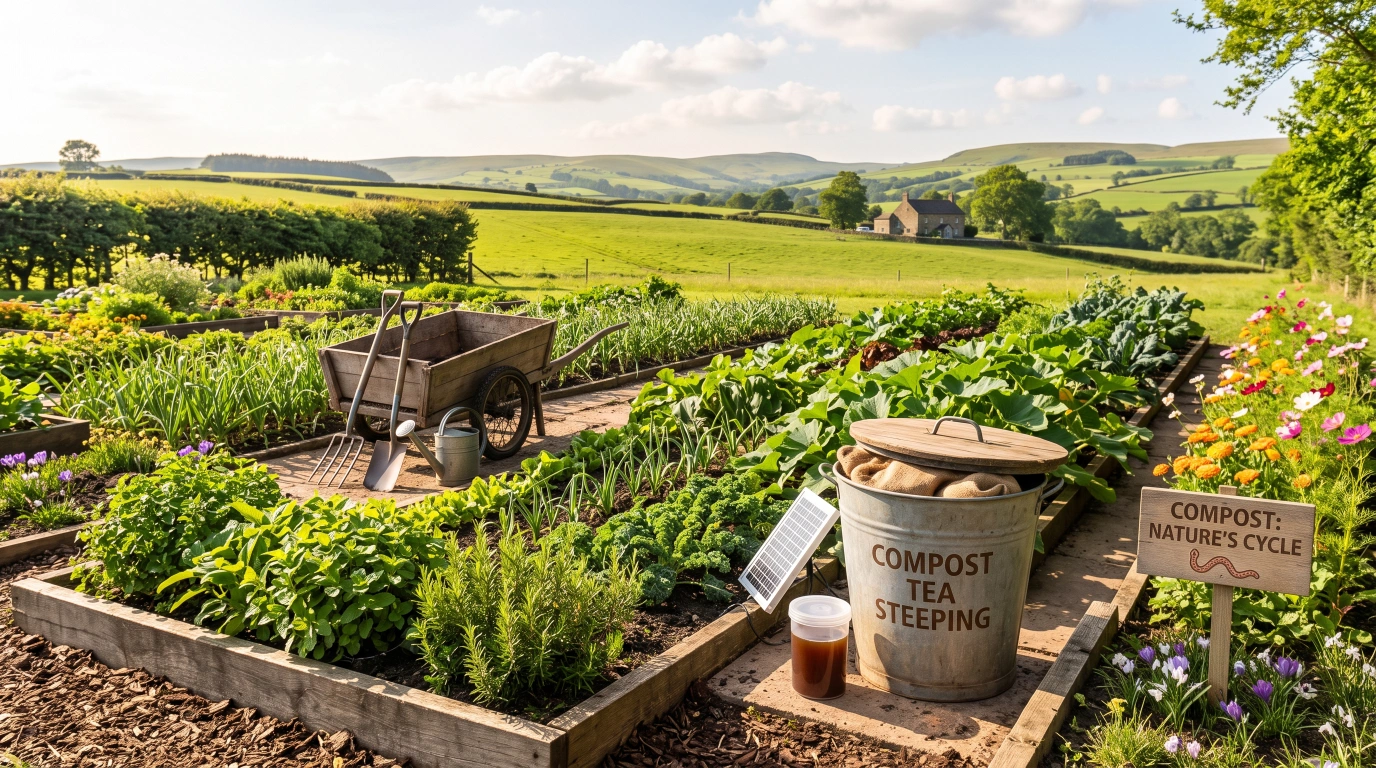
Steep a scoop or two of finished compost in a bucket of water, ideally stirring or aerating it periodically over a day or two rather than leaving it to sit undisturbed. This keeps the brew oxygenated and prevents it turning sour. Strain out the solid material (which can go back onto the heap or straight onto a bed) and dilute the remaining liquid before applying it, roughly the colour of weak tea, around the base of plants.
Frost Risk Changes Timing and Storage
This is the one thing that genuinely differs here from a milder climate. A bucket of liquid tea or feed left outside can freeze solid overnight even in shoulder seasons, and if the container is sealed or narrow-necked, the ice expanding as it forms can crack or split it. Time any application to a frost-free window rather than a late-evening top-up that might freeze before it's absorbed, and if you're storing liquid feed rather than using it immediately, keep it somewhere it genuinely won't freeze, an insulated shed, a cellar, or indoors, not a container left standing in the open.
Urine and Comfrey or Nettle Tea
Urine diluted roughly 1:10 with water is the simplest liquid feed available, since it needs no growing season and no plant material, which makes it particularly useful early on, before much else in the garden is established enough to make tea from. Once comfrey or nettle, the same cold-hardy plants covered as activators in Chapter 8, are established and putting on real growth, they make an excellent liquid feed steeped the same way as compost tea, and are worth planting specifically for this purpose given how useful they are through the rest of the season.
Apply During the Active Window, Not at the End of It
Liquid feeds work by giving plants a quick nutrient boost they can use right away, so they only make sense while plants are actively growing and have time to benefit before frost. Apply during the active growing window described in Chapter 13, not as a late-season measure squeezed in just before the first hard frost, when there simply isn't enough remaining season left for the feed to do any good.
Frequently Asked Questions
How do I make a basic compost tea?
Steep finished compost in water for a day or two, stirring or aerating it periodically to keep it from turning stagnant, then strain out the solids and dilute the liquid before applying it around plants. It's a simple, low-effort way to get a quick liquid feed from compost you already have.
Can I leave compost tea or liquid feed outside overnight here?
Not safely once frost risk is a possibility. A liquid tea or feed left outside can freeze solid, and if it's in a sealed or narrow-necked container, freezing can split or crack it. Time application to frost-free windows, and store any liquid feed you're keeping somewhere it won't freeze, such as an insulated shed or indoors, rather than leaving it exposed.
What's the simplest liquid feed if nothing is growing yet to make tea from?
Urine diluted about 1:10 with water. It's always available regardless of the season, needs no growing plant material, and is particularly useful early in the year before comfrey, nettle or other tea plants have put on enough growth to harvest from.