
A long temperate spring-to-autumn cycle isn't available here. Rotation and compost application both have to work around a short, intense growing season, and the long cold gap either side of it needs a deliberate plan rather than being left idle.
A Simple Rotation for a Short Season
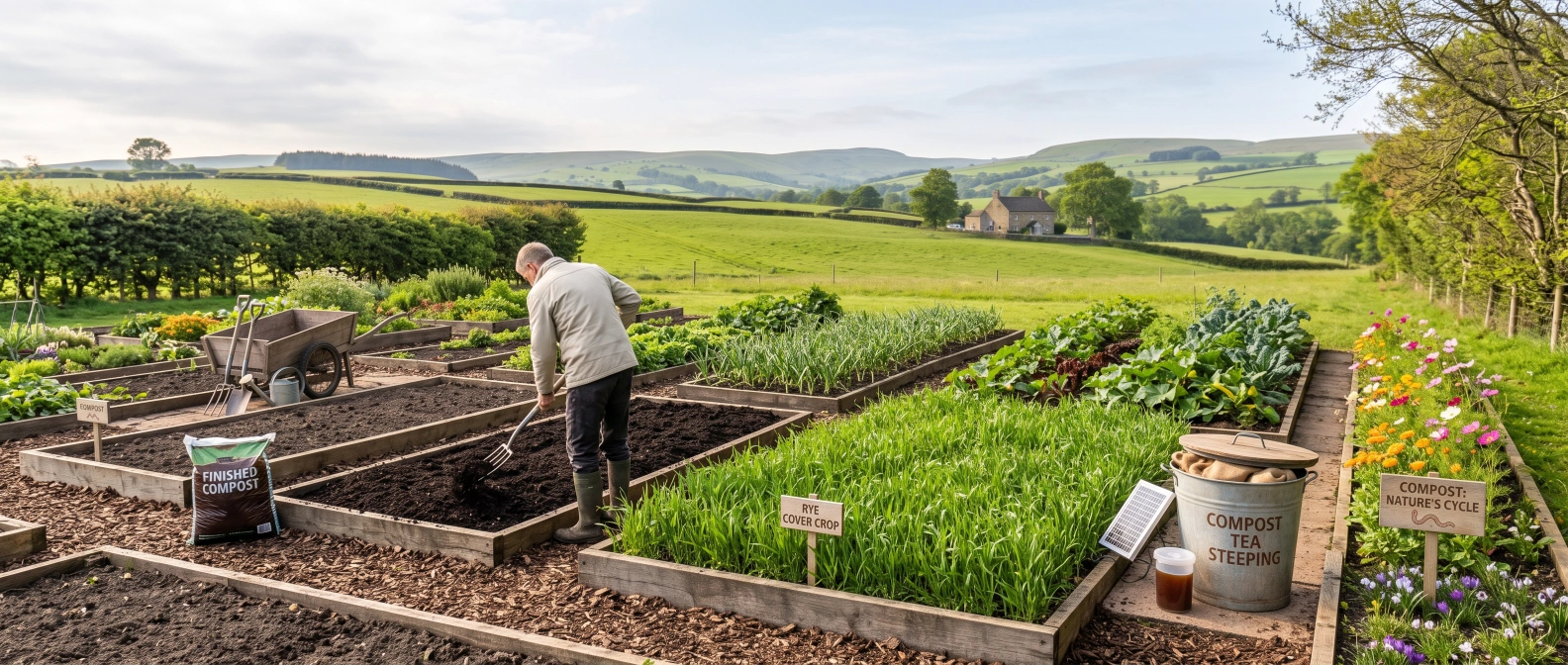
A simple three- or four-bed rotation still works well here, moving crop families through beds year to year to avoid the pest and disease build-up that comes from growing the same thing in the same soil repeatedly. What's different is how tightly the whole cycle, compost application, planting, harvest and the following cover crop, has to be compressed. Apply compost the moment the ground is workable in spring rather than easing into the season, favour fast-maturing varieties or succession sowing where the season allows it to squeeze more out of the limited window, and use the long gap from autumn to spring productively with an overwintering green manure per Chapter 12, rather than leaving a bed bare and doing nothing for half the year.
A Sample Compost & Bed Calendar
This is one workable pattern for a single bed across a full year here; adjust exact dates to your own local thaw and freeze.
| Stage | Timing | Compost Action |
|---|---|---|
| Early spring thaw | As soon as the ground is workable | Turn in last autumn's green manure; apply finished compost promptly |
| Main planting | Immediately after compost application | Plant into the freshly composted bed without delay |
| Mid-season | Height of the short summer | Liquid feed as needed; apply any heap that finishes mid-summer right away |
| Succession / second crop | If season length allows | Light top-up of compost between fast-maturing successions |
| Autumn harvest | As the season closes | Clear bed; sow overwintering green manure immediately |
| Winter | Ground frozen | Bed rests under green manure; heap insulated and dormant |
Using the Short Season Efficiently
Where the season genuinely allows it, succession planting or choosing deliberately fast-maturing varieties squeezes more out of a compressed window than a single slow crop would. This isn't always possible in the shortest boreal seasons, but where it is, a bed can produce two lighter harvests instead of one, with a light top-up of compost between them rather than a full fresh application each time. Match this to how you're harvesting and using compost overall, see Chapter 15, applying whatever's ready rather than banking it.
Don't Leave the Long Gap Idle
The stretch from autumn harvest to spring planting is long here, often much longer than the active season itself, and leaving a bed bare through it wastes months that could be building fertility instead. An overwintering green manure, sown right after autumn harvest per Chapter 12, protects the soil surface through freeze-thaw cycles and gets turned in as the first step of the following spring's cycle, feeding the next season's crops rather than leaving the ground to sit empty and exposed.
Frequently Asked Questions
How does crop rotation here differ from a longer-season climate?
The core principle, not growing the same crop family in the same bed two years running, doesn't change. What changes is the pace: the whole cycle of compost application, planting and harvest has to happen inside a much shorter window, and the long gap between autumn and spring needs a deliberate plan rather than being left as idle bare soil.
When should compost go onto beds in this climate?
As early as the ground is genuinely workable in spring, not before it thaws and not held back for convenience. Applying promptly gives crops the maximum possible time to use those nutrients before the short season ends and the ground freezes again.
What should I do with a bed once autumn harvest is finished?
Sow an overwintering green manure rather than leaving the bed bare. A hardy cover crop uses the long autumn-to-spring gap productively, protecting and feeding the soil through winter, and gets turned in ahead of the next season's compost application and planting.