
Most compost problems in a cool or boreal climate trace back to the same root cause: the short, intense season and the long hard freeze that bookend it. The fixes below are the practical, honest responses to the failures that actually happen here, not generic composting advice.
The Heap Froze Solid Before It Finished
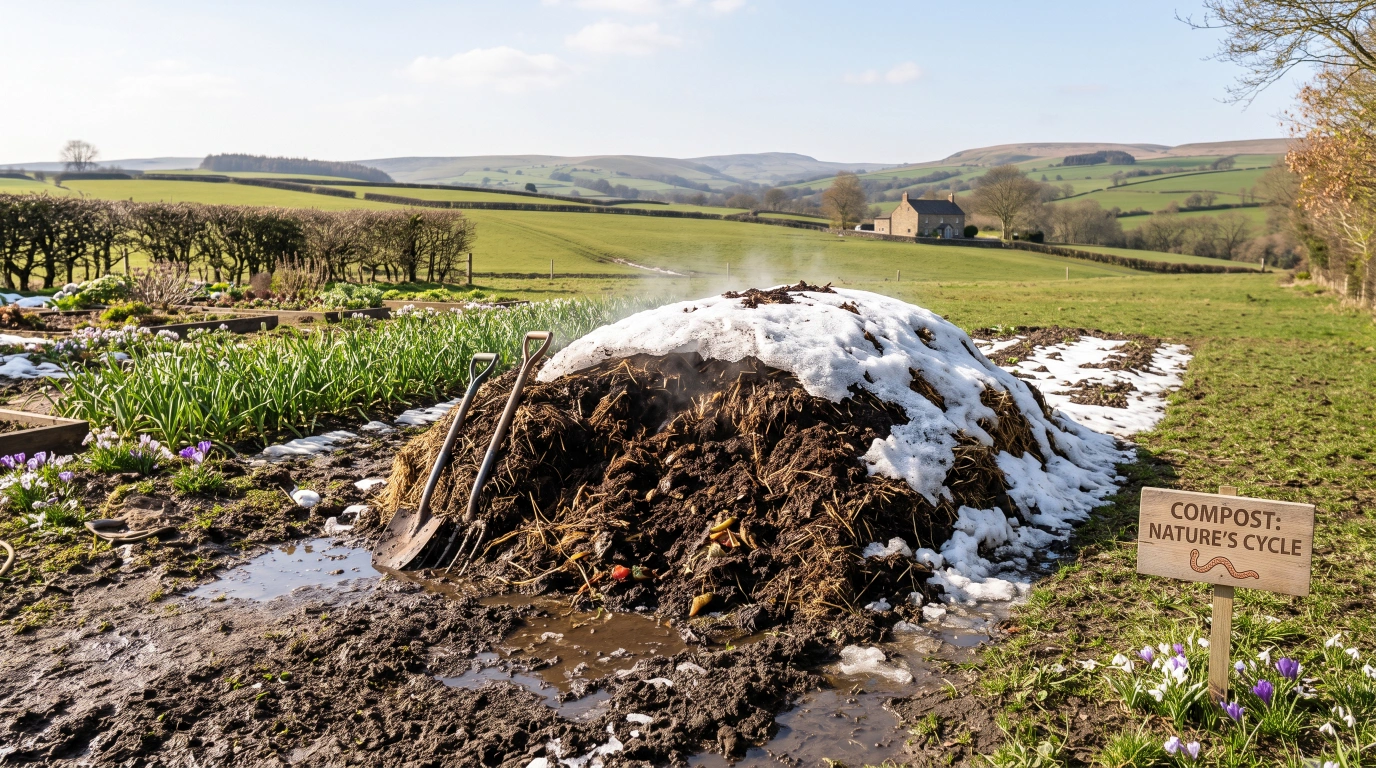
This is the most common failure specific to this climate, and it isn't really something you can fix mid-winter. Once a heap is frozen through, there's no practical way to restart decomposition until temperatures recover, so trying to intervene in January usually does more harm than good. Instead, accept the pause as normal. Check that the heap is insulated as well as you can manage per Chapter 11, to minimize any further damage from the depths of the cold, and simply wait. Resume turning and active management once spring temperatures genuinely allow it, and use the experience: next year, build and insulate the heap earlier, before the freeze catches an unfinished batch out again.
Cold Slush or Waterlogging at Spring Thaw
As snow and ice melt, that water has to go somewhere, and if it saturates material that's still too cold to process it, the heap can turn into a cold, sodden, airless mass rather than resuming active decomposition. The fix has three parts: improve drainage at the base of the heap so meltwater can pass through and away rather than pooling, turn the heap once temperatures have genuinely warmed enough to work with it, reintroducing air to material that's been sitting compacted and wet, and then be patient. Full activity doesn't switch back on the moment the ice is gone, it can take a few weeks of warming for the heap to really get going again.
The Heap Never Got Going At All
When a heap sits lifeless all season, the cause is usually timing rather than technique. Starting a heap partway through the short warm season, once some of the available window has already passed, leaves too little time and too little material for it to build real momentum before the cold returns. The fix isn't a different recipe, it's different timing: start deliberately at the very beginning of the warm season next time, building and feeding hard from day one, following the seasonal guidance in Chapter 13 rather than easing in once the season is already underway.
The Heap Runs, But Stays Lukewarm Even in Summer
A heap that's active but never really heats up, even during the warmest part of the season, is usually too small for this climate. Heat loss to cold surrounding air and ground is a bigger problem here than almost anywhere else, so this guide recommends a larger-than-usual minimum size to compensate, see Chapter 3. The other common cause is insufficient nitrogen, often the result of too short a gathering window for fresh green material, see Chapter 4. Check size first, then check the balance of fresh material going in.
Cold-Climate Pest Problems
Wildlife is drawn to a compost heap looking for food, and in a harsh climate where forage is genuinely scarce for animals too, that pressure can be worse rather than better than in a milder climate. Avoid putting meat or dairy in the heap at all, site the heap sensibly away from the house rather than right next to it, and use a secure, enclosed structure per Chapter 3 rather than an open pile that offers easy access.
Frequently Asked Questions
My heap froze solid before it finished a batch. Is that batch ruined?
No, it's paused rather than ruined. A frozen heap isn't decomposing, but it also isn't spoiling, since the cold that stopped it also holds it stable. The practical response is to accept the pause, make sure the heap is as well insulated as you can manage so it isn't damaged further by the worst of the cold, and resume active management once temperatures allow again in spring. Treat it as useful experience for building and insulating earlier the following year rather than as a failure.
My heap turned to cold slush at spring thaw. What went wrong?
This is usually meltwater saturating material that's still too cold to process it properly, not a sign of a badly built heap. Improve drainage at the base so water can escape rather than pool, turn the heap once temperatures genuinely allow to reintroduce air, and be patient, since full biological activity often takes a few weeks to resume fully after a hard thaw even once the heap is no longer frozen.
My heap never really got going this year. Why?
In this climate it's usually a timing problem rather than a materials problem. Starting partway through the short season instead of right at its very beginning leaves too little of the active window to build real heat and momentum. The fix is deliberate: start building and feeding the heap hard at the earliest point the season allows next time, rather than easing into it.