
In a milder climate, where you put a compost bin is mostly a matter of convenience. Here, it's a decision that materially affects whether a heap generates and holds enough warmth to work at all. Heat is the scarce resource in a cool or boreal climate, and siting and basic construction are the first two places to fight for every bit of it, before a single insulating technique from Chapter 3 even comes into play.
Choosing the Site
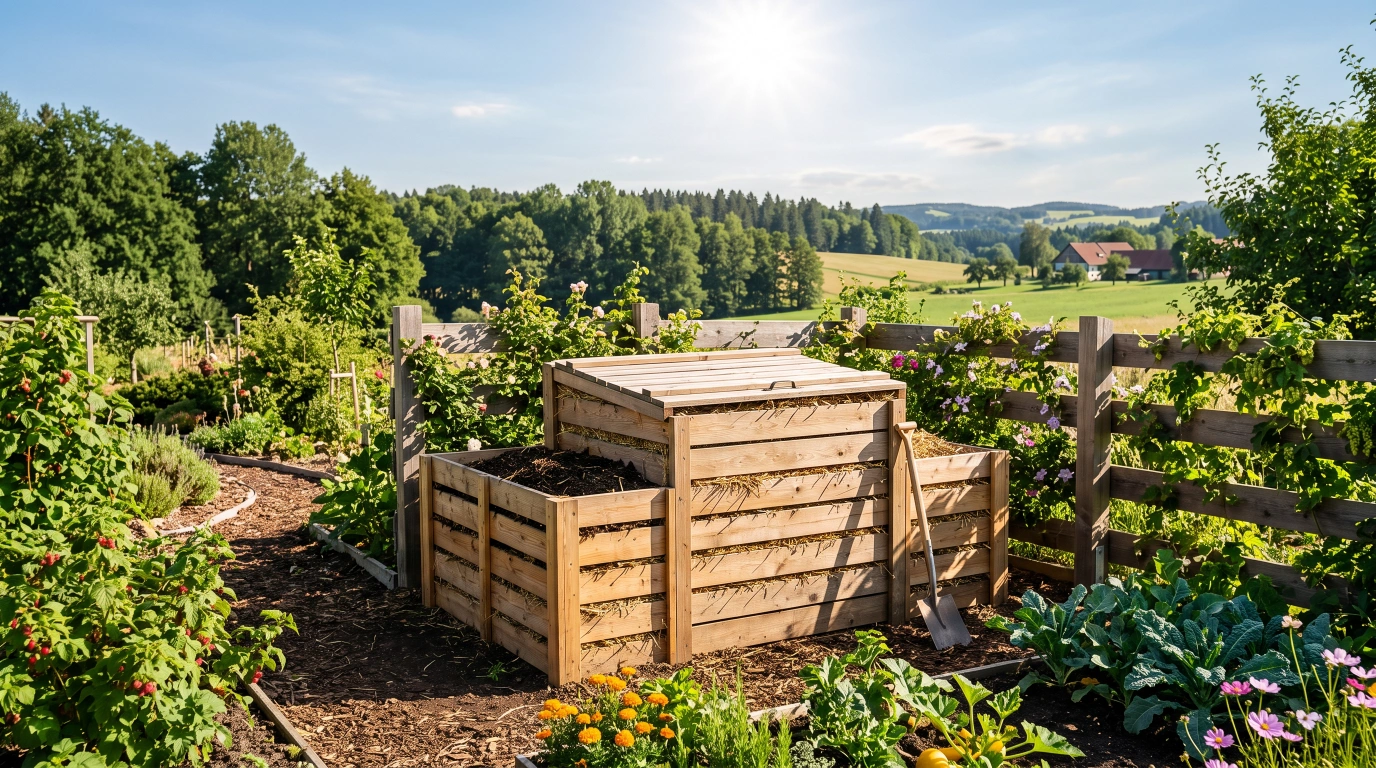
Maximum sun exposure
Choose a sun-facing site (south-facing in the northern hemisphere, north-facing in the southern) that gets as much direct sun as the plot allows through the year. Every bit of passive solar warmth soaking into a heap's outer layers adds to the heat the microbes themselves are generating, and in a climate where that warmth is genuinely scarce, it's not a marginal gain, it's a meaningful contribution to keeping the heap above the temperature where activity slows to nothing.
Shelter from prevailing cold winds
Site the heap away from the direction the coldest winds usually come from, and ideally behind a genuine windbreak, a fence, a hedge, or the wall of a shed or house. Wind strips heat from an exposed surface far faster than still cold air alone, so an unsheltered heap can lose more warmth to wind chill than it manages to generate internally. A windbreak is as important as sun exposure when choosing where to build, not an optional extra.
Close enough to reach in deep snow
Site the heap within easy, snow-cleared reach of the house, not tucked away at the far end of a plot. A bin that's genuinely inconvenient to get to once snowdrifts build up simply won't get checked or fed through the months it needs the most attention, and a heap that's forgotten about through winter loses far more than one that's visited and managed, even briefly, through the cold season.
Building for Heat Retention
The basic structure matters as much as the site. A thin single-walled box does little to slow heat loss through its walls, so the goal here is a design that can hold real insulation, not just contain the material inside it.
- Double-walled timber construction with a cavity between an inner and outer wall that can be packed with straw, dry leaves or another insulating material, giving the heap a genuine thermal buffer against the outside air.
- Single-wall construction sized for a wrap -- a simpler build is perfectly workable if it's sized to leave room for a straw-bale or similar insulating wrap added around the outside for the cold months (covered in full in Chapter 3).
- Solid, wind-resistant construction -- a structure that flexes or gaps in the wind undoes much of the benefit of a good site, so build tight joints and a sturdy frame able to stand up to the same winds the site was chosen to avoid.
Frequently Asked Questions
Where's the best place to put a compost bin in a cool or boreal climate?
Somewhere sun-facing that gets maximum direct sun exposure, sheltered from prevailing cold winds, and close enough to the house to reach easily once snow is deep. Every bit of passive solar warmth genuinely helps a heap here, since heat is the scarce resource, and a bin that's inconvenient to reach in winter simply won't get checked or fed when it matters most.
Does wind really make that much difference to a compost heap?
Yes, genuinely. Wind strips heat from a heap's surface far faster than still air does, even at the same air temperature, so a heap sitting in the open on a wind-exposed site can lose more warmth to wind chill than it generates internally. A windbreak, whether it's a fence, a hedge or simply the wall of a building, cuts that heat loss significantly and is worth prioritising as highly as sun exposure when choosing a site.
What construction actually holds heat better here?
Materials and designs that can carry insulation, not just contain material. A double-walled timber bin with a cavity that can be packed with straw, leaves or another insulating material performs far better through a hard winter than a single thin-walled box, and even a simple single-wall bin works well if it's sized and built to accommodate a straw-bale or similar wrap added for the cold months. The site and basic structure covered here work together with the specific insulated designs in Chapter 3.