
A cool or boreal climate -- the short-summer, hard-winter regions of Scandinavia, Alaska, much of Canada, and Russia's boreal belt -- takes the temperate maritime climate's cold-weather challenge and pushes it much further, into genuine seasonal shutdown rather than mere slowdown. Understanding this properly, not just as a list of tips but as the actual biology behind it, is the foundation everything else in this guide builds on.
The Challenges
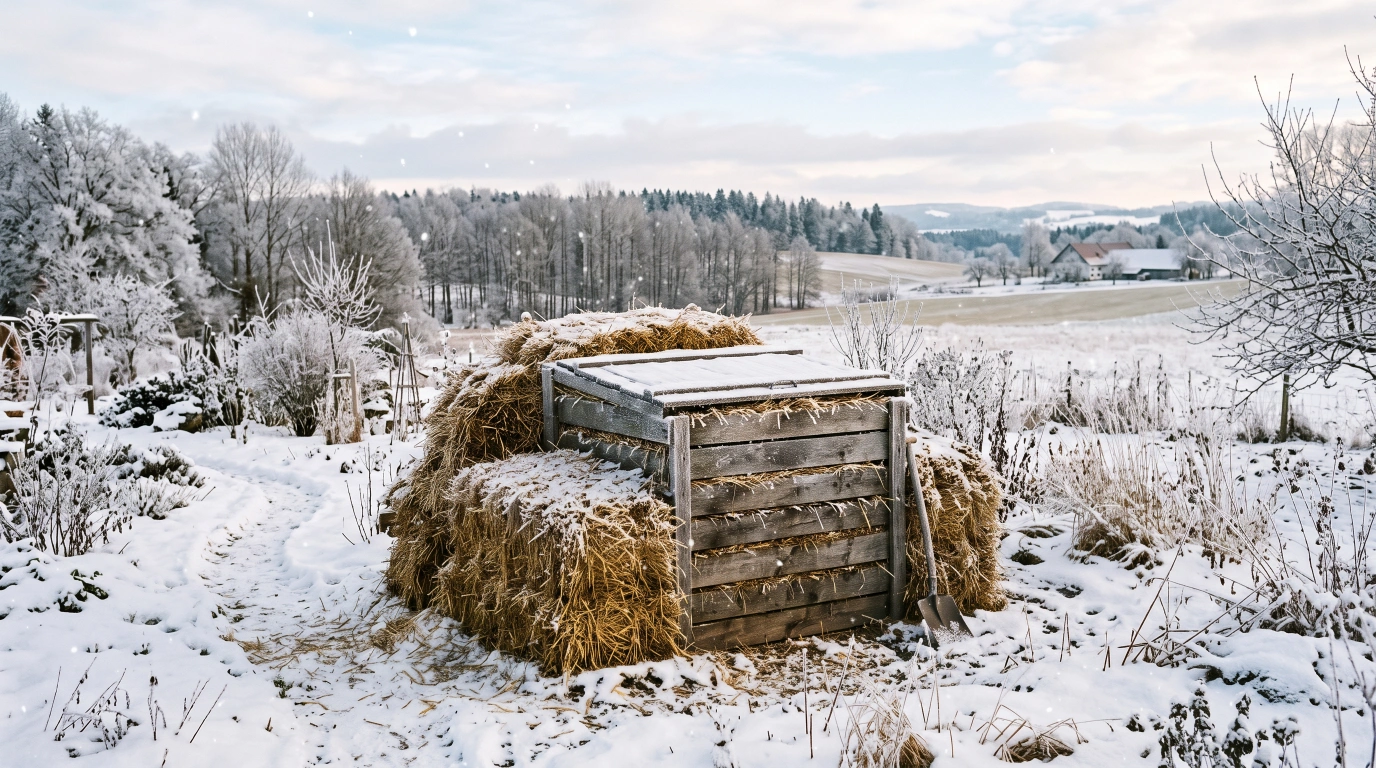
Months of hard freeze stop microbial activity almost completely
This is the central challenge, and it goes well beyond ordinary cool-climate slowdown. Composting bacteria need liquid water and a minimum working temperature to function at all, and once a genuine boreal winter sets in, most of a heap sits frozen and biologically inert for a large part of the year rather than simply working slowly. This is why heap mass, real insulation and deliberate winterizing run through almost every chapter in this guide, they're the direct response to a season where the heap can't work at all rather than just working less well (see Chapter 11).
A short, compressed growing season limits fresh material
In a milder climate, fresh nitrogen-rich material trickles in across most of the year. Here, the growing season is short and intense, so the window for gathering fresh greens is compressed into a few months rather than spread out. A heap needs to be built and fed hard during that window, with the expectation that little fresh material will be available once it passes, rather than assuming more will simply turn up later.
Freeze-thaw cycles bring their own problems
The shoulders of winter, as the ground freezes in autumn and thaws in spring, bring their own distinct issues -- a heap can waterlog as snowmelt saturates material that's still too cold to process it, and repeated freezing and thawing can heave and disturb a poorly built structure in ways a milder climate never has to plan around. Timing management around these transitions matters as much as managing deep winter or high summer (see Chapter 13).
Slower decomposition overall means much longer processing times
Everything simply takes longer here than it would in a warmer climate, even during the active season. This matters for ordinary garden compost, but it matters most when handling humanure safely (Chapter 7), where months of total inactivity each year are exactly why this guide sets a genuinely conservative, multi-year processing minimum rather than the shorter cycles that might be reasonable somewhere with a longer working season.
The Advantages
- Long summer daylight hours -- often far more than a temperate climate gets -- drive intense plant growth and give an active heap real warmth and abundant fresh material to work with while the season lasts.
- Low pest and disease pressure compared to warmer climates, since a hard winter knocks back much of what would otherwise trouble a heap or a garden elsewhere.
- Abundant wood ash from wood-burning for heat, close to universal in this climate, provides a genuinely free and plentiful compost input most other climates simply don't produce in the same quantity (see Chapter 6).
- Naturally abundant carbon material -- conifer needles, birch bark and leaves, straw -- gives a heap plenty of bulking material to work with once nitrogen is found.
Frequently Asked Questions
Does a compost heap really stop working completely in winter here?
Very close to it. Composting bacteria slow down steadily as temperatures drop, and below around freezing point, biological activity in most of the heap effectively stops rather than just running slowly. A well-insulated heap can keep a warm core going a little longer into the cold, but through the depths of a genuine boreal winter, even a good heap is essentially in suspended animation, picking back up once temperatures recover rather than working through the cold.
Why is the growing season length so important for composting here?
Because it controls when fresh, nitrogen-rich material is actually available. In a longer, milder climate, green material trickles in across most of the year. Here, it arrives in a short, intense burst, so a heap needs to be built, fed and managed hard during that window rather than assuming more material will turn up gradually the way it would elsewhere.
Does a cool or boreal climate actually have any advantages for composting?
Genuinely, yes, and they matter as much as the challenges. Long summer daylight hours drive intense plant growth and give an active heap real warmth to work with, cold winters mean very low pest and disease pressure compared to warmer climates, and wood-burning for heat, close to universal here, produces wood ash as a free, abundant compost input most other climates simply don't have in the same quantity.