
Other zone guides in this series give a chapter to seaweed, a genuinely useful input where it's available. But coastal access isn't a given here, and much of the boreal and cool-continental world is nowhere near a coastline at all. What is close to universal in this climate is burning wood for heat, and that makes wood ash, not seaweed, the real dominant free compost input most households in this climate actually produce, week after week, all winter long.
What Wood Ash Actually Contains
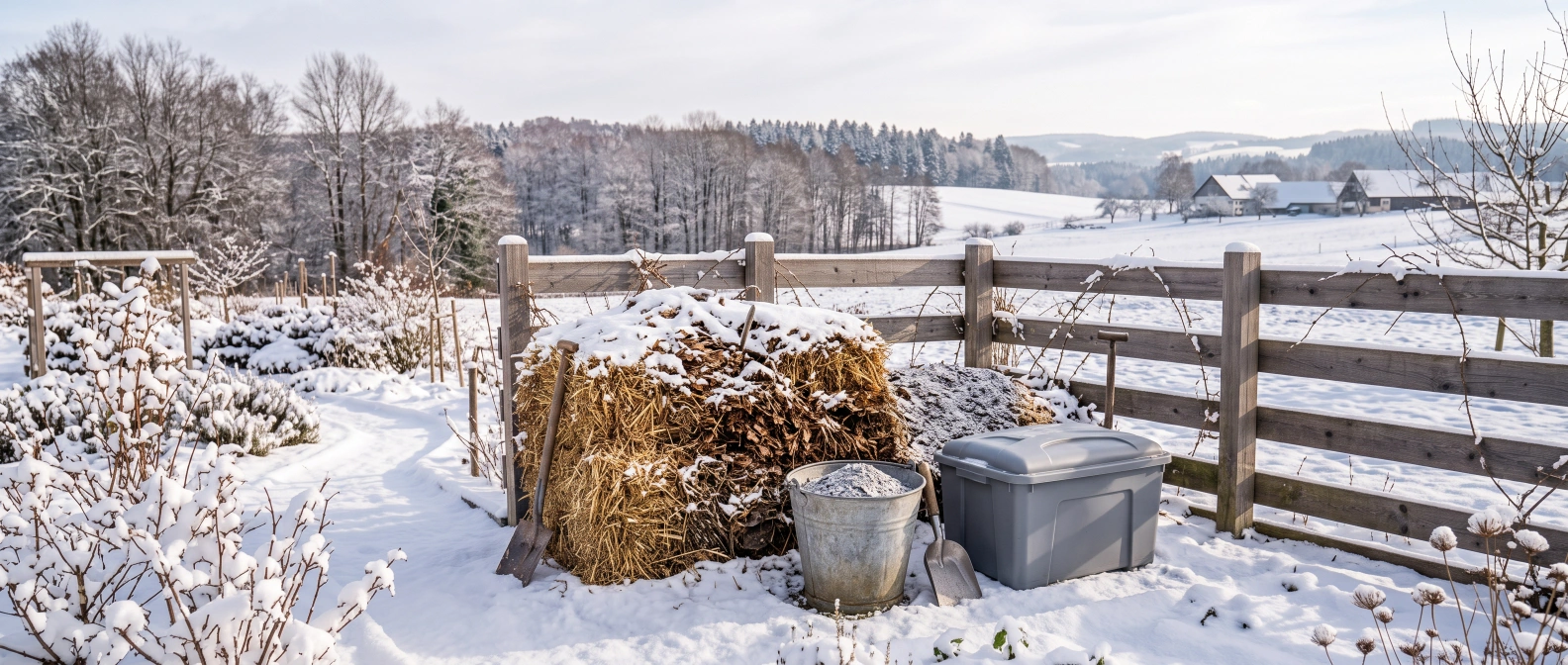
Wood ash is what's left once the combustible carbon in wood has burned away, and what remains is genuinely useful: potassium, calcium and a range of trace minerals that were drawn up from the soil by the tree over its lifetime and concentrated in the ash. Added in the right amount, it's a real soil amendment and compost input, not just a waste product to be discarded.
It's also, for most households in this climate, essentially free and continuously produced through the entire heating season, arriving in a steady trickle exactly when a lot of other compost inputs are frozen solid or buried under snow.
Use In Real Moderation
This is the single most important thing to get right with wood ash. It's strongly alkaline and raises pH, and while a little goes a genuinely long way, too much does real damage: it can push soil pH too high, harm acid-loving plants, and lock up certain nutrients so they become less available to plants even though they're still technically present in the soil.
The rule of thumb is a thin sprinkling per layer as the heap is built, not a bucketload dumped in at once. Treat it the way you'd treat a strong seasoning rather than a bulk ingredient, and spread applications out over the whole active season rather than adding it all in one go.
Only Clean Wood, Never Treated or Waste Material
Only use ash from clean, untreated firewood. Ash from painted or chemically treated wood, from coal, or from burning any waste material can carry contaminants that have no place in a food-growing system, and these should never be added to compost or soil under any circumstance.
Store ash in a dry, covered metal container before use. Wet ash can form a caustic paste that's unpleasant and potentially harmful to handle, and ash left exposed to rain also loses some of its mineral value as it leaches out before it ever reaches the compost heap or garden.
Unburned Charcoal Bits, and Ash as a Pest Deterrent
A woodstove doesn't produce pure ash, there are usually small unburned charcoal fragments mixed in at the bottom of the firebox. These can be sifted out, crushed, and used much like biochar, a stable carbon structure rather than a mineral-rich ash, see Chapter 9 for how to charge and use this kind of material properly.
Thinly sprinkled around the base of plants, ash has a genuine traditional use as a deterrent against some slugs and soft-bodied pests, who dislike crossing the sharp, drying texture. It's not a complete solution on its own, and heavy rain washes the effect away quickly, but it's a real, free, low-effort layer of protection worth using alongside other methods.
Frequently Asked Questions
How much wood ash can I safely add to compost?
Only a thin sprinkling per layer, never a dumped bulk load. Wood ash is strongly alkaline and raises pH, and over-application can push soil too far toward alkaline, harm acid-loving plants, and lock up certain nutrients so plants can't take them up. A light dusting worked into the heap now and then is genuinely useful, a bucketload all at once is not.
What kind of ash is safe to use, and how should it be stored?
Only ash from clean, untreated wood. Ash from treated or painted wood, coal, or any burned waste material can introduce contaminants and should never go anywhere near compost or soil. Store ash in a dry, covered container before use, since wet ash can form a caustic paste and rain leaching through an uncovered pile also washes away some of its value.
Is wood ash the same thing as biochar?
No, and it's worth keeping the two separate. Ash is the fine mineral residue left after wood burns completely, alkaline and used sparingly. Biochar is deliberately-made charcoal, quenched before it fully burns to ash, an inert and porous carbon structure used more generously as a long-term soil conditioner. They come from the same woodstove but do very different jobs.