
"Brassica" isn't one crop -- it's a whole family, and that's exactly why it's tricky for seed saving. Kale, broccoli, cauliflower, both cabbages, Brussels sprouts and kohlrabi are all the same species (Brassica oleracea), grown into wildly different shapes. That means they cross-pollinate freely with each other regardless of how different they look on the plate. Most are also biennial, flowering only in their second year. Learn which vegetables this covers, crossing risks, isolation distances, and seed-saving strategies below.
New to terms like isolation distance or outcrossing? See the Seed-Saving Glossary.
Vegetables Covered by This Guide
These are all Brassica oleracea and will cross with each other if allowed to flower nearby:
Note: turnip, swede, mustard greens, pak choi and Chinese cabbage are different Brassica species (mainly B. rapa and B. juncea). They cross within their own species, not with the B. oleracea group above -- but keep them isolated from each other too if you're saving multiple brassica species.
Seed-Saving Difficulty
How It's Pollinated
Insect-pollinated (bees, hoverflies -- high outcrossing)
(High crossing risk)
Scientific name: Brassica oleracea
Domestic Crops It Can Cross With
- Any other B. oleracea flowering nearby -- kale will cross with cabbage, broccoli with kohlrabi, and so on
- Different varieties within the same vegetable (two cabbage varieties, two kale varieties)
- Does not cross with turnip, swede, radish, pak choi or Chinese cabbage -- different species
Wild Relatives & Feral Species
Common wild relatives:
- Wild cabbage (Brassica oleracea) survives on coastal cliffs in parts of the UK and Europe
- Feral/escaped brassicas from neighbouring allotments or farms
Check for coastal wild cabbage populations if you garden near the sea -- they will cross with your crop.
Separation Distances Required
Minimum: 500m between flowering B. oleracea varieties
Recommended: 800m-1km for reliable purity
Strict / small gardens: Isolation cages or hand-pollination of bagged flower heads
Time isolation works too: stagger flowering by several weeks, or only let one variety bolt/flower per season.
Seed-Saving Strategies
- Most are biennial -- overwinter the plant (mild zones) or lift and store roots, replant in spring
- Vernalization (a period of cold) is required to trigger flowering in year two
- Grow only one B. oleracea variety to seed per season, or cage/bag flower heads and hand-pollinate
- Allow seed pods to dry brown on the plant before harvesting
- Thresh pods and store seed somewhere cool and dry -- viable 4-5 years
Why Brassica Seed-Saving Takes Planning
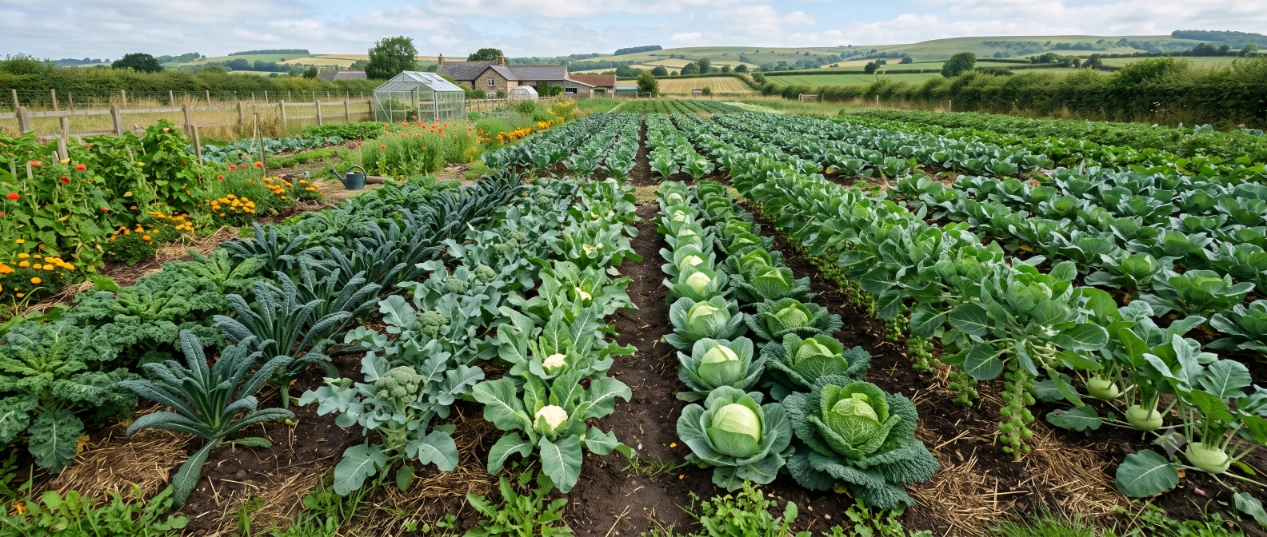
The tricky part isn't any single brassica -- it's that they're all interchangeable at flowering time. A kale plant and a cabbage plant look nothing alike on the plate, but their flowers are functionally identical to a bee, so cross-pollination happens readily between any B. oleracea varieties blooming at once. Add in that most need a cold winter before they'll flower at all, and brassica seed saving becomes a two-year, one-variety-at-a-time project rather than a quick job. The upside: once isolated and vernalized, they set huge quantities of seed that stores well for years.