
Seasonal compost management here doesn't follow a temperate hot/cold pattern or an arid summer/winter one, it follows a wet-season/dry-season calendar. Many tropical and humid regions have a genuine rainy season and dry season, sometimes called monsoon and non-monsoon, rather than four distinct temperate seasons, and the two halves of that calendar demand very different levels of attention.
The Wet Season: When Attention Matters Most
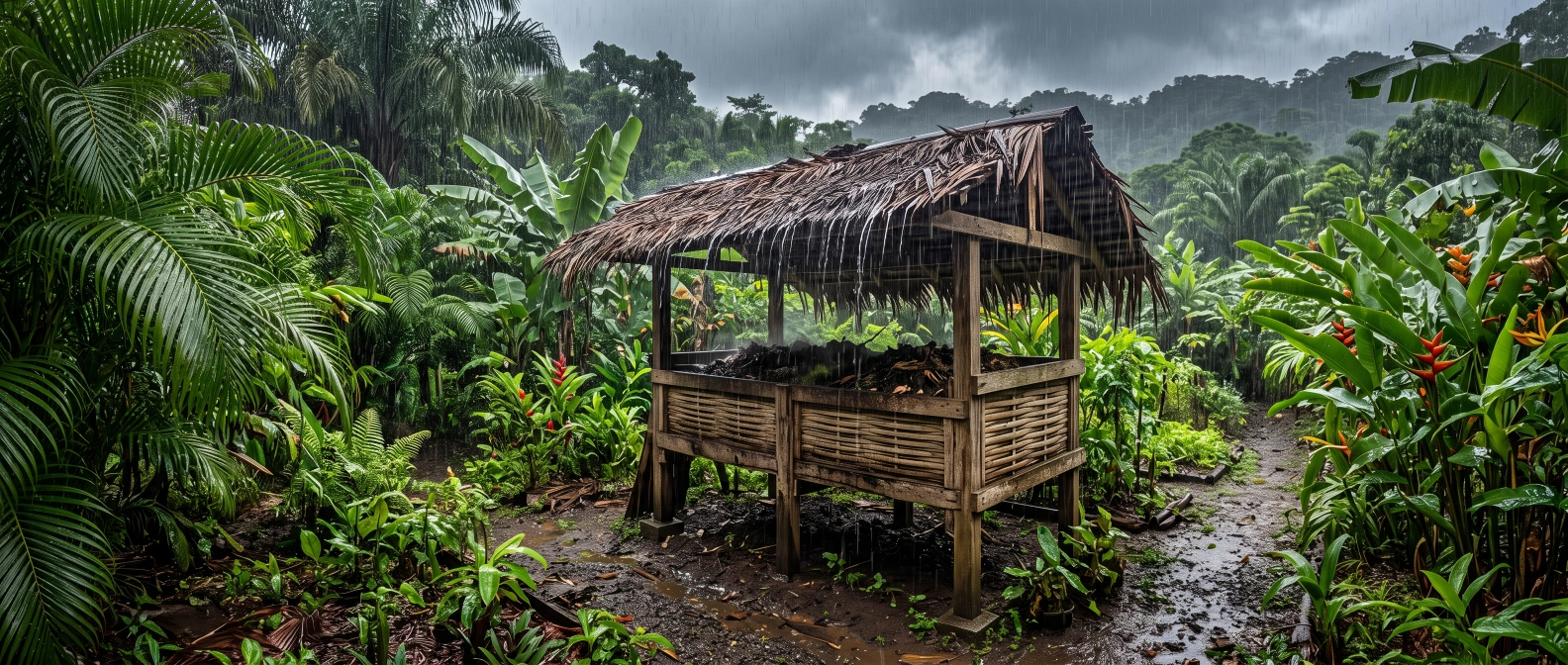
Rain protection and drainage become the priority
This is the most demanding period of the year for a compost heap. Everything covered on rain protection and drainage in Chapter 2, Chapter 3 and Chapter 11 matters most right now, and the heap needs checking more frequently for signs of waterlogging than at any other point in the year. A roof or drainage gap that's been adequate for months can fail the moment the rains intensify, so treat the start of the wet season as a prompt to re-check the whole system, not just a date on a calendar.
Abundant green material, if you can keep up with it
The wet season is also often when green material is at its most abundant, driven by the fast plant growth the rain itself fuels. That's a genuine advantage, but it means the more pressing task during this period is usually managing volume and moisture rather than finding enough material to compost in the first place.
The Dry Season: A Comparatively Easier Stretch
The dry season is comparatively easier for the compost heap itself, since the flooding risk that dominates wet-season management drops away. Watering may occasionally be needed if the dry season in your specific region is pronounced enough to actually dry material out, but this is genuinely less of an issue here than it is in an Arid-zone heap, more a brief secondary consideration to keep in mind than a central challenge to plan around.
Regional Variability: Why This Chapter Won't Give You Months
Unlike a fixed four-season temperate calendar, tropical wet-season and dry-season timing and intensity vary enormously by specific region. Some areas have two wet seasons a year, some have only a mild dry season, and some stay wet for almost the entire year. Rather than inventing specific calendar months that would be wrong for most readers, this chapter describes the general wet-season/dry-season framework, apply it to your own region's actual pattern, which ties into the planting calendar covered in Chapter 17.
Frequently Asked Questions
Does a tropical climate have four seasons like a temperate climate?
Usually not. Many tropical and humid regions have a genuine wet season and dry season, sometimes called monsoon and non-monsoon, or rainy and dry, rather than four temperate seasons. Timing and intensity vary enormously by specific region, some areas even have two wet seasons a year, so this is a general framework rather than a fixed calendar.
What changes about compost management during the wet season?
The wet season is the most demanding period for a compost heap. Rain protection and drainage matter most now, and the heap needs checking more frequently for waterlogging. It's also often when green material is at its most abundant, thanks to fast plant growth driven by the rain itself.
Is the dry season a real concern for composting the way it is in an arid climate?
Only mildly. The dry season is comparatively easier for the compost heap since flooding risk drops, though watering may occasionally be needed if the dry season is pronounced enough to actually dry material out. This is genuinely less of an issue than in arid climates, more a brief secondary consideration than a central challenge.