
In a temperate or arid climate, siting a compost heap is mostly about sun exposure. In a tropical or humid one, sun is never the limiting factor, heat is abundant almost everywhere, so the decision that actually determines whether a system survives its first wet season is drainage, structure and how quickly you can get to it when something goes wrong.
Choosing the Right Site
Drainage, not sun, is the priority
Never site a heap in a low spot where water visibly pools after rain, even if it looks convenient the rest of the year. Look for slightly elevated ground that sheds water naturally, the same instinct that guides house and path placement on a smallholding. A patch that stays merely damp rather than standing wet after a downpour is worth far more than one with perfect sun and poor drainage.
Site it close enough to check often
Decomposition runs fast in this climate, which means problems develop fast too. A heap that tips anaerobic or floods can go from fine to a slimy, smelly mess within a couple of days, not the week or two it might take elsewhere. Site the system somewhere on your daily path, close to the kitchen or the main growing beds, so checking it becomes a habit rather than a special trip.
Wind and storm exposure
In cyclone- and monsoon-prone regions, a tall, exposed structure is a liability. Favour low-profile, securely anchored designs over anything tall and freestanding, and avoid siting against a wall or fence line that could funnel wind-driven rain straight into the heap during a storm.
Building Materials That Suit Heat and Rain
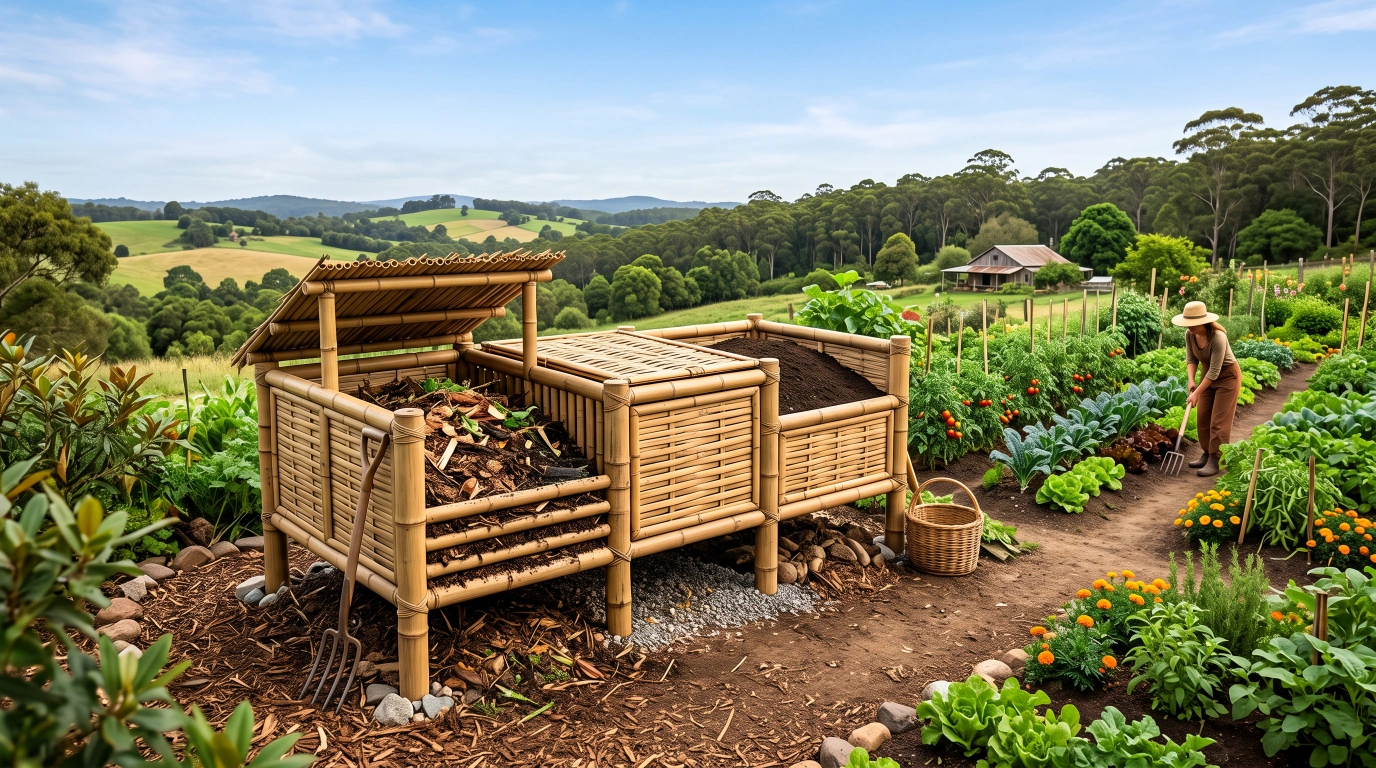
Bamboo is the classic tropical building material for a reason: it's durable through heat and rain, genuinely abundant across most tropical regions, and breathable when built as slats or woven panels rather than solid sheets. A simple bamboo-frame bin with slatted sides can be built and repaired entirely from what's growing on or near the plot, which matters on a self-sufficiency site where imported building materials may not be an option.
Stacked block or brick is a solid alternative where it's available, and holds its shape well through storms. Whatever material you use, avoid solid, airtight walls. Airflow through the sides matters for two reasons here: it helps dissipate the heat a fast-decomposing heap generates, and it prevents the still, wet, low-oxygen pockets that push material anaerobic. A wall you can see daylight through is usually doing its job.
Whichever material and roof design you choose, keeping rain off the heap itself (Chapter 3) is a separate job from getting the site and structure right, and both need to be solved together, not one instead of the other.
Raising the Base
Even on well-drained ground, sitting a heap directly on soil during a heavy wet spell means it's in contact with whatever water is moving through that soil. Raising the base on a pallet, a simple bamboo platform, or a layer of stacked blocks keeps the bottom of the heap out of standing groundwater, improves drainage of any excess liquid straight down and away, and opens airflow from underneath as well as the sides. This is a structural decision about the site and the bin itself, distinct from the roofing and covering that Chapter 3 and the leaching-control work in Chapter 11 cover in detail.
Frequently Asked Questions
Does a compost heap need full sun in a tropical climate?
No, and chasing sun exposure is the wrong priority here. Heat is never in short supply in this climate, so the site decision that actually matters is drainage, not sunlight. A well-drained spot on slightly elevated ground, even a partly shaded one, will outperform a sunny low spot that floods every time it rains.
Why does bamboo work so well for compost bins in this climate?
Bamboo is durable in heat and rain, naturally breathable when left in slatted or woven form, and locally abundant across most tropical regions, which matters on a self-sufficiency site since it means a bin can be built and repaired entirely from what's already growing nearby. Its open structure also keeps air moving through the heap, which solid block or timber walls can restrict.
Why raise the compost off the ground rather than building directly on soil?
Ground contact in this climate means sitting in whatever water is moving through or pooling in the soil beneath it, even on a well-drained site during a heavy wet spell. A pallet, bamboo platform or raised base off the ground lets excess water drain away instead of wicking upward into the heap, and it opens airflow from below, both of which matter more here than in a drier climate.