
Rotation and compost timing here follow the wet-season / dry-season pattern set out in Chapter 13, not a temperate spring-to-autumn cycle. Timing is everything: get compost applied and covered just ahead of the rain, and it drives growth; leave it exposed, and the same rain washes it away.
A Wet-Season-Primary Rotation
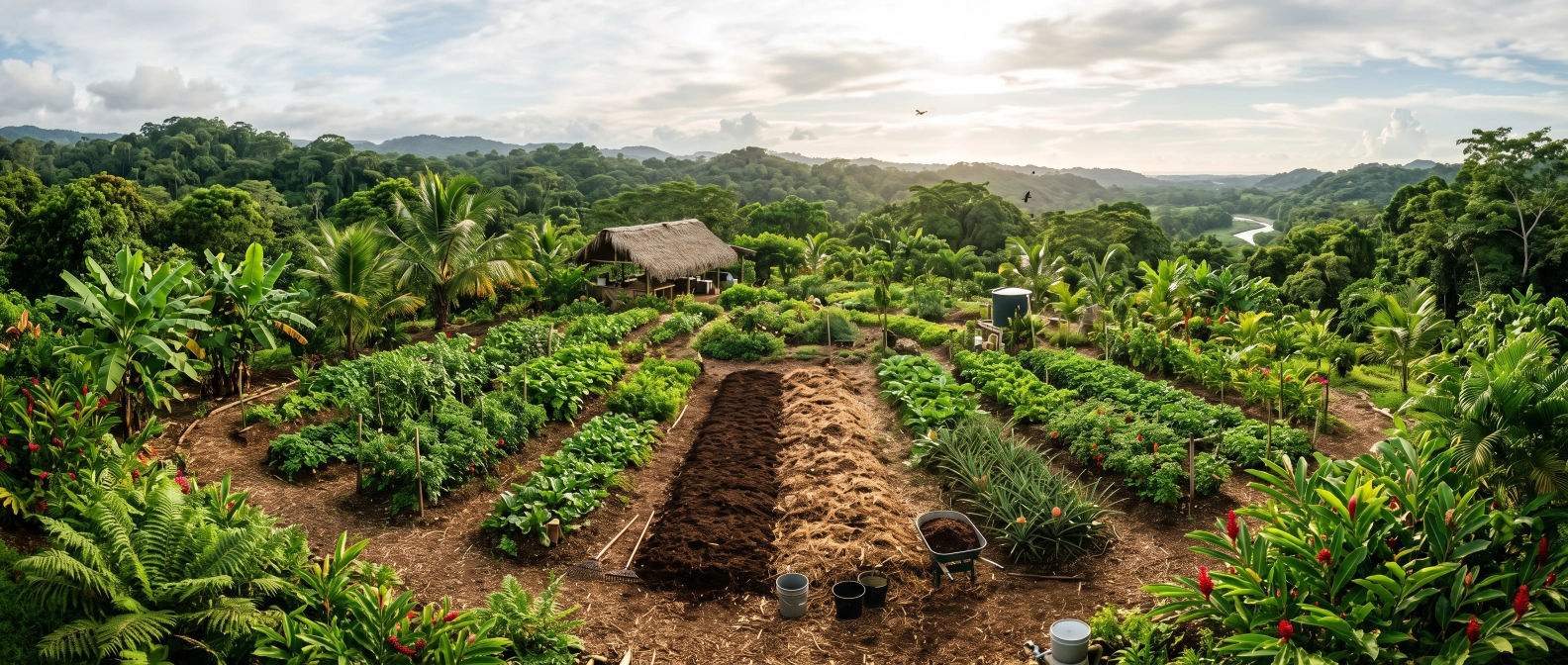
Run a simple rotation across a small number of beds, each moving through the same stages a season apart: compost applied and covered just ahead of the wet season, the main wet-season crop grown through the rains, then a dry-season phase used either for a lighter follow-on crop or for building and turning the next batch of compost, before the cycle repeats. The aim throughout is to time compost application and planting so nutrients are captured by growing roots or held under mulch (see Chapter 18) rather than washed away by the wet season's rain (see Chapter 11).
| Bed / Stage | Timing | Compost Action |
|---|---|---|
| Pre-planting prep | Late dry season, just ahead of the rains | Main compost application, immediately covered with mulch or a quick-establishing crop |
| Wet-season crop | Through the main rains | Liquid feeds as needed (see Chapter 16); avoid exposed top-dressing during heavy rain |
| Green manure / cover phase | Between crops, any season | Fast-growing green manure (see Chapter 12) to hold and build the bed |
| Dry-season build phase | Dry season, where pronounced | Build and turn the next batch of compost without flooding risk, ready for the following wet season |
Frequently Asked Questions
Why is this rotation built around wet and dry seasons rather than spring and autumn?
Because a temperate spring-to-autumn cycle doesn't exist here. Growth in this climate is driven far more by the arrival of rain than by temperature, so the rotation follows the wet-season / dry-season pattern instead, timing compost and planting to make the most of rain-driven growth while limiting how much it can wash away.
When should compost go on ahead of the wet season?
Just ahead of it, timed so the nutrients get covered with mulch or captured by an establishing crop's roots before the rain arrives in force. Compost applied too far ahead sits exposed and vulnerable to leaching for longer than it needs to.
What's the dry season used for in this rotation?
Where a dry season is pronounced, it's a lower-risk window to build and turn the next batch of compost, without the flooding risk that comes with doing the same work during heavy rain. It lets the compost system get ahead of the following wet season's planting.