
Most subtropical compost problems trace back to the same root cause as everything else in this guide: rain that arrives episodically rather than reliably. A heap here genuinely has to survive both directions, drying out in a gap between downpours and being swamped when one finally arrives, so troubleshooting has to be two-directional too. Here's how to recognise and fix the problems that actually happen in this climate.
The Heap Dried Out Between Rains
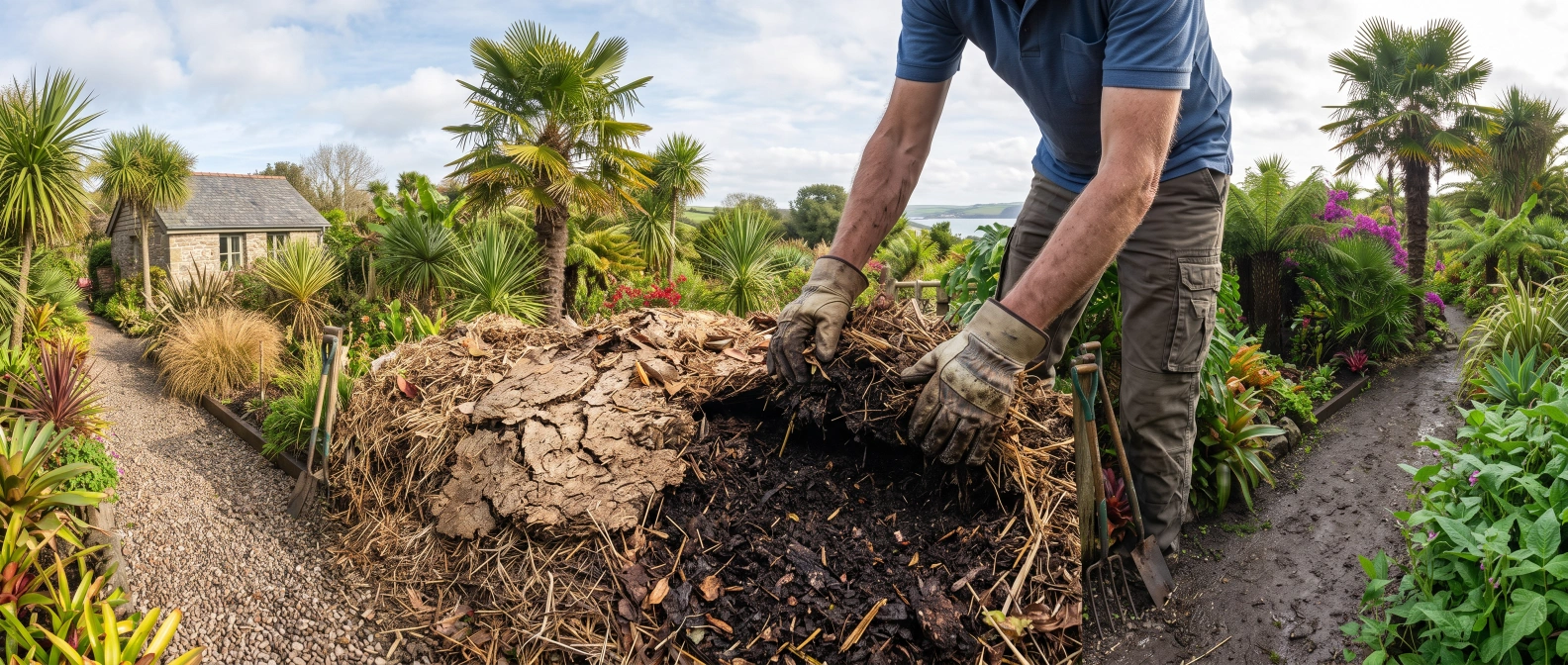
This is the single most defining failure mode in this zone. A heap that looked fine after the last rain can be bone dry and stalled two or three weeks later if a dry stretch runs long, since sustained heat pulls moisture out steadily and general humidity in the air doesn't replace what's lost inside the pile. Material stops breaking down, the heap cools, and decomposition effectively pauses until moisture is restored.
The fix follows the bridging techniques covered in Chapter 11: water deeply rather than just wetting the surface, check moisture more often during a dry stretch rather than assuming it's fine, and keep a mulch cap on the heap at all times to slow evaporation between checks. A heap that's actively managed through a dry spell rarely fails this way twice.
The Heap Was Waterlogged After a Downpour
A sudden heavy downpour or tropical storm can push a properly moist heap to waterlogged in a single event, forcing out the air pockets aerobic decomposition depends on. The material can go anaerobic, cool, and start to smell sour rather than earthy.
Start by making sure the heap can actually drain, good drainage from the siting and build covered in Chapter 2 matters more here than almost anywhere else. Once the excess water has drained through, generally within a day or so, turn the heap to reintroduce air. This tends to resolve faster here than in a cold climate, since the ground itself isn't cold, just temporarily wet, and the warmth gets decomposition moving again quickly.
The Heap Turned Slimy
A slimy, matted, foul-smelling heap usually means too much fresh green material went in without enough dry carbon to balance it, the same problem flagged in Chapter 4's troubleshooting note. The real fix isn't scrambling for dry material the moment a heap goes wrong, it's keeping a standing stockpile of dried leaves, straw or other browns topped up during dry stretches, so carbon is always on hand the moment a batch of greens needs balancing.
Pests Around the Heap
Ants, roaches and other insects are drawn to a heap in warm, humid conditions, particularly around exposed food scraps sitting near the surface. Bury fresh scraps into the centre of the heap rather than leaving them on top, and avoid adding meat or dairy entirely, both of which draw pests far more readily than plant material.
Diseased Citrus or Palm Material Was Added
This is a genuine regional caution worth repeating from Chapter 5: diseased citrus or palm material should never go into the heap. Some subtropical orchard diseases can persist and spread through composted material that doesn't reliably reach sterilising temperatures throughout the pile, and a home heap can't be trusted to get hot enough, evenly enough, to make that material safe. If you realise diseased material has already gone in, it's safest to stop using that batch on food beds and dispose of it well away from the garden instead.
Frequently Asked Questions
Why does my heap keep drying out even though this climate is humid?
Because rain here arrives episodically rather than constantly, and sustained heat pulls moisture out of a heap steadily during the gaps between rain events. General humidity in the air doesn't replace that lost moisture the way direct rain or deliberate watering does. The fix is checking moisture more often during a dry stretch, watering deeply rather than just misting the surface, and keeping a mulch cap on at all times to slow the loss.
A heavy downpour just soaked my heap through, what now?
First check that the heap can actually drain, a properly sited and built system sheds excess water within a day or so rather than sitting waterlogged. Once the excess has drained through, turn the heap to reintroduce air pockets that the saturation pushed out. This generally resolves faster here than it would in a cold climate, since the ground itself isn't cold, just temporarily wet, and warm conditions get decomposition moving again quickly once air is restored.
Can I compost citrus or palm material that has disease on it?
No. Diseased citrus or palm material should never go into a home compost heap. Some subtropical orchard diseases can persist and spread through composted material that doesn't reliably reach sterilising temperatures throughout the pile, and a home heap can't be trusted to get hot enough, evenly enough, to guarantee that kind of material is safe. Burn it, bag it for disposal, or bury it well away from any garden bed instead.