
A full working reference of what a subtropical climate genuinely offers for composting, sorted by carbon and nitrogen, plus a clear line on what to keep out of the heap altogether. Everything here is something you can grow, gather or produce yourself, there's no assumption of a bag from a shop or a bin collected from the roadside.
Good Carbon Inputs
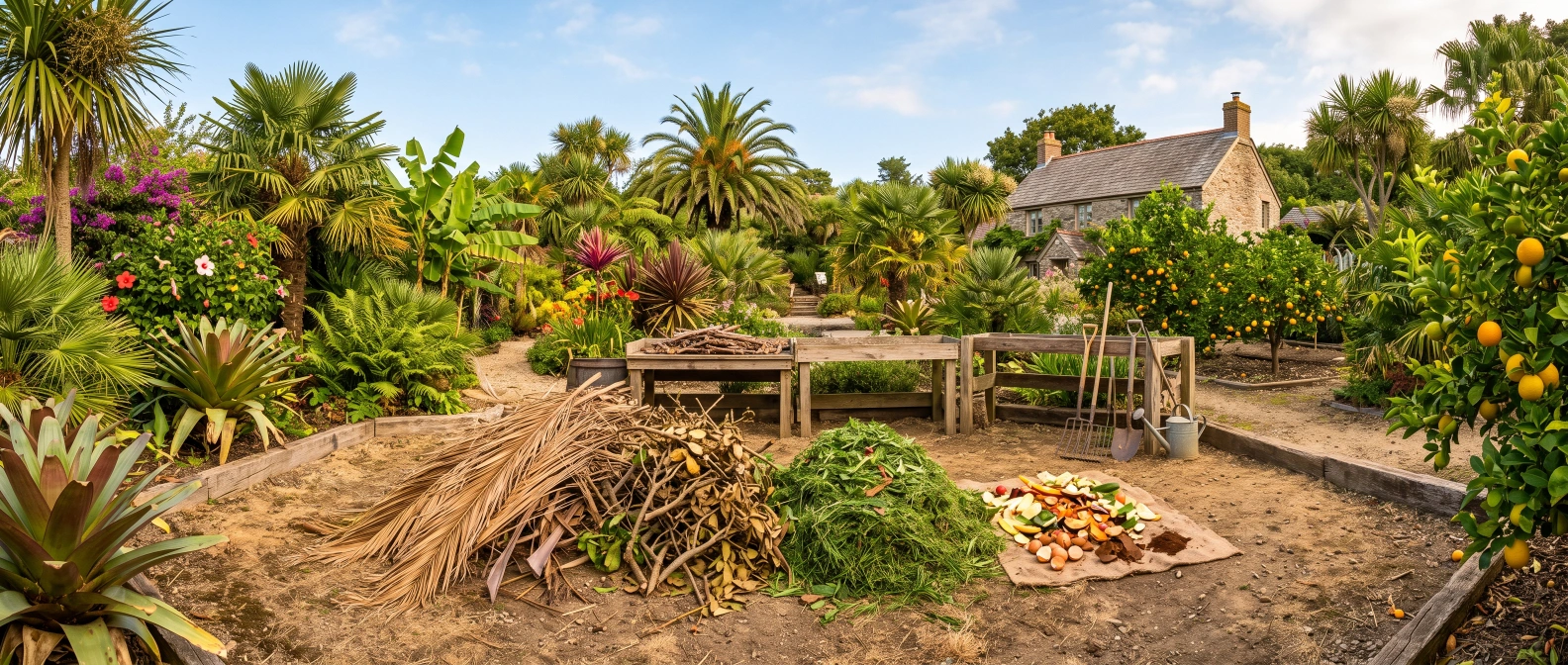
- Dried palm fronds -- must be deliberately dried during a dry stretch and shredded before use, genuinely tough and fibrous even once dry; the characteristic dry carbon source across much of this zone (see Chapter 6).
- Citrus prunings, dried and shredded -- woody material that dries well between rain events; shred first for a faster, more even breakdown.
- Dried yard waste and leaves -- genuinely achievable here thanks to episodic rather than constant rainfall; gather and store dry ahead of a wet spell.
- Cardboard -- shred first, and store it somewhere completely dry until you're ready to use it, since it will absorb ambient humidity and lose its structural value if left exposed.
- Straw, where available -- good bulk carbon and structure; keep dry and under cover until mixed in.
Good Nitrogen Inputs
- Fresh kitchen scraps -- reliably plentiful year-round; the everyday backbone of nitrogen input for most households in this climate.
- Fresh-cut grass -- near-constant growth keeps this coming; use promptly before a thick layer mats down and goes anaerobic on its own.
- Fresh garden weeds -- pull before seed set; a near-constant supply thanks to sustained warmth and growth through most of the year.
- Legume trimmings -- fast-growing warm-climate legumes provide some of the richest green nitrogen available here (see Chapter 12).
- Manure, where available -- a strong, useful nitrogen source; use well-rotted rather than fresh.
Materials to Avoid
Not everything belongs in the heap, and in this climate the consequences of getting this wrong show up fast. Some materials are a firm no under any circumstances; others are usable but need extra preparation first.
| Material | Tier | Why / What To Do Instead |
|---|---|---|
| Meat, fish, cooked food, dairy | 1 -- Avoid entirely | Attracts pests fast in sustained warmth; pile separately, never in the main heap |
| Diseased plant material (citrus greening and other orchard diseases) | 1 -- Avoid entirely | Home heaps don't reliably reach pathogen-killing temperatures; pile separately or use biochar/burning (Chapter 9) |
| Pet or dog faeces | 1 -- Avoid entirely | Pathogen risk; keep out of any heap destined for food-growing beds |
| Perennial weed roots, vigorous subtropical vines | 1 -- Avoid entirely | Can resprout from small fragments in warm, humid conditions; pile separately and dry out fully first |
| Whole, unshredded palm fronds | 2 -- Use with caution | Genuinely tough and fibrous; shred first or they take a very long time even in this fast-composting climate |
| Citrus peels in very large quantity | 2 -- Use with caution | Mildly acidic and can slow a heap if they dominate the mix; fine in reasonable amounts mixed with other material |
Frequently Asked Questions
Why is meat, fish or cooked food such a firm no in this climate specifically?
Sustained warmth accelerates decomposition of these materials into an attractive, foul-smelling state within hours rather than days, and pest pressure rises fast alongside it. Meat, fish, cooked food and dairy draw pests to a heap much faster here than in a cooler climate, so these stay out entirely rather than being added in small amounts, pile any unavoidable scraps separately instead.
Can whole palm fronds go straight into the heap?
Not whole, no. Palm fronds are genuinely tough and fibrous, and even in this fast-composting climate a whole, unshredded frond takes a very long time to break down. Shred or chop them first, and they become a genuinely useful, achievable dry carbon source (see Chapter 6).
What should be done with diseased citrus or other orchard plant material instead of composting it?
Pile it separately from the main heap rather than mixing it in. Citrus greening and other subtropical orchard diseases specifically should never go in the heap, since a home compost pile won't reliably reach the sustained temperatures needed to kill off many plant pathogens, and diseased material composted alongside healthy waste risks spreading the problem back into your growing beds. Burning it or converting it to biochar (see Chapter 9) is the safer route.