
Citrus and palm cultivation define subtropical horticulture worldwide, from Florida and the Gulf Coast to southern China, coastal South Africa and coastal Queensland. That makes citrus and palm material, not seaweed, the genuinely dominant local compost input across this entire zone, coastal or not. This chapter covers what these plants actually offer a compost heap, and how to handle the tougher, more fibrous material properly.
Citrus Prunings, Leaves, Peels and Pulp
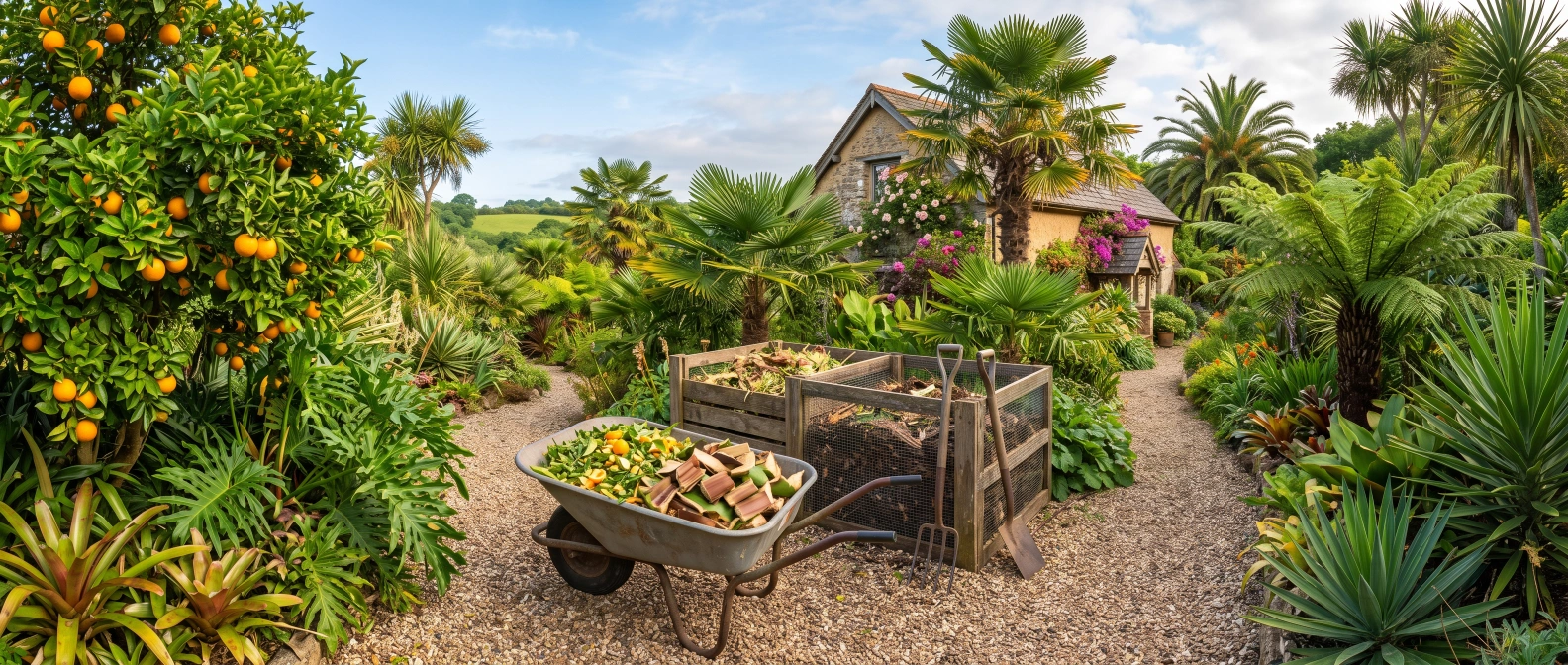
Citrus trees are pruned regularly to keep them productive and manageable, producing a steady supply of woody material through most of the year. Citrus wood is moderately tough, so shredding it before adding it to a heap makes a genuine difference to how quickly it breaks down, whole unshredded branches can sit resisting decomposition for a long stretch. Citrus leaves themselves break down reasonably well on their own and don't need the same treatment.
Citrus peels and pulp are a genuinely abundant kitchen or food-processing byproduct in any citrus-growing household, and they're a perfectly good compost input. They're also mildly acidic, though, so they're best used in moderate amounts mixed thoroughly with other material rather than piled on as a heap's sole input, the same general caution around any single concentrated input that's covered in Chapter 5.
Palm Fronds
Palm fronds are a genuinely iconic, abundant piece of subtropical yard waste, and they're also large, tough and fibrous, similar in character to coconut husk in a true tropical climate. Left whole, a palm frond can sit largely intact in a heap for a very long time, resisting the moisture and microbial contact it needs to break down. Shredding or chopping fronds into smaller sections before adding them dramatically speeds breakdown, and it's worth doing even though it takes real effort given how tough the material is.
Fast-Growing Subtropical Yard Waste
Crepe myrtle, azalea and other common warm-climate landscaping plants all contribute steady green and woody trimmings through a long growing year, and they compost well alongside citrus and palm material. Between regular hedge and shrub trims and the near-constant growth this zone supports, most subtropical gardens produce a genuinely reliable stream of yard waste across most of the year rather than in one short seasonal burst.
If a particular reader doesn't grow citrus or palm, the same underlying principle still applies: identify whatever fast-growing yard waste is locally dominant, and shred or chop the tougher, more fibrous material before composting it. That single step matters more than the specific plant it came from.
Frequently Asked Questions
Why citrus and palm instead of seaweed for a coastal climate zone?
Because citrus and palm cultivation genuinely define subtropical horticulture worldwide, in Florida and the Gulf Coast, southern China, coastal South Africa and coastal Queensland alike, whether or not a given reader lives right on the coast. Seaweed only helps a narrow coastal strip, while citrus and palm material, or whatever fast-growing warm-climate yard waste is locally dominant, is available across the entire zone.
Can I compost citrus peels and pulp in large amounts?
In moderation, yes, they're a genuinely abundant kitchen and food-processing byproduct in citrus-growing households. But citrus peel and pulp is mildly acidic, so it's best mixed with other material in reasonable amounts rather than used as a heap's sole input, the same caution that applies to any single concentrated input covered in Chapter 5.
Do palm fronds need any special preparation before composting?
Yes, and this matters more than for almost any other input in this zone. Palm fronds are large, tough and fibrous, similar in character to coconut husk in a true tropical climate, and left whole they can sit largely intact in a heap for a very long time. Shredding or chopping them first dramatically speeds breakdown and is genuinely worth the extra effort.