
Humanure, properly composted human waste, is a genuinely serious pathogen-safety topic in any climate, and it deserves real care here rather than a shortcut. In a self-sufficiency context where normal sanitation systems may not be available, knowing how to process it safely matters enormously. This chapter covers the same core safety principles used anywhere in the world, with the specific considerations a warm-most-of-the-year, milder-winter, rainfall-inconsistent climate brings.
The Two-Bin or Bucket System
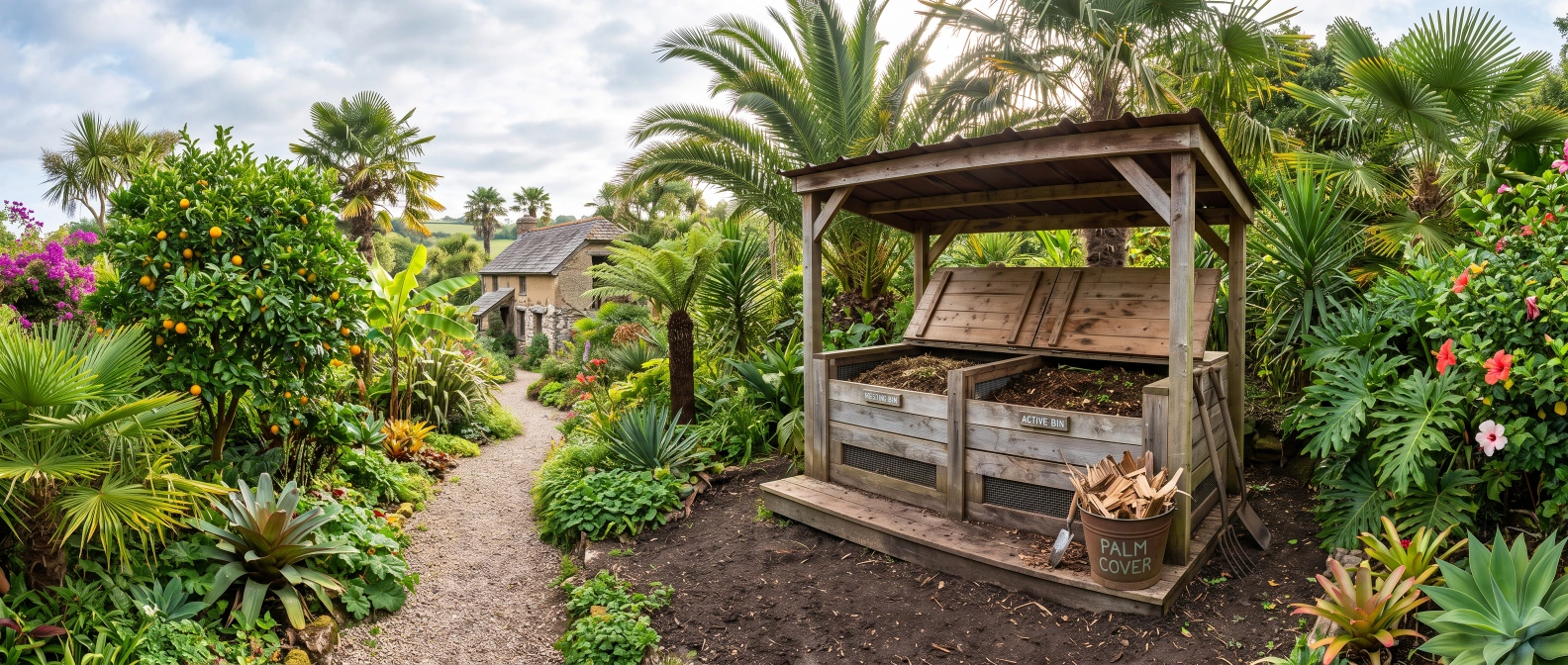
A simple bucket system, or a two-bin arrangement where one bin fills while the other processes, is the standard low-technology approach. Waste is collected in a covered container and, critically, a generous layer of dry cover material is added after every single use. Once a bin or bucket is full, it's set aside to process undisturbed, raised off the ground and protected from both direct sun and sudden heavy rain, while a second one fills.
Cover material choices that suit this climate well include dried palm frond material (see Chapter 6), straw, and dry soil, all reasonably available without relying on supply chains. The cover layer does three jobs at once: it controls odour, it absorbs excess moisture, and it adds carbon that balances nitrogen-rich material underneath it.
Heat, Seasonal Slowdown and Processing Time
As covered in Chapter 1, sustained heat for most of the year does speed pathogen die-off, and a pile that reliably reaches and holds a proper thermophilic temperature of 55-65 degrees C can process somewhat faster here than the same pile would in a temperate climate. That much is genuinely true, and it's a real advantage this zone has.
But two things stop this being a tropical-style shortcut. First, this zone gets a genuinely milder, if real, cooler winter stretch, unlike a true tropical climate's near-constant warmth, and a pile built or maturing through that stretch will run cooler and slower for part of the year. Second, rainfall here is episodic rather than constant, as Chapter 11 covers in detail, so a pile may not always have the consistent moisture it needs to sustain proper heat even during the warm season, a dry spell at the wrong time can stall it just as effectively as cold weather can.
Taken together, this climate sits between a true tropical climate's faster potential and a cooler temperate climate's slower, more cautious standard. It's genuinely faster than a temperate approach given how much of the year is warm, but it still deserves a conservative timeline given the real seasonal slowdown and the risk of moisture gaps interrupting heat even in summer.
A minimum processing period of a full year, with confirmed thermophilic heat sustained for an extended period within that year and verified with an actual compost thermometer, is the responsible standard to work toward here. Where heat can't be confirmed, or a pile has spent significant time cool through winter or a dry stretch, extend the processing time further rather than shorter. Longer is always the safer choice.
Safe Use Guidance
- Never on or near root vegetables -- direct contact risk is too high regardless of processing time.
- Never on leafy greens eaten raw -- splash contamination and surface contact make this a genuine risk.
- Fine for fruit trees and ornamentals -- where there's no direct contact with edible plant surfaces.
- Fine for soil-building beds a season later -- fully cycled-through compost dug into a bed that then grows a further season of other crops before anything is eaten from it.
- Never used fresh, under any circumstance -- the entire point of the processing period is to make this safe, skipping it removes that safety entirely.
Frequently Asked Questions
Does the warm climate here make humanure composting as fast as a tropical one?
Not quite. Heat does speed pathogen die-off for most of the year here, similar in principle to a true tropical climate, but this zone gets a genuinely milder, if real, cooler winter stretch that slows things down for part of the year, unlike a tropical climate's near-constant warmth. Episodic rainfall can also mean a pile doesn't always have the consistent moisture needed to sustain proper heat, even during the warm season. This chapter sits between a tropical climate's standard and a cooler climate's standard, not at either extreme.
What cover material should I use after each use?
Dried palm frond material, straw, and dry soil are all reasonably available in this climate. A generous layer added after every use controls odour, absorbs moisture, and keeps flies and other pests away, and it adds carbon that balances the nitrogen-rich material underneath it.
Is finished humanure compost safe to use on vegetables?
Never on or near root vegetables or leafy greens eaten raw, regardless of how long it has processed. Fully cycled-through humanure compost, held for a genuinely conservative period with confirmed sustained heat, is appropriate for fruit trees, ornamentals, or soil-building beds that will grow a further season of other crops before anything from them is eaten.